
Proposal for $5M study to reassess transit funding for North Dakota’s four fixed-route cities
Get AI-powered insights, summaries, and transcripts
Subscribe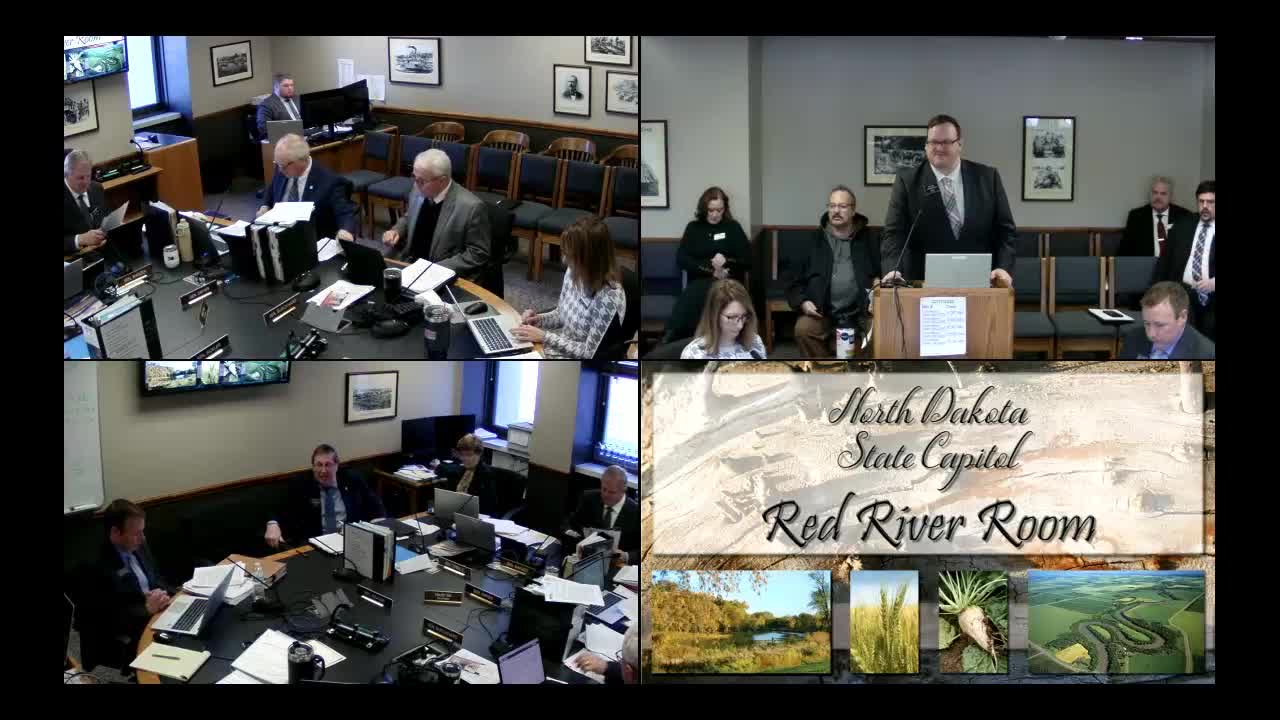
Summary
Senate Bill 2254 would authorize a one‑time $5 million appropriation to the Department of Transportation to grant Minot, Bismarck, Grand Forks and Fargo funds and commission a study of fixed-route and paratransit funding formulas. Proponents said federal reclassification and the end of COVID-relief funds have strained local transit systems.
Senators heard from local transit officials and advocates on a proposal to fund a study and one-time grants to four cities that operate fixed-route transit systems.
Senate Bill 2254, presented by Senator Josh Baucher, would provide $5,000,000 in one-time state grants to Minot, Bismarck, Grand Forks and Fargo to support fixed-route and paratransit operations and to fund a study during the next interim that would examine the feasibility of updating a state transit funding formula.
Why it matters: Baucher told the committee that recent population growth and changes in federal transit designations have reduced federal funding for Minot and Fargo. He said COVID relief in prior biennia temporarily offset shortfalls and that as federal relief recedes, communities face budget stress that could cut routes and services residents rely on for work, education and health care.
What proponents asked for: Baucher said the study should tap in-state consultants to help devise a sustainable funding model that could account for general ridership (not just seniors and disabled riders) and changing service patterns such as on-demand transit. Transit advocates asked the committee either to put the $5 million directly into the DOT budget or to authorize the study and grants through the bill. Trevor Vanette, an advocate for statewide public transit, supported including human-services appropriation chairs in the study because of the overlap with medical transportation.
Local testimony: Cale Dunwoody with the Fargo-Moorhead Chamber emphasized workforce impacts: "If you can't get to work, you can't work," he said, urging support for the bill. Corey Peterson, former mayor of Horace, said Horace’s rapid growth (from about 2,200 to nearly 7,000 people during his tenure) makes a transit study worthwhile to assess new service needs.
Funding mechanics and next steps: Testimony explained that federal transit formulas rely on census-based designations; Minot and Fargo’s reclassification reduced federal aid even as ridership and local needs grew. Committee members discussed possible funding sources in the DOT budget, flexible-transportation funds and motor-vehicle excise-tax allocations. No formal committee vote on SB 2254 was recorded in the transcript.
Ending: Supporters asked the committee to provide a study and short-term grants while work continues on a sustainable formula that accounts for general ridership and changing local transit models.