Get Full Government Meeting Transcripts, Videos, & Alerts Forever!
Appropriations committee debates jail mental‑health grants and advances several human‑services and transparency bills
Summary
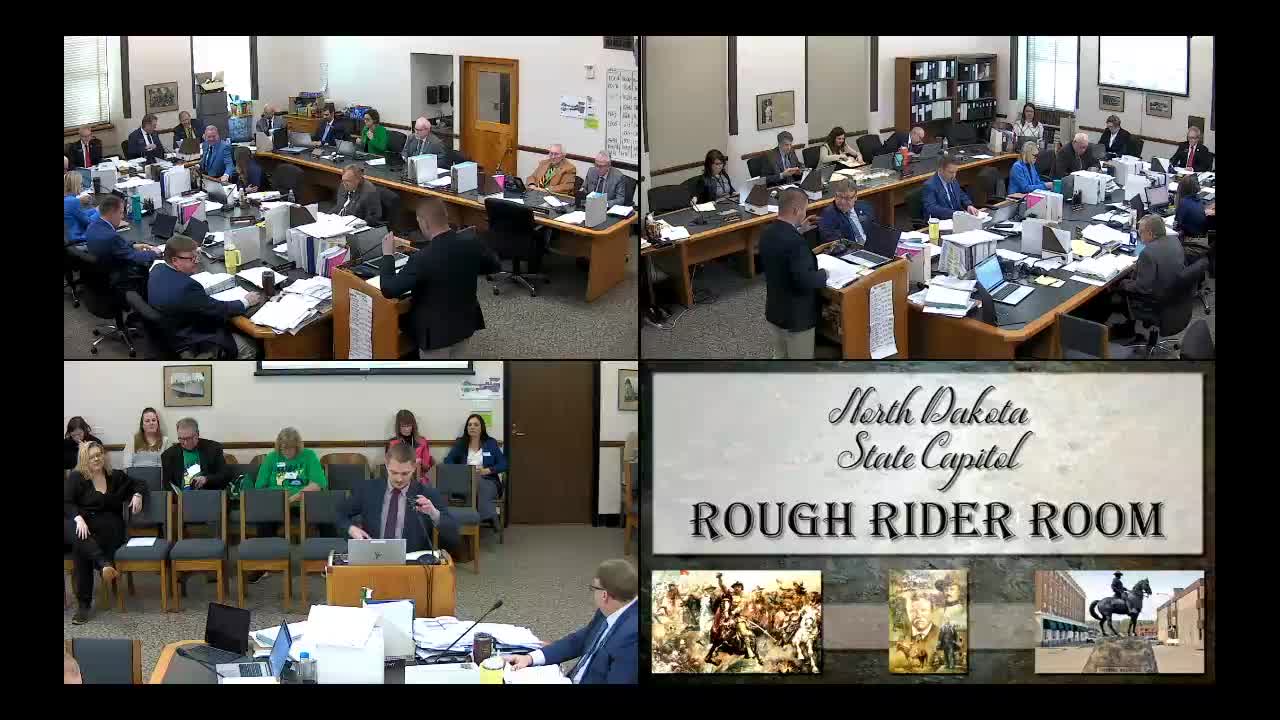
The House Appropriations Committee on Wednesday heard extensive testimony on a proposed $10 million grant to expand mental‑health services in county jails and acted on multiple human‑services and transparency measures, voting to recommend against advancing the jail grant and approving measures to raise a nursing‑home personal allowance and create a Legacy Fund disclosure website.
The House Appropriations Committee on Wednesday heard extended testimony on a proposed $10 million grant program to expand mental‑health and substance‑use services in county jails and took votes on several other human‑services and transparency measures.
The panel heard from bill sponsor Rep. Matt Ruby (District 40) and Pam Segnus, executive director of behavioral health at Health and Human Services, about House Bill 13‑37, a one‑time $10,000,000 grant program modeled on a Walsh County pilot. Rep. Matt Ruby said the bill would fund mental‑health and, when eligible, substance‑use services in county jails; Walsh County used leftover ARPA dollars to run a pilot that served about 294 participants over three years, Ruby said.
Segnus told the committee that behavioral‑health services already exist in jails in various forms — the SUD voucher, contracted private providers, the Integrated Telehealth Partners (ITP) telepsych contract, and state human‑service centers — but that those resources are fragmented and insufficient to meet demand. “We still can’t meet need,” Segnus said, noting that HHS has served about 1,300 individuals in jail settings this biennium and provided just under 6,000 services.
Committee members questioned how the proposed grant would interact with existing programs and whether the state should instead expand ongoing reimbursement mechanisms such as the SUD voucher or emphasize rollout of Certified Community Behavioral Health Clinics (CCBHCs). Representative Russell Nelson moved a “do not pass” recommendation, saying he was uncomfortable with a stand‑alone county grant without integration into the department’s broader behavioral‑health work; Representative Nathie seconded the motion. The committee approved the do‑not‑pass recommendation.
Other bills the committee handled included:
• House Bill…
Already have an account? Log in
Subscribe to keep reading
Unlock the rest of this article — and every article on Citizen Portal.
- Unlimited articles
- AI-powered breakdowns of topics, speakers, decisions, and budgets
- Instant alerts when your location has a new meeting
- Follow topics and more locations
- 1,000 AI Insights / month, plus AI Chat