Get Full Government Meeting Transcripts, Videos, & Alerts Forever!
Get email alerts on the Lands Fire Budget topic
No spam. Unsubscribe anytime.
Department of Lands seeks staffing, one-time funds; governor proposes large transfers to fire fund
Summary
The Department of Lands told the Joint Finance and Appropriations Committee on Wednesday it needs new personnel, continued support for wildfire response and changes to program funding, while the governor recommended large transfers to the fire suppression fund.
The Department of Lands told the Joint Finance and Appropriations Committee on Wednesday it needs new personnel, continued support for wildfire response and changes to how some programs are funded after several recent budgetary and programmatic shifts.
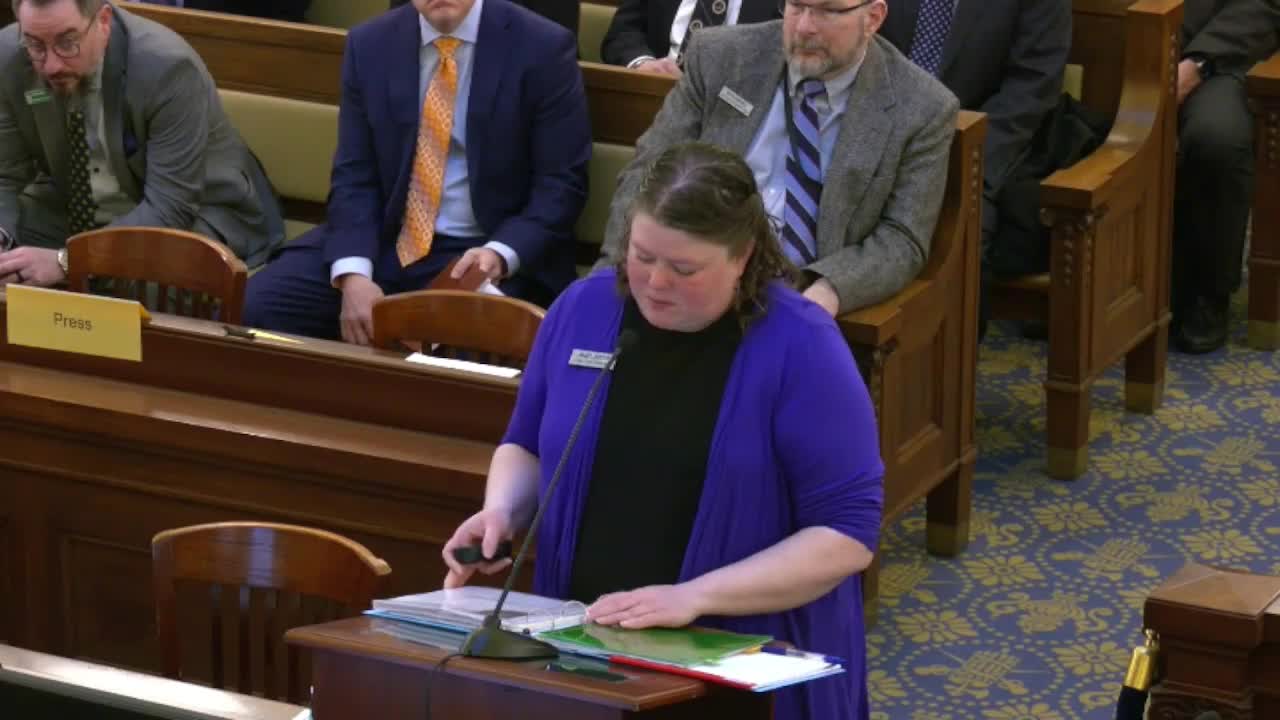
Janet Jessup, budget and policy analyst with the Legislative Services Office, opened the department's presentation, saying the Department of Lands is one of Idaho's 20 executive departments and functions as the administrative arm of the Board of Land Commissioners. Jessup walked the committee through the department's six program areas and noted personnel and dedicated fund breakdowns.
Jessup highlighted a long-standing, continuously appropriated Fire Suppression Deficiency Warrant Fund that has been prefunded by the legislature since 2015 to cover catastrophic suppression costs. She said the governor recommended a $60 million supplemental transfer in the current year and a $40 million transfer from the general fund to the deficiency fund in the governor's budget.
Director Dustin Miller told the committee the department is requesting six staff additions in FY2026, primarily to strengthen fire operations and assessments: a fire emergency support program manager, a fire aviation section manager, a statewide forest assessment program manager, an assistant fire warden for the Ponderosa area, a fiscal financial specialist and a forest program specialist. He said the request aligns with the department's multi-year fire program modernization and the governor's wildfire roundtable recommendations.
Miller also described the Good Neighbor Authority (GNA) program, which directs timber-sale receipts from federal lands toward state-managed restoration and planning work. "We are now generating enough income in the program through the timber sales off of federal lands where we gave that money back," Miller said, adding the GNA has produced about $40 million to date and has returned funds for personnel, operating expenses, payments to the Forest Service and restoration contracts.
Jessup said the department requested roughly $5.7 million in budget enhancements for Timber Protective Associations and other items; 79% of that was one-time funding. The governor's recommendation increased the CEC-equivalent adjustment for TPAs but did not recommend some one-time requests. The governor proposed $1,000,000 in firefighter bonuses for Department of Lands employees; Timber Protective Associations later amended their request to ask for an additional $250,000 to provide comparable bonuses to TPA firefighters.
Miller warned of pressure on the suppression account. He said the current balance was about $35.8 million and that without the additional transfers the account could fall to about $13 million in FY2026 after outstanding invoices and partner reimbursements are processed. "That account dropping down to $13,000,000 is going to provide us some challenges," Miller said.
Committee members asked about trends in suppression spending, the timing of federal reimbursements, and mitigation strategies. Miller said fire years vary widely between roughly $30 million and $100 million in suppression expenditures and that longer fire seasons, more extreme fire behavior and growth in the wildland-urban interface have all increased costs. He said the department is pursuing mitigation through GNA, shared stewardship, and federal wildfire mitigation grants for private landowners.
The department also discussed the Abandoned Mine Lands program and a large inventory of nearly 9,000 abandoned mine sites across the state. Miller said funding for abandoned mines has not kept pace with the need and that the department continues to prioritize closures and to coordinate with the Idaho Geological Survey.
No formal committee vote was recorded during the presentation; committee members requested follow-up information on historical suppression expenditures, federal reimbursement timing and other details to inform budget decisions.