Get Full Government Meeting Transcripts, Videos, & Alerts Forever!
Get email alerts on the Finance topic
No spam. Unsubscribe anytime.
Idaho parks department seeks program consolidation, seasonal pay increases and capital funding
Summary
The Idaho Department of Parks and Recreation asked the Joint Finance Committee to approve a consolidation of two budget programs, targeted pay increases for seasonal staff and rangers, and multiple one‑time capital requests; the governor recommended the agency's requests intact.
The Idaho Department of Parks and Recreation told the Joint Finance Committee it wants to merge its management services and park operations programs, raise seasonal wages and address pay compression for rangers while pressing for capital funds for deferred maintenance and marina replacement.
Janet Jessup, a budget and policy analyst with Legislative Services, told the committee the department is allocated 190.8 full‑time positions for the 2024 fiscal year and operates 30 state parks and trail systems. She said the agency’s budget mixes general, dedicated and federal funds and that many dedicated funds are statutorily restricted to particular uses.
Director Susan Buxton of the Idaho Department of Parks and Recreation said the program consolidation would combine management services and park operations into a single budgeted program to simplify administration. "It really is a ministerial request," Buxton said, adding the change “would be a lot easier for us to manage across the system” and, she said, would not cause a loss of information about revenues or expenditures.
The department asked the committee to fund two targeted personnel items for fiscal 2026: an increase in seasonal pay from $12 to $15 per hour and a tiered ranger compensation program to address compression issues among longer‑tenured and supervisory staff. Buxton said the requested increases would come from dedicated funds the department already controls and that the goal is to preserve step differentials when future CEC (compensation) adjustments occur.
Representative Petzke and Vice Chair Miller pressed staff for detail on the consolidation and on how the new pay structure would be implemented. Jennifer Quindell Miller, the department’s human resources officer, said managers can currently hire seasonal workers between $12 and $15 an hour but that market conditions are pushing wages higher in some resort and remote locations. "We are going to have to push that pay range higher as we try to recruit these seasonal employees," she said.
The department also highlighted capital requests and deferred maintenance. Jessup told the committee the governor’s recommendation included the agency’s requested capital projects in full. Buxton described planned marina replacements at Hebron (Hebron State Park on Lake Coeur d’Alene), saying the Coeur d’Alene Tribe contributed to early designs and had pledged at least $1 million toward replacing two marinas, which the director said will add slips while addressing aging docks at Rocky Point and Chocolat marinas.
Troy Elmore, the department’s operations administrator, described a compact wheel loader purchase funded by the snowmobile sticker fund, noting the department owns groomers used by county snowmobile programs and that counties operate the equipment. "It's a pass through program. The counties operate the equipment. The department owns the groomers," Elmore said, and he told the committee this loader would cover roughly one‑third of snowmobile grooming parking‑lot needs statewide and support about 27 county programs.
Jessup and Buxton also discussed a history of large, mostly one‑time appropriations for deferred maintenance in 2023 that produced a multi‑year spending pattern as projects spanned fiscal years. Jessup cited a $2.2 million ongoing 2024 appropriation to increase the department’s ability to distribute revenues to local agencies and other recent ongoing increases tied to park personnel and operating costs.
The department stood for questions and said it will provide committee members the slide deck and a project list showing where deferred maintenance funds have been spent or remain in progress.
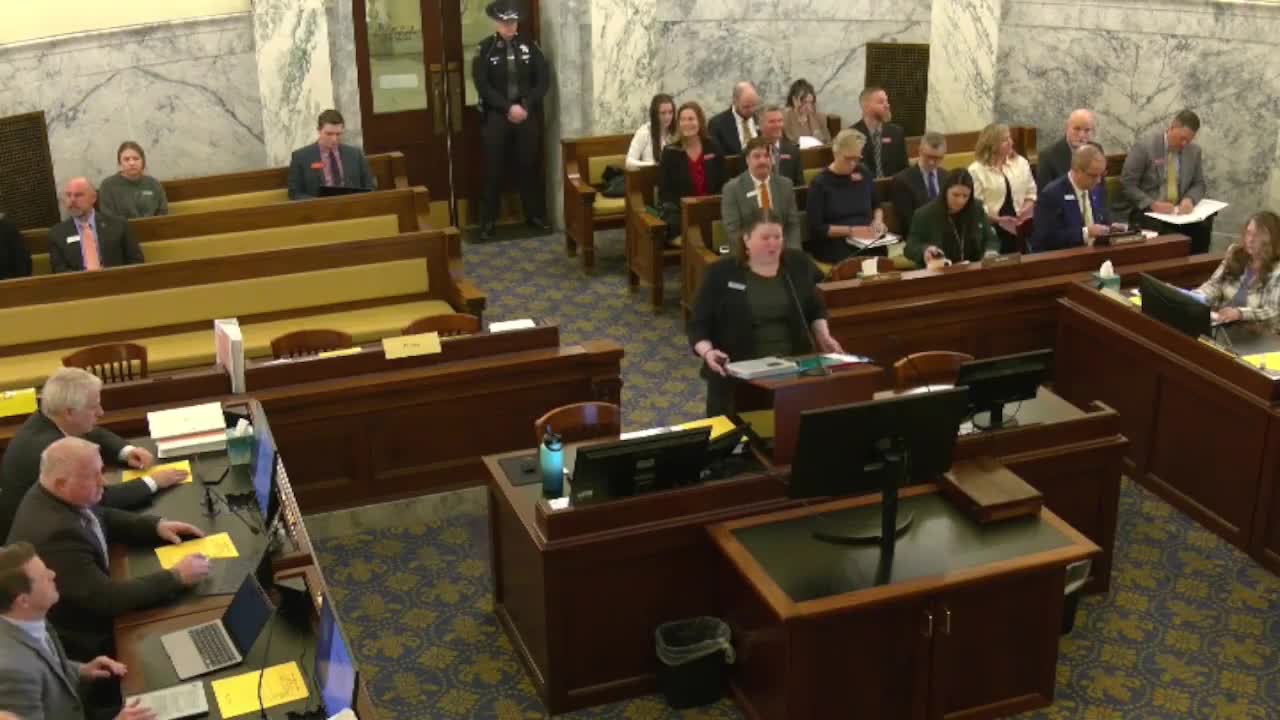
Meeting context: the parks presentation lasted roughly 34 minutes and drew sustained questioning from multiple committee members about pay, procurement, and capital project timing. Buxton and staff repeatedly emphasized that many requests are funded from dedicated or federal sources and that one‑time capital work will draw down cash balances over multiple years.
The department did not present any formal motions or items requiring a committee vote during the presentation; the governor’s recommended budget, as described here, contains the administration’s proposals.