Get Full Government Meeting Transcripts, Videos, & Alerts Forever!
Get email alerts on the Public Meetings Remote Access topic
No spam. Unsubscribe anytime.
Council tables decision on restoring remote call-in or Zoom for meetings after staff and treasurer warn of technical and legal risks
Summary
After a lengthy discussion on whether to restore a remote call-in or Zoom option for council and commission meetings, the council voted to table the item indefinitely and asked staff to research reliable options and costs; staff noted technical failure risks and potential Brown Act implications.
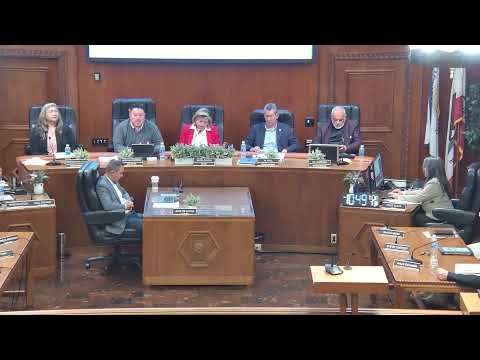
Councilmembers debated restoring a remote public-participation option (phone/Zoom) for council and commission meetings on Feb. 11 and ultimately tabled the issue for further staff study.
City Manager Rob Houston reviewed the city's prior use of Zoom during the COVID-19 period and the city's later decision to discontinue remote participation while adding cameras and YouTube streaming. Houston told council that 28 of 32 surrounding cities had removed remote call-in features and warned that system failures can create Brown Act risk when remote access is allowed but not available.
Why it matters: Restoring remote participation would expand access for residents who cannot attend in person, but technical failures during meetings can prevent public comment and create legal exposure; the council asked staff to develop options that balance access, reliability and cost.
Key points from the debate - Technology and reliability: City Treasurer Jose de la Paz (serving as the meeting's technology adviser) said no system is immune to failure, but robust solutions require investment and redundancy. Treasurer de la Paz estimated a modest recurring cost for limited audio-only dialing was possible (~$12,000 per year referenced in staff commentary), but said more resilient citywide solutions could cost substantially more (he offered an illustrative ongoing annual range near $120,000'150,000 for a highly reliable system). Staff warned that a live stream or call-in service outage could force a meeting suspension to preserve the administrative record. - Legal risk: The city attorney and city manager explained that if the city advertises and offers remote participation and a technical failure prevents the public from participating, the city could face Brown Act complaints or a challenge to actions taken while remote access was unavailable. - Access and equity: Multiple councilmembers and members of the public supported restoring some remote option as a way to increase civic engagement for people who cannot attend in person because of work, family or mobility limits. Speakers suggested a phone-based call-in feature that allows listening in real time and calling in when the item is called.
Council action After discussion, councilmember motioned to table the proposal indefinitely, asking staff to research technologies used by similar agencies, cost estimates and operational plans; the motion passed by roll call (Council members Avalos, Hurtado, Rios, Vice Mayor Baron and Mayor Davila voted "yes").
Next steps Staff was instructed to investigate options, gather cost estimates and best-practice models from agencies that maintain remote participation, and return when a feasible, reliable proposal and budget estimate are available.