Get Full Government Meeting Transcripts, Videos, & Alerts Forever!
Get email alerts on the Land Use Planning topic
No spam. Unsubscribe anytime.
City council directs staff to seek consultant and environmental review for industrial, transit and corridor planning; vote 4-1
Summary
The Southgate City Council voted 4–1 to direct staff to issue an RFP for a planning and environmental consultant to study changes to industrial (warehousing) rules, plan land use near two future Metro transit centers and recommend commercial-corridor updates. Staff estimated the combined planning and environmental work at about $500,000–$750,000.
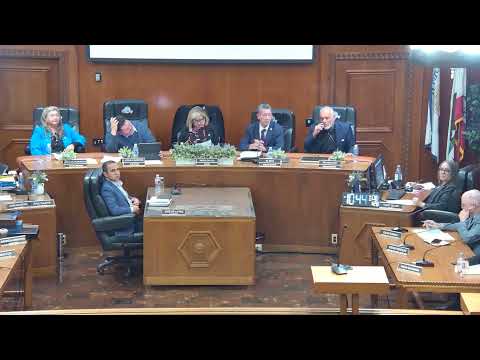
The Southgate City Council voted 4–1 on Jan. 28 to authorize staff to solicit proposals from planning and environmental consultants to study possible changes to industrial zoning, plan improvements around two Metro transit centers and propose updates to commercial corridors.
City planning staff said the work would include ordinance research, community outreach, traffic and air-quality analysis and a California Environmental Quality Act (CEQA) document (either a mitigated negative declaration or an environmental impact report) so the city could consider any changes consistently across the jurisdiction.
Planning Manager John Signals told the council that consultants’ cost estimates for the work range from roughly $350,000–$400,000 for planning tasks plus $150,000–$330,000 for the CEQA environmental document, for a total project range of about $500,000–$750,000. Staff estimated an 8–10 month schedule for the planning work and 12–14 months for environmental review; overlapping tasks could shorten the calendar to roughly a year depending on scope.
The draft scope would also include a transit-oriented-development feasibility study for two potential Metro sites — one east of the Azalea Shopping Center at Atlantic and Firestone and another near the new Hollydale Park — and identify half-mile radii that may qualify for Metro funding. Staff noted a separate Metro grant for the Holiday Village site with a project cost near $171,000; Metro could cover approximately $142,000 of that project, leaving a city match of roughly $29,000.
Council debate was robust. Supporters said the work would give Southgate a planning foundation to attract higher-value investment, shape development around future Metro stops and give the city tools to require mitigation for traffic, air quality and other impacts before projects arrive. “We should be proactive; if we don’t set a vision, projects set a vision for us,” one council member said.
Opponents warned of traffic, air-quality and community impacts tied to warehousing and urged caution. Several residents told the council they feared more truck traffic, part-time low-wage jobs and environmental harms.
The motion to release the RFP and begin the environmental process passed on a roll call vote (Avalos — yes; Rosado — yes; Rios — no; Vice Mayor Baron — yes; Mayor Davila — yes).
Why it matters: the decision opens a multi-step planning and CEQA process that could change allowable industrial uses, create an overlay for transit areas and alter zoning and parking rules on major commercial corridors — ultimately shaping the kinds of businesses and investments that locate in Southgate.
Ending: staff will issue a request for proposals to prequalified consultants and return to council with recommended consultant selections, a more detailed timeline and funding options.