Get Full Government Meeting Transcripts, Videos, & Alerts Forever!
Get email alerts on the Tax Increment Financing topic
No spam. Unsubscribe anytime.
Planning Commission approves reclassification of TID No. 92; staff says school-district taxpayers will carry some cost
Summary
The Rapid City Planning Commission approved an amendment to Tax Increment District (TID) No. 92 to reclassify part of the district from "affordable housing" to "local," shifting certain tax impacts to residents in the Rapid City school district and leaving the developer to correct an earlier oversight, city staff said.
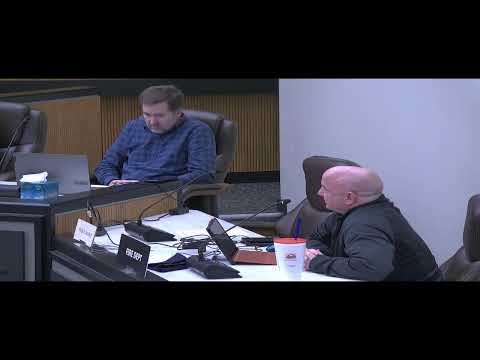
The Rapid City Planning Commission on Jan. 23 approved an amendment to the project plan for Tax Increment District (TID) No. 92, changing the district classification from “affordable housing” to “local.” The change was presented by Mike Dugan, the city’s TIF planner, during the commission’s meeting. Mike Goller made the motion to approve the amendment and Kelly seconded; the motion carried.
Why it matters: The reclassification alters how tax increment is calculated for parcels inside the TID boundary and shifts the mechanism that makes school districts whole for lost property-tax revenue. Staff said that under the local classification, some of the difference that would otherwise be covered by state affordability programs will instead be borne by Rapid City school-district residents.
City presentation and numbers: Mike Dugan told the commission the TID was originally set up to extend Reservoir Road and grade a section of the future East Anamosa to open a subdivision planned for 156 single-family homes. According to Dugan, the subdivision plan includes 84 lower-priced homes with listing prices “upwards of $220,000” and 72 homes priced below the state’s first-time homebuyer purchase-price limit, which Dugan said is $385,000. Dugan said 55 additional homes west of Reservoir Road that later became included in the TID boundary are expected to sell at prices “approaching half a million dollars,” which exceeds the state limit for the affordable classification.
Dugan said the project’s approved TID-funded project costs are about $3,600,000, financing costs about $4,400,000, and total eligible project costs roughly $7,800,000. He said the district’s amortization runs 15 years with payoff in February 2039 under the current schedule.
Tax impact estimates: Dugan presented preliminary impact figures for Rapid City residents within the school district. Using 2024 calculations he said the local tax impact is estimated at about $0.81 per $100,000 of owner-occupied value and $1.52 per $100,000 of commercial or industrial value; he said the impact would rise as the increment grows and could reach about $3.25 per $100,000 of owner-occupied value at the district’s peak years. Dugan cautioned the calculations are complex and that exact impacts are difficult to pin down.
Developer explanation and staff position: Andrew Scull, representing the applicant, told the commission the developer originally intended 156 affordable units and that inclusion of the additional western lots in the TID was an oversight: “We did not realize that the whole TIF District also had to have that affordable limit. ... So now we’re correcting that,” Scull said. Planning staff (Vicky) and finance staff indicated support for the amendment because the TID continues to capture needed street construction (Reservoir Road) and other eligible infrastructure costs that staff said will save the city money over time.
Options and remedy: Dugan said an “easy solution” would be to redraw the TID boundary to remove the 55 higher-priced lots so the district could retain the affordable classification; he warned, however, that those lots are needed within the boundary to help the district’s increment reach the payoff goal within the allowed 20-year timeframe.
What was decided: The commission voted to approve Amendment No. 1 to the project plan for TID No. 92. The approval changes the classification to local as described in the staff presentation. The item will proceed under the amended project plan and staff and the developer will continue coordination on boundary and financing details.
What remains unresolved: Dugan and other staff noted the precise tax impact calculations remain estimates and that additional details about which parcels and taxpayers are affected will be clarified as the project and its construction schedule develop. Dugan also said state procedures apply when a TID is classified as affordable housing vs. local; the commission did not adopt a boundary change on the floor during the Jan. 23 meeting.
Ending: City staff said they will continue to provide updated amortization and tax-impact numbers to the commission and school-district stakeholders as the project progresses.