Get Full Government Meeting Transcripts, Videos, & Alerts Forever!
Get email alerts on the Housing Development topic
No spam. Unsubscribe anytime.
Garden City says RHID remains primary housing tool; county, city officials warned about tax‑shift impacts
Summary
City officials presented a housing update to the Finney County commissioners that showed a multi‑year shortfall in housing production and reiterated use of the Reinvestment Housing Incentive District (RHID) program as the main tool for development; commissioners raised concerns about delayed tax revenue return to local taxing entities.
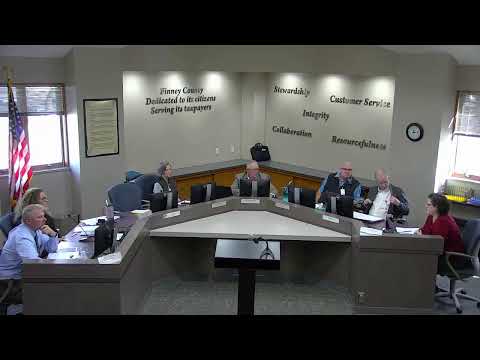
Garden City officials told the Finney County Board of County Commissioners that the Reinvestment Housing Incentive District, commonly called RHID, is the municipality’s primary tool for encouraging housing development, but current output falls far short of projected need.
Danielle Burke, assistant city manager for Garden City, told the commission the city and county partner to produce a biennial “chat report” that tracks housing need. “If we assume a 2% annual growth rate … we can anticipate that we’re gonna need almost 4,000 new units, new front doors by 02/1935,” Burke said in the presentation; she later clarified that figure in the slides was the projection from the end of 2024 and reflects a rear‑view snapshot. Using a longer‑term 1.28% growth assumption reduces the projected shortfall but still leaves roughly 2,400 units needed under that scenario.
Burke reviewed permitting and certificates‑of‑occupancy trends for single‑family and multifamily housing. She said 2022 saw the largest multifamily construction activity in recent years—driven largely by the Hunters Glen quadplex project—but permitting and occupancy remain uneven: “On the multifamily side … in 2022, we had 94 permits for multifamily,” she said, and noted a mismatch between multiple permits pulled up front and single certificates of occupancy issued for multifamily structures when units are completed together.
The city’s RHID inventory shows about 1,200 units currently in the queue, Burke said, but many of those developments remain unbuilt. She explained how RHID works: developers are reimbursed for eligible infrastructure expenses up front, and the incremental property taxes generated by the development flow to the developer for a period defined in the RHID agreement; taxing entities receive only the base taxes until the RHID expires or the eligible reimbursements are complete.
Commissioners pressed the city on constraints. Commissioner Mike Yoots asked whether the review would include local workforce capacity; Burke and Lana Duvall, president and CEO of the Finney County Economic Development Corporation, said building trades capacity and partnerships with the community college affect construction timelines. “We’ve got builders here that, have a long, long list of projects … and they’re making good headway,” Burke said. Duvall added that RHIDs are intended to bring people and jobs to the community and produce offsets such as increased sales tax revenues: “When we are doing our HIDs, we are … investing in the future, but we are also assuming that additional revenues come with those individuals,” Duvall said.
Commissioners also raised fiscal concerns. The commission chairman told the group that while RHIDs can stimulate development, the county must be mindful of tax shifts that place service costs onto existing taxpayers: “The people that occupy our growth and the services that are demanded … are then absorbed by the other remaining taxpayers,” he said, noting the county’s usable tax base declined by roughly $500,000 in the prior year even as total valuation increased.
Burke and Duvall answered questions about Hunters Glen phases (Burke said Hunters Glen 3A will have 44 units and 3B 68 units) and offered to provide more detailed slides on individual RHID projects if commissioners wanted them. Burke said the city is updating other tools such as the neighborhood revitalization program and continued to emphasize RHID as Garden City’s principal development mechanism since about 2012.
The presentation concluded with an offer from city staff to return with more detailed project schedules, and commissioners encouraged further work on workforce capacity and coordination with the county on future RHID approvals.