Get Full Government Meeting Transcripts, Videos, & Alerts Forever!
Get email alerts on the Homelessness Shelters topic
No spam. Unsubscribe anytime.
Committee hears bill to create code and expedited approvals for pallet shelters; advocates urge faster openings
Summary
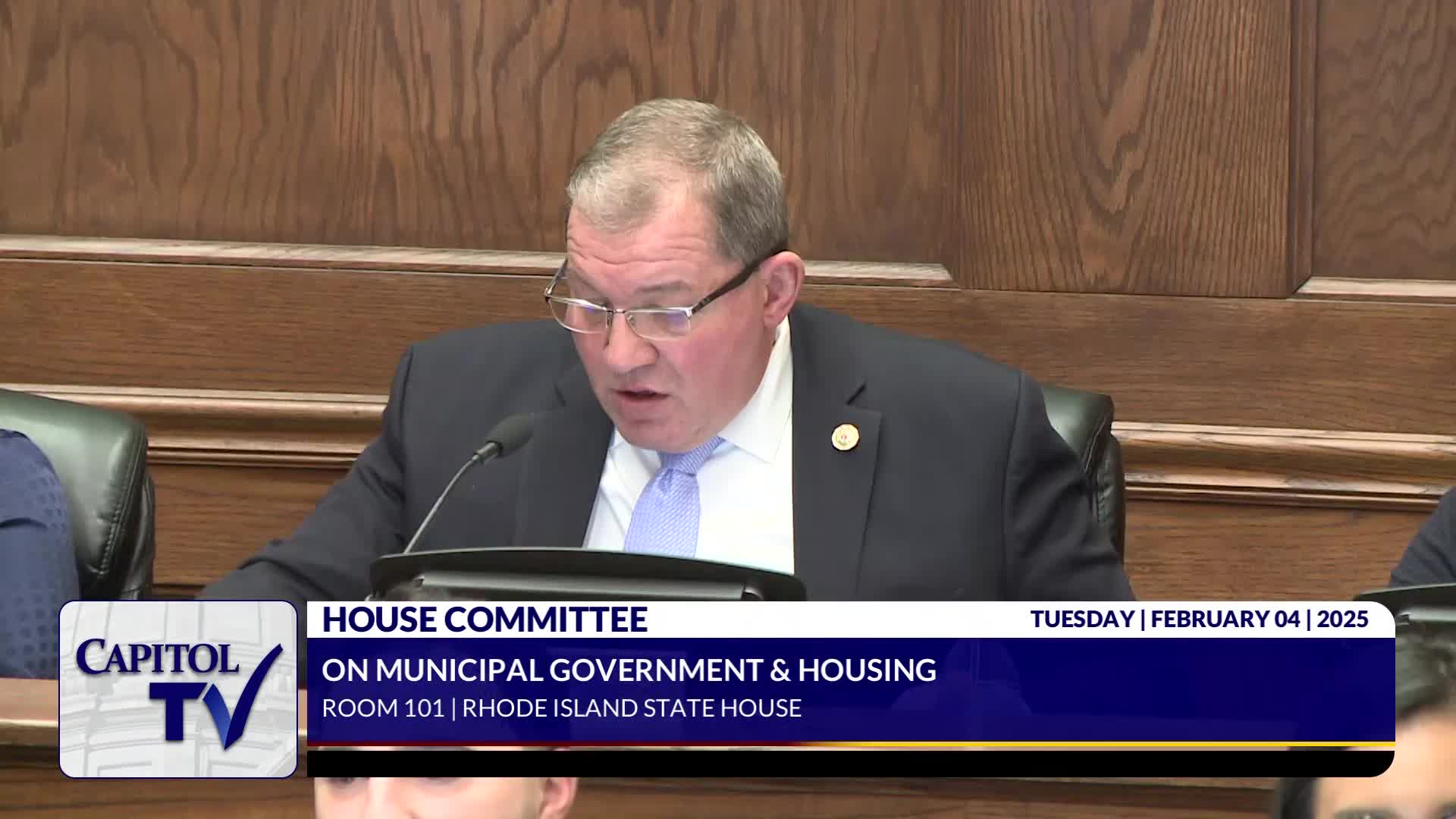
Providence — The House Committee on Municipal Government and Housing on Feb. 4 heard testimony on House Bill 5100, a bill that would create a specialized building- and fire-code category for pallet shelters and allow municipalities to authorize temporary shelter sites on an expedited basis during emergencies.
Providence — The House Committee on Municipal Government and Housing on Feb. 4 heard testimony on House Bill 5100, a bill that would create a specialized building- and fire-code category for pallet shelters and allow municipalities to authorize temporary shelter sites on an expedited basis during emergencies.
The bill, introduced by Representative Shekharji, would establish technical requirements for pallet or “save” units — including climate controls, carbon-monoxide and smoke detectors, a locking door, an egress window and fire extinguishers — and allow municipalities to declare a local emergency for up to 180 days and to renew it every 30 days to operate such units. Representative Lombardi presented two companion measures (House Bills 5101 and 5102) that would set minimum standards for licensing emergency shelters and create a committee to recommend shelter-related elements for the state housing plan.
Why it matters: Witnesses told the committee the state is seeing rising homelessness and that older adults are a growing proportion of those without housing. Proponents said zoning and current building and fire-code paths do not fit the shelter units now being used and that the bill would remove a regulatory barrier that delays opening life-saving temporary housing.
Representative Shekharji, the bill sponsor, said the measure was intended as a “beginning point” and that the proposal drew on other states’ practices to allow quicker approvals: “Our current building and fire codes do not have specialized provisions that allow these units to be permitted or constructed in a cost-effective or timely manner…Exploring long-term solutions cannot be people should not be able to wait while we address this issue,” he told the committee.
Catherine Taylor, Rhode Island state director for AARP, said older adults are the fastest-growing age group experiencing homelessness and urged action. “Older adults who are homeless are just not as resilient as younger people, much more likely to not survive exposure to severe weather,” she said, citing a 2023 federal report and local data from Crossroads Rhode Island. Taylor added that an AARP–Statista estimate projects hundreds more Rhode Islanders will face eviction between 2023 and 2027.
Volunteers and service providers described street conditions and the need for rapid sites. Bernie Baudreau, a volunteer with a local homeless advocacy group, described meeting a 66-year-old man living in a tent who said he needed fuel every 48 hours to keep a heater running. “He’s certainly gonna die, perish, if not this year, next, if he continues to live outside,” Baudreau said.
Mutual-aid and provider representatives supported the bill but asked for clear pathways that permit volunteers and nonprofits to help. Patrick Ford, executive director of LibertarianMutualAid.org, said volunteer groups provide water, food and supplies to encampments and that regulatory barriers limit mutual-aid responses. “It is my profound hope that legislation like this has the potential not only to drastically increase the scope and speed of our response to this crisis, but also that this legislation will begin to clear a path for increased participation by mutual aid organizations,” Ford said.
Katie West, director of strategic initiatives at the Housing Network of Rhode Island, said save units can supplement congregate shelters and meet needs for people who cannot or will not enter congregate settings, including people with PTSD or companion animals. She noted the network submitted written recommendations for clarifications to the bill and offered to work with sponsors on technical changes.
Several witnesses referenced Echo Village, a temporary site expected to open with about 44–45 units managed by House of Hope; committee members sought clarification about occupancy and selection for that site. Committee members and witnesses acknowledged there are remaining questions about operational details — for example, who selects occupants and whether units will be restricted to older adults — and several providers said those operational decisions rest with the shelter operator.
The committee did not take a final substantive vote on the bill; at the start of the meeting the committee had voted procedurally to hold the day’s calendar for further study (see “Votes at a glance”).
What’s next: Sponsors and several advocacy groups said they are open to technical amendments, and multiple witnesses offered to collaborate on language for permitting, licensing and the standards the bills would require. The committee suspended the hearing and planned to return later in the session.
Ending: Supporters framed the bills as an immediate regulatory fix — not a long-term housing strategy — to allow faster deployment of temporary, climate-controlled shelter units while broader housing solutions continue to be developed.