Get Full Government Meeting Transcripts, Videos, & Alerts Forever!
Get email alerts on the Ballistics Nibin topic
No spam. Unsubscribe anytime.
Sponsor urges universal submission of ballistic evidence to NIBIN; witnesses note lab concerns
Summary
Representative Boylan’s HB 5130 would require law enforcement to submit crime‑scene ballistic evidence and test‑fired casings to the National Integrated Ballistic Information Network (NIBIN) and to submit tracing information to ATF. Sponsor and witnesses said universal submission could help link crimes and solve cases; witnesses and legal experts
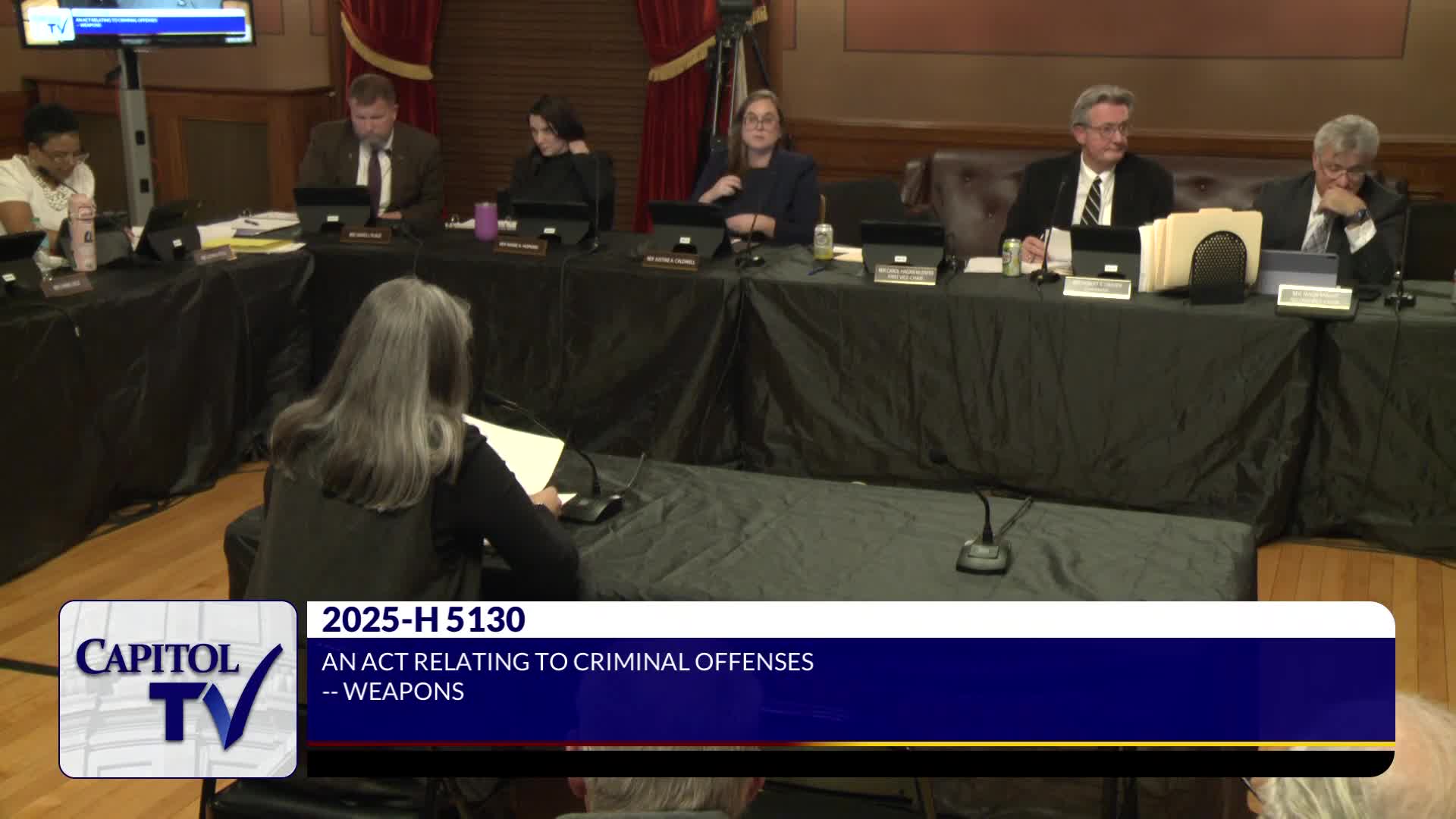
House Bill 5130 would require law-enforcement agencies to submit ballistic evidence — recovered casings and test fired cartridges — to the National Integrated Ballistic Information Network (NIBIN) and to submit tracing information to the Bureau of Alcohol, Tobacco, Firearms and Explosives (ATF). Representative Boylan told the committee the measure is a crime‑solving tool analogous to fingerprint submission and urged universal submission.
Boylan said the bill is substantially similar to legislation passed in other states and urged universal use of NIBIN, which compares casing images across jurisdictions to generate investigative leads. He said Rhode Island already has two NIBIN systems (URI scribe lab and the Attorney General’s office) and that the statute would require agencies to submit casings for imaging and data for ATF tracing.
During testimony, several witnesses discussed the technical reliability and oversight of ballistic analyses. Attorney and longtime court practitioner Mike DeLauro briefed the committee on the importance of publicly funded crime laboratories and noted recent mishaps at the state crime lab in tool‑mark analysis; he urged the committee to consider laboratory capacity, quality assurance and transparency when imposing submission requirements.
Committee members asked for data on accuracy, operational capacity and the potential cost and logistical burdens on municipal agencies. The committee left the bill in play for further review and requested information about laboratory resources and quality controls.