Get Full Government Meeting Transcripts, Videos, & Alerts Forever!
Get email alerts on the Civil Judgment Interest topic
No spam. Unsubscribe anytime.
Sponsors seek to tie judgment interest to Treasury yields, lower Rhode Island’s flat 12% rate
Summary
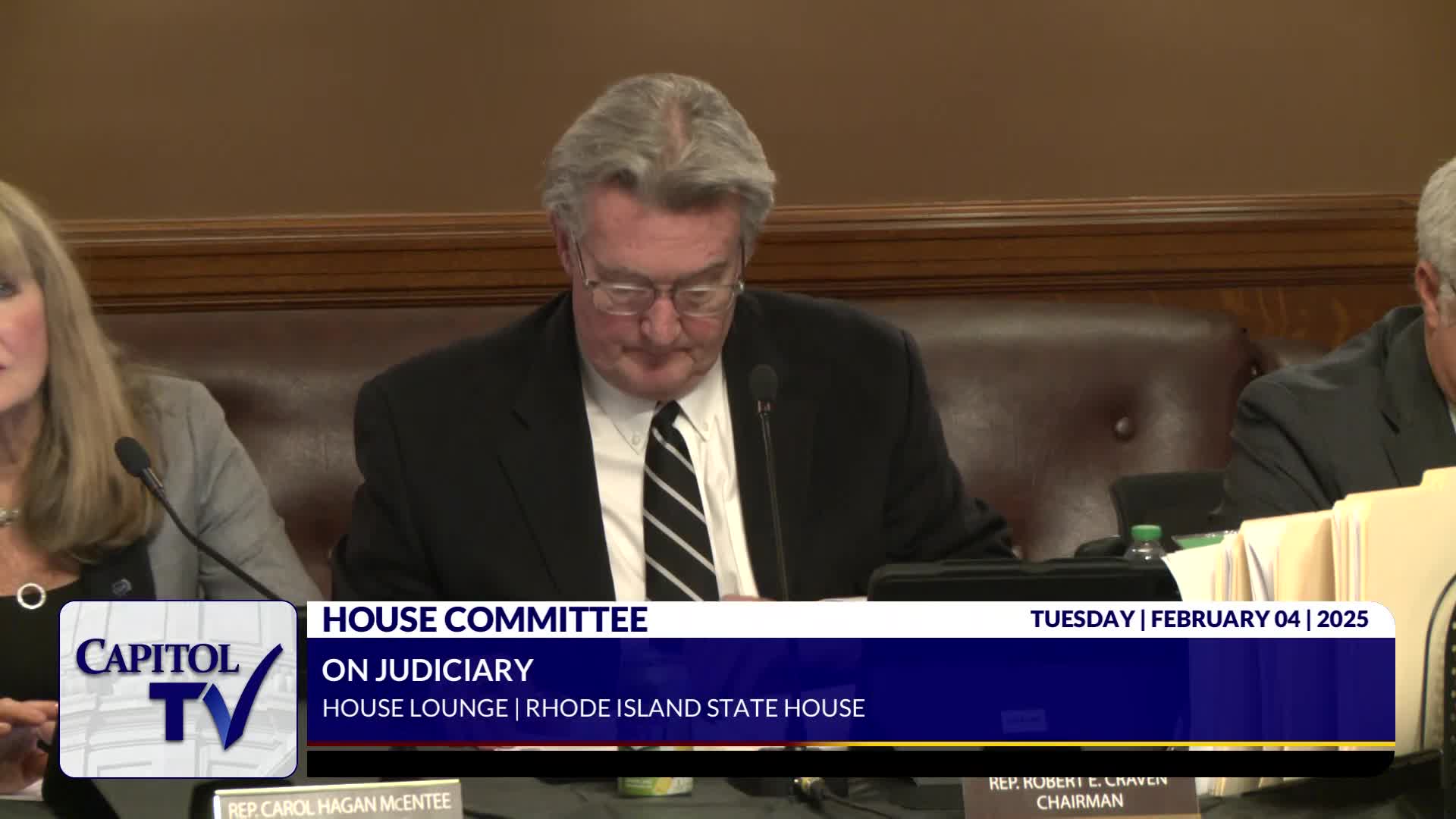
House Bill 5179 would replace Rhode Island’s flat 12% pre- and post-judgment interest with a variable rate tied to Treasury yields, sponsors and insurers said, to align the state with other jurisdictions and reduce incentive to delay cases; plaintiff-side advocates said lower rates would harm injured plaintiffs who face high borrowing costs while
House Bill 5179 would change how courts calculate pre‑judgment and post‑judgment interest in civil cases by tying the rate to a market benchmark (average accepted auction prices for the last 52‑week U.S. Treasury bills), rather than a fixed 12 percent. Representative Finkelman introduced the bill and testified that Rhode Island is one of a small number of states that still uses a high flat rate.
Jonathan Schreiber of the American Property Casualty Insurance Association said the current 12 percent rate is punitive and can produce judgments that substantially exceed the underlying damages when cases are delayed. "After 8 years the total judgment would be $196,000 — nearly double the original value" on a hypothetical $100,000 claim, he told the committee. Insurer witnesses said a variable market‑based rate would better compensate plaintiffs without rewarding delay.
Opponents, including the Rhode Island Association of Justice, argued that injured plaintiffs often face immediate out‑of‑pocket costs and high consumer borrowing rates while awaiting resolution. Christina Fernandez told the committee that claimants may rely on credit with much higher interest rates and that reducing prejudgment interest would materially harm injured parties.
Witnesses and members discussed the practical effect of the change: prejudgment interest applies only when a judgment is entered, so the reform would affect cases that proceed to judgment and the size of those judgments rather than every filed claim. Committee members asked parties to provide data on the number and size of judgments to quantify the fiscal effect and practical implications.
No final vote was taken; the bill remained in committee for further consideration and data-follow up.