Get Full Government Meeting Transcripts, Videos, & Alerts Forever!
Get email alerts on the Cryptocurrency Atms topic
No spam. Unsubscribe anytime.
Rhode Island hearing spotlights cryptocurrency ATM scams; bill would cap daily transactions and require disclosures
Summary
Lawmakers heard extensive testimony on House Bill 5121, which would set daily limits, require on-screen warnings and detailed receipts for cryptocurrency kiosks after advocates and law enforcement described growing scams that target older adults.
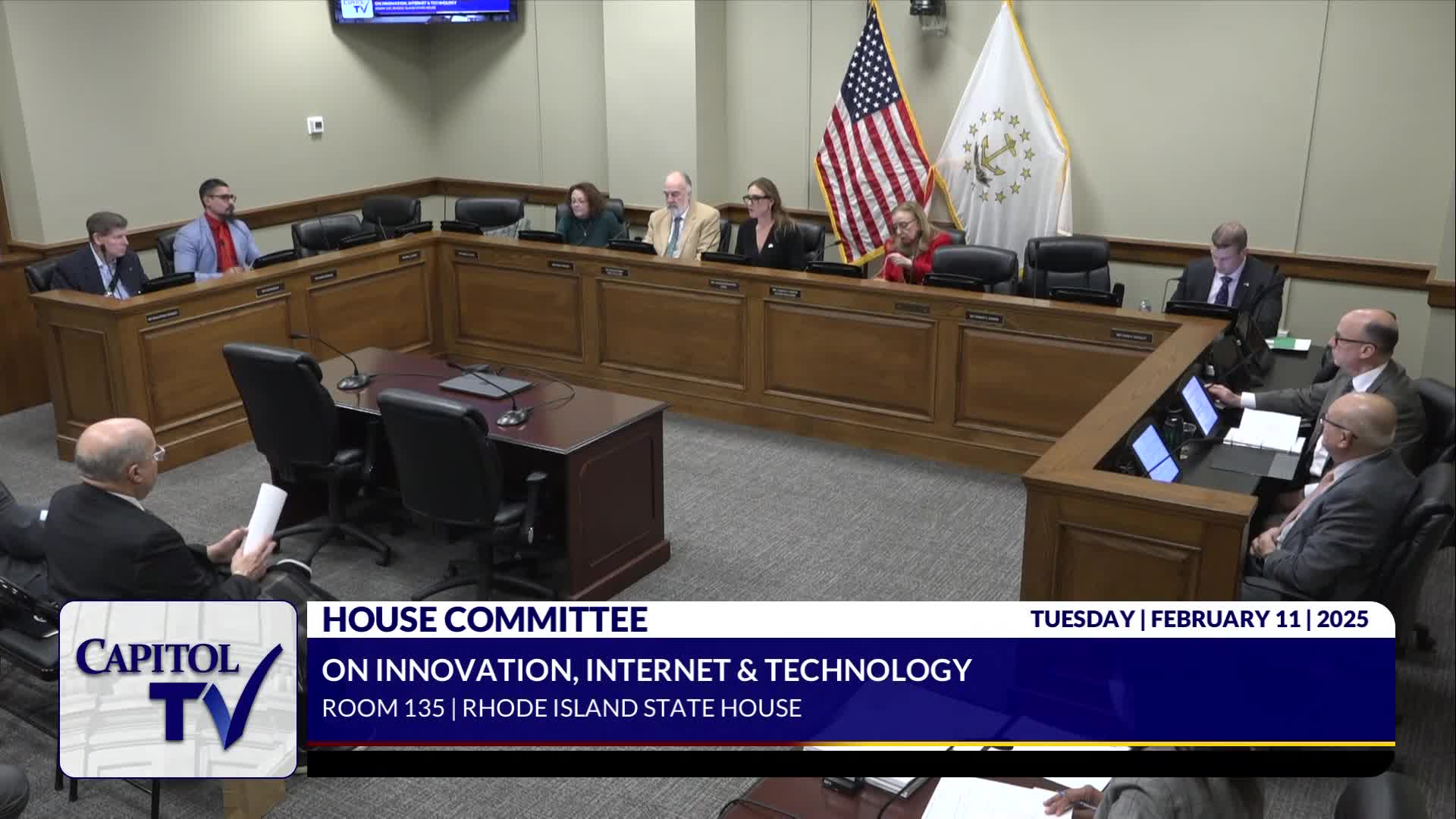
House Innovation and Technology Committee members heard more than three hours of testimony on House Bill 5121, a consumer-protection measure that would impose daily transaction limits, require on-screen scam warnings and detailed receipts, and create traceability requirements for cryptocurrency kiosks and “crypto ATMs.” The bill’s sponsor and multiple witnesses said the measures aim to curb scams that have targeted older residents.
The bill matters because witnesses described rapid growth in kiosk numbers and large losses from scams, and said changes to operator practices would give law enforcement a better chance to trace stolen funds and give consumers time to reconsider transactions. “From what we are latest count online. There is over a 120 of these machines within the state and recently with coin star starting to utilize crypto in ATM's in the supermarkets. There are now if you count them well over 300 of these ATM's around the state,” said Matthew, associate state director of advocacy for AARP Rhode Island.
AARP, the state treasurer’s office and the state police urged the committee to adopt measures that would reduce losses and aid investigations. Robert Craven, director of policy and intergovernmental affairs for the office of the general treasurer, said the bill is intended “not to impede the operations of any of these businesses that operate these virtual kiosks, but it's intended to provide reasonable guardrails for how they transact business in this state so that more elderly people don't fall victim.” Lieutenant Richard Potazek, who leads the state police financial crimes unit, described an active caseload and said tracing requires machine-generated identifiers. “We at the state police do have the ability to track these crypto funds once they're put into that machine. There are hurdles that we have to go through, but we need something to start with,” he said.
Victims and industry witnesses gave contrasting details about the best policy approach. Timmons Roberts, a Providence resident who described losing roughly $2,200 after a caller claiming to be a federal marshal instructed him to pay at a kiosk, urged low limits and strong warnings. “This is the last time I will ever pick up the phone from a unknown phone number,” Roberts said, recounting how he was directed to insert cash in a supermarket kiosk and later learned he had been scammed.
Larry Lipka, general counsel for CoinFlip, a major kiosk operator, said his company supports most consumer protections in the draft but urged changes that he said would preserve law-enforcement reporting and legitimate transactions. “The daily transaction limit should be increased to account for federal reporting requirements including the $2,000 suspicious activity reporting threshold,” Lipka told the committee, arguing that a $1,000 cap would prevent operators from filing certain suspicious-activity reports required by FinCEN.
Witnesses described several provisions in the bill: a suggested $1,000 per-day transaction cap, required pre-transaction disclaimers or a brief warning page, machine-generated receipts containing data useful to investigators (transaction timestamps, kiosk operator contact, hash IDs or transaction identifiers), and a requirement that operators register kiosk locations with the state. Law-enforcement witnesses and AARP supporters said those elements could slow scammers and provide prosecutors and investigators a trail to follow. The lieutenant and AARP also cited FBI national data showing large aggregate losses and an outsized share of losses affecting people over 60.
Committee members asked about interactions with federal reporting systems and how required receipts or data retention would help investigations. Committee members also heard industry concerns about fee caps and refund requirements; CoinFlip said an artificially low fee cap could push customers to unregulated options and urged a differentiated limit for new users versus established customers. Lipka said CoinFlip already requires customers to affirm a short series of warnings and said the company maintains transaction receipts and customer-consent records.
The committee did not vote on HB 5121 itself during the hearing. At the start of the session the committee adopted a parliamentary motion to hold all bills on the calendar for further study; Representative Asinaro moved the motion and Representative Kennedy seconded it. The chair recorded a roll-call of members, with those named during the roll call voting yes, and the motion carried. The chair emphasized that that procedural vote was not an endorsement on the merits of any bill.
The committee will decide next steps, including possible follow-up meetings with stakeholders. Several witnesses asked the committee to consider blending a transaction limit with federal SAR thresholds, improve location registration and receipt standards, and pair regulatory changes with public education targeted at older residents.