Get Full Government Meeting Transcripts, Videos, & Alerts Forever!
Get email alerts on the Criminal Threats Schools topic
No spam. Unsubscribe anytime.
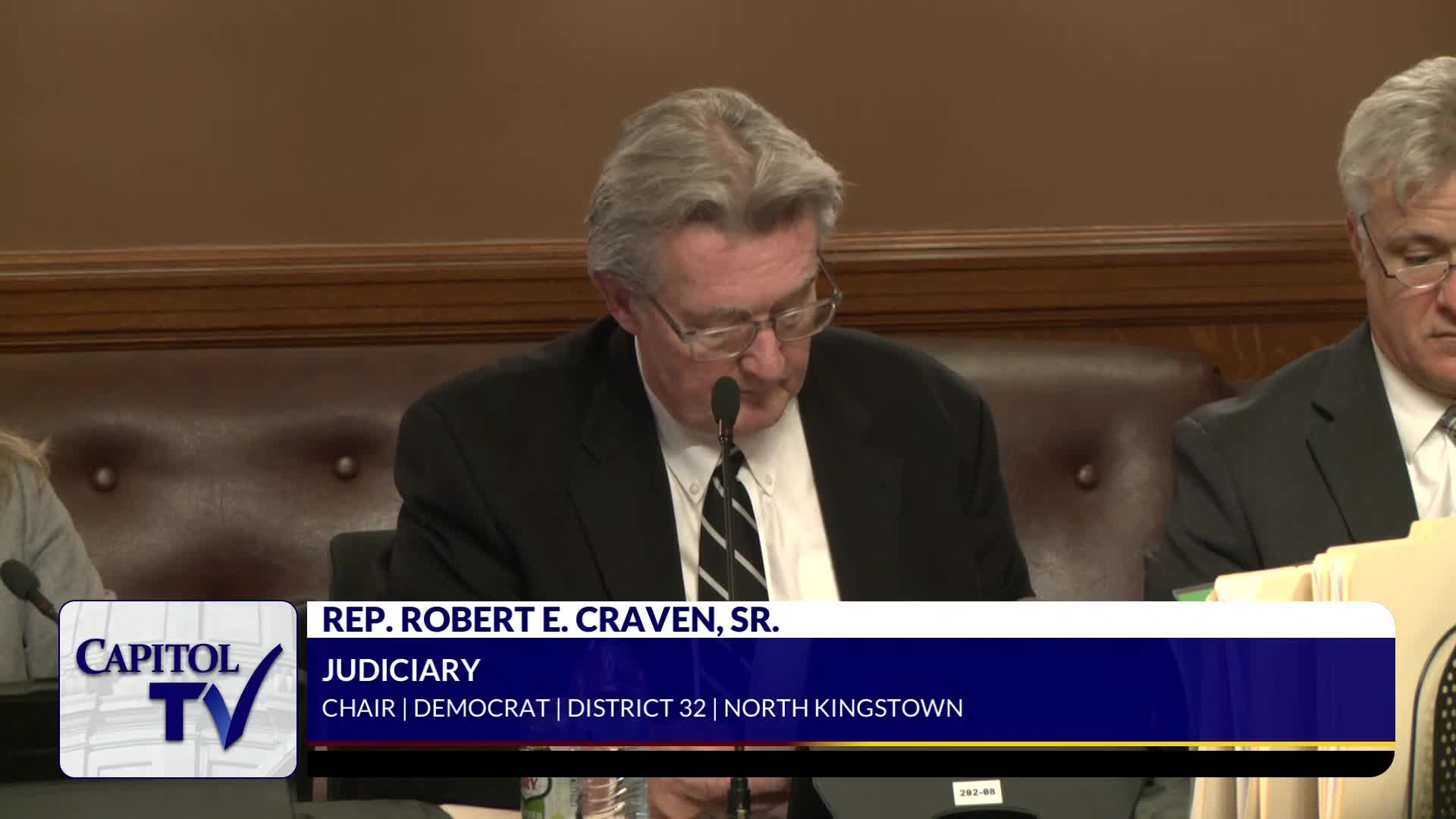
Committee hears bill to add school staff to public-official threats statute
Summary
The House Judiciary Committee heard testimony on House Bill 5262, which would add school personnel to the definition of “public official” for the criminal prohibition on threats. Supporters said threats against school staff have risen; civil liberties groups urged caution and narrower language tied to intent and student exclusions.
House Bill 5262 would expand the state’s criminal prohibition against making threats to include school superintendents, principals and other school employees as “public officials.” The bill’s sponsor and education advocates told the House Committee on Judiciary on Feb. 4 that recent years have seen an increase in harassing and threatening conduct against school staff.
The bill’s advocates said the change is narrowly aimed at adults who threaten staff and is intended as a deterrent. Tim Ryan of the Rhode Island School Superintendents Association testified that "teachers, principals, superintendents have been threatened for following policy" and described threats and harassment directed at employees and their families.
Supporters argued the statute should not apply to students. Ryan and Representative Noray said the draft amendment will clarify the language to exclude students, and Ryan said the intent is to reach adults who engage in threatening conduct. Representative Place and other legislators pressed for explicit exclusions for students and for careful drafting to avoid unintended consequences.
Civil liberties and youth-advocacy witnesses urged the committee to narrow the proposal and to add a culpability requirement. Kelsey Bala of Rhode Island Kids Count told the committee the bill as written "does not have protections for students as an exempt party" and warned that adolescents with dysregulation or disabilities could be swept into severe penalties. Stephen Brown of the ACLU of Rhode Island recommended tightening the statute to reflect recent U.S. Supreme Court guidance requiring a mental-state element for true-threat prosecutions, citing Counterman (Colorado v. Counterman).
Committee members discussed drafting options that would require a knowing, intentional threat and would exclude ordinary adolescent outbursts. Representative Knight urged aligning statutory language with recent constitutional decisions so prosecutions would target only true threats.
The committee did not take a final vote on the bill; the chair earlier moved and the committee voted to "hold all bills for further study," a procedural motion the panel approved at the start of the session.
The committee left the bill in play and heard additional related testimony from witnesses scheduled to appear on similar statutory changes.