Get Full Government Meeting Transcripts, Videos, & Alerts Forever!
Get email alerts on the Harm Reduction Overdose Prevention topic
No spam. Unsubscribe anytime.
Backers urge permanent harm reduction center; data collection and funding questioned by some members
Summary
Supporters told the House committee Rhode Island’s overdose prevention center has already connected clients to care and reversed overdoses; they urged removing the sunset or extending the pilot so services can continue and the research can collect longer-term data.
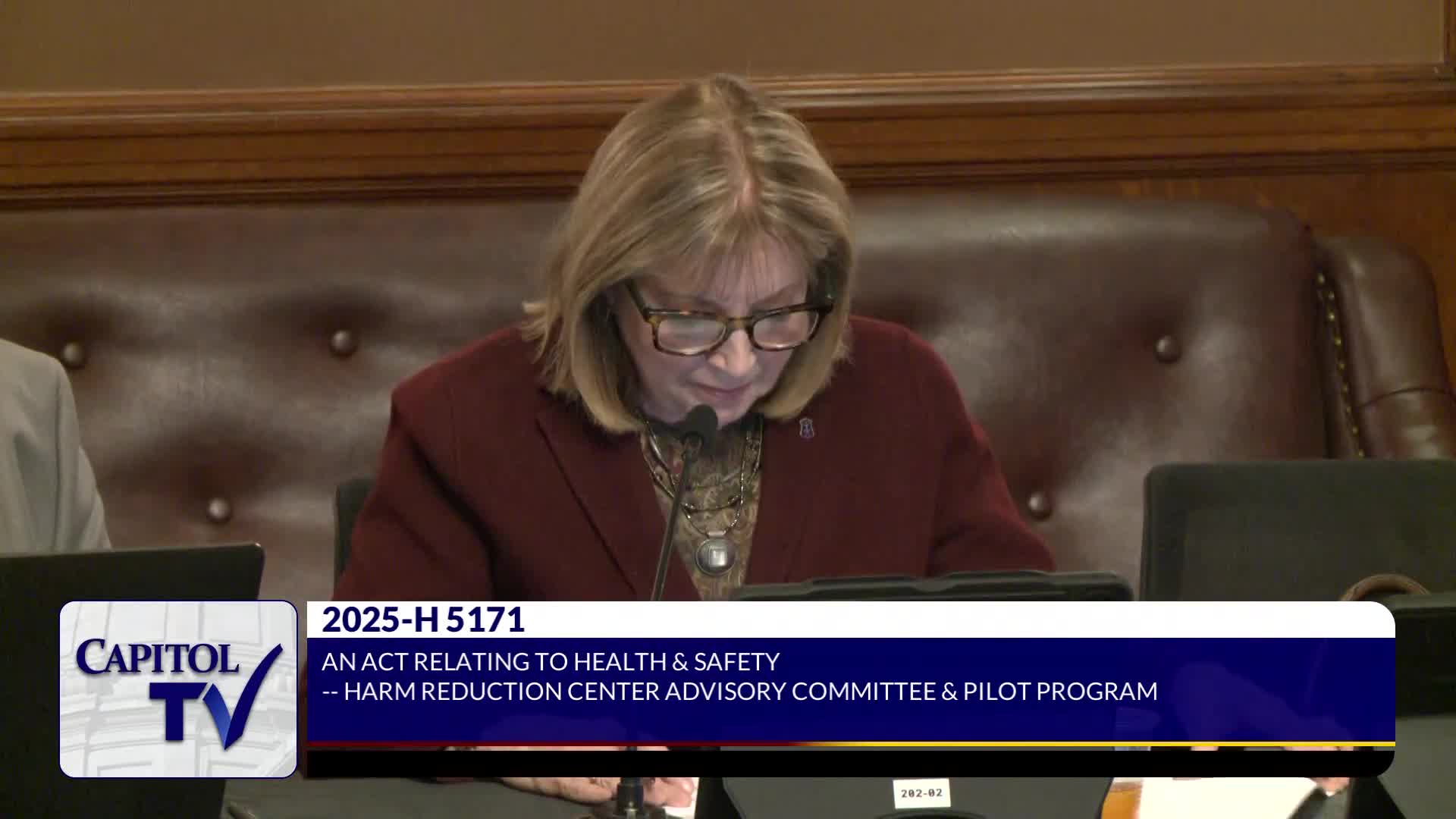
Representative Edwards presented House Bill 5,171 seeking legislative action on the state’s harm reduction center pilot. Edwards told the committee Rhode Island was among the first states to codify harm reduction centers and said the initiative has saved lives.
Project Weber Renew, the center operator, and clinical partner Victor described early operations. Dennis Baylor, Overdose Prevention Program Director at Project Weber Renew, said the center had been open about three weeks and reported reversing approximately six overdoses in that period. Anna Jin Yilken (Project Weber Renew) said the center had about 60 visits and reported that roughly 70% of clients were street-based homeless and 66% said they would have used alone if not for the center.
Lisa Peterson, chief operating officer at Victor (clinical partner), provided utilization data for Victor’s clinical suite: in under three weeks 23 drop-in clients were seen; 17 (74%) connected to follow-up care. Peterson described medical, behavioral-health and substance-use services on site and said the center has a full-time nurse, a therapist and rotating medical providers.
Funding and data: Witnesses said the overdose prevention center is licensed by the Department of Health and funded initially from opioid settlement funds; witnesses stated this is not general-tax revenue. Jackie Goldman, a Brown University researcher, explained a NIDA-funded evaluation will collect data through at least 2027 and described multi-method research to measure client outcomes and community impacts. Committee members debated whether to remove the sunset or extend the pilot to allow more data collection; Representative Place supported an extension to collect fuller data; some members expressed support for permanence to continue saving lives.
Why it matters: Supporters described the center as a ‘‘one-stop’’ site for overdose reversal, medical care, behavioral health and referrals to treatment, stressing that the site provides services to individuals who are otherwise disconnected from care.
No final committee vote was taken on the measure; it was included in the procedural hold for further study.