Get Full Government Meeting Transcripts, Videos, & Alerts Forever!
Get email alerts on the University Debt Authorization topic
No spam. Unsubscribe anytime.
House finance panel reviews increased debt requests for URI student union and health center
Summary
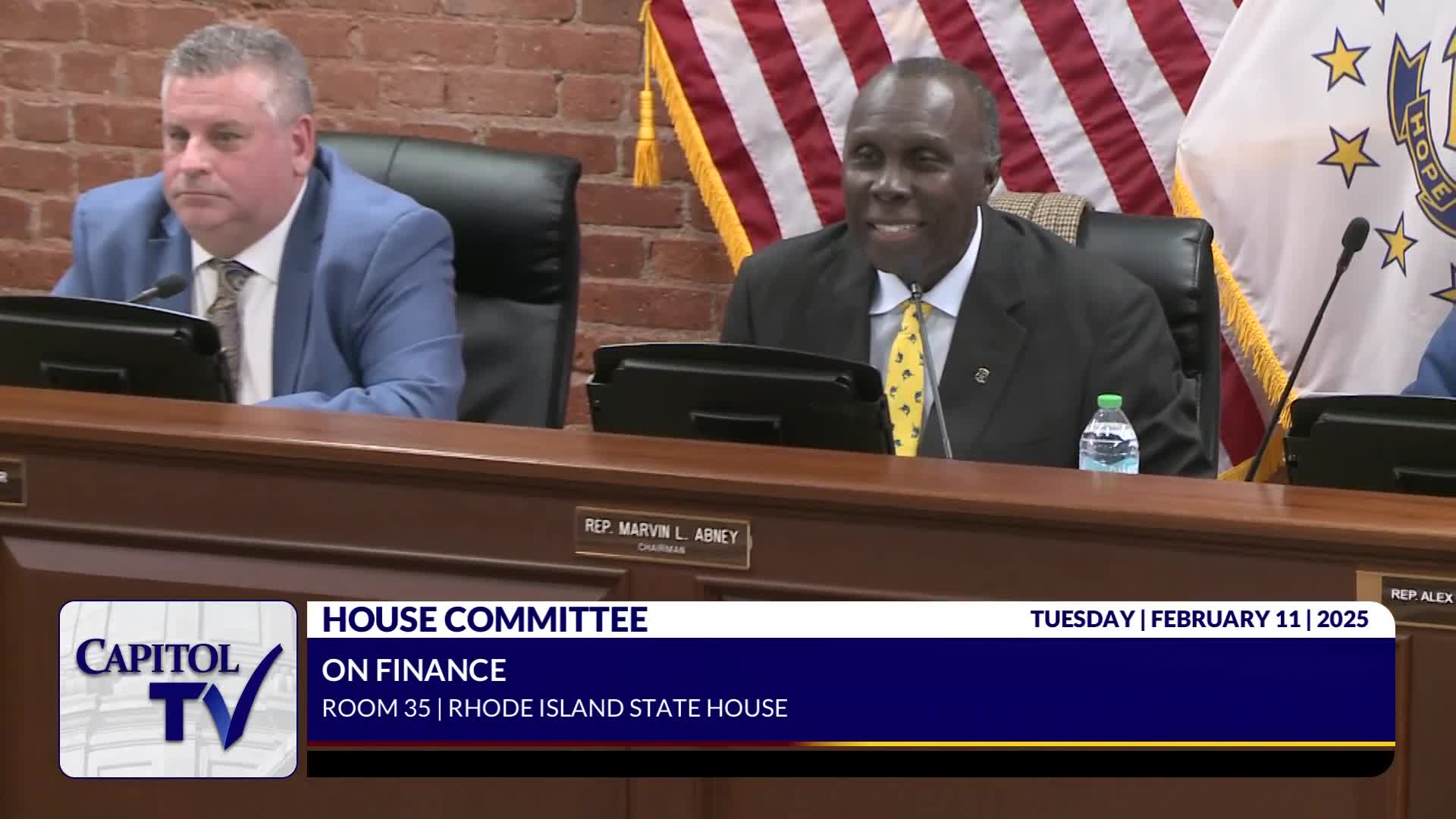
The House Committee on Finance heard presentations on proposed increases in debt authorization for two University of Rhode Island projects — a renovated Memorial Student Union and a new combined Health and Counseling Center — and was told the debt service would be paid largely from student fees.
The House Committee on Finance on Wednesday reviewed requests to increase state debt authorizations for two University of Rhode Island projects: a complete renovation and expansion of the Memorial Student Union and a new combined Health and Counseling Center.
Sharon (staff member) told the committee the requests update earlier authorizations and reflect COVID-related delays, design changes and construction-cost escalation. "This is the provision that requires that any debt with the state to have some legislative review," she said as she opened the discussion of Article 4 of the governor's budget.
The university presented the projects and the revised costs. Abby Benson, vice president of administration and finance for the University of Rhode Island, told the committee URI is requesting $126,000,000 for a total renovation and expansion of the Memorial Student Union and $45,600,000 in debt authority for a combined Health and Counseling Center. "We're requesting a hundred and 26,000,000 for a complete renovation and expansion of the student union," Benson said.
University materials and witnesses described the Memorial Student Union project as a full renovation of a building first opened in 1954, with a roughly 9,000-square-foot addition intended to increase event and student-organization space and to bring the building up to current code. The request described $118,000,000 to be financed by revenue bonds and $8,000,000 from university auxiliary funds.
For the health and counseling project, the university said the new 37,100-square-foot facility will combine services now in separate buildings to address increased demand and to reduce duplicated administrative costs. The university presented the combined project's financing as $33,600,000 in revenue bonds and $12,000,000 from university funds.
Committee staff estimated the added debt service for the counseling and health facility would total about $2,600,000 annually and said that would be covered by health-service fees, an increase "estimated to increase by $215 annually" per student. For the Memorial Student Union, staff said total debt service was not expected to exceed the figure presented by the university and that most debt service would be supported by student fees with a small portion coming from retail leases. Benson told the committee estimated fee impacts of the union project at about $685 per year for undergraduates and $465 per year for graduate students, and said the health-service fee would be a roughly $215 annual increase per student.
Committee members asked about escalation, contingencies and procurement approaches. Benson said escalation and contingency increases reflect recent construction-market changes and longer timelines; she also said the delivery method (design-bid-build versus an alternative) had not been selected. No formal committee vote was recorded in the transcript for either request.
Why this matters: both projects would be financed largely through auxiliary revenues and student fees, which would increase per-student costs once bonds are issued. The committee's review is part of the Public Debt Management Act process that requires legislative review for state-related borrowing.
The committee did not take a recorded vote on the authorization requests during the segment in the provided transcript; presenters answered members' questions and provided cost and schedule detail. The university said the Memorial Student Union project schedule now targets a later opening (previously 2026, moved to 2029) and attributed part of the cost increase to regional post‑COVID construction-price escalation and an anticipated project labor agreement.
Ending: Committee discussion moved on after questioning university and administration witnesses. The transcript records no formal action taken on the debt-authority requests during the portion provided.