Get Full Government Meeting Transcripts, Videos, & Alerts Forever!
Get email alerts on the Higher Education Lsu topic
No spam. Unsubscribe anytime.
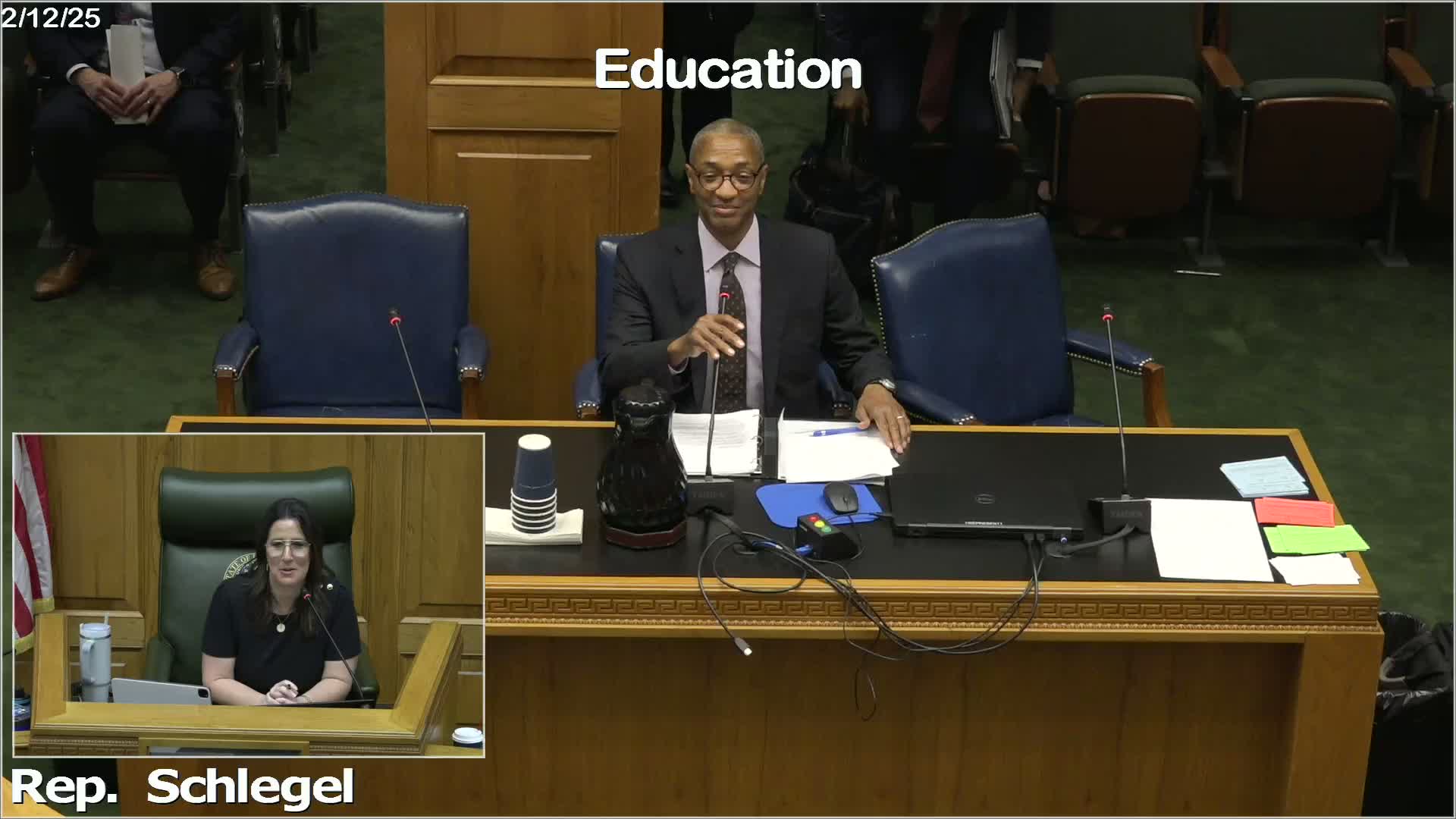
LSU president reports record enrollments, rising research and retention; lawmakers press on out‑of‑state recruitment, scholarships and DEI/Title IX reporting
Summary
LSU President William F. Tate told the House Education Committee on Feb. 12 that the LSU system set enrollment and research records and that most in‑state graduates remain in Louisiana, while lawmakers pressed the university for more detail on out‑of‑state scholarships, deferred maintenance and recent DEI/Title IX reviews.
President William F. Tate and LSU senior staff updated the House Education Committee on Feb. 12 about enrollment, strategic priorities (a ‘‘Pentagon’’ of research focus areas), Title IX operations and the system’s ongoing reviews of diversity‑related programs.
"We now have over 66,700 students across all our campuses," Tate told the committee, reporting record enrollments at multiple LSU campuses and a flagship freshman class he described as ‘‘the most accomplished class in LSU history.’’ He said the flagship (A&M campus) had a record‑setting first‑year class of about 7,900 students.
Danny Barrow, LSU vice president for enrollment and student success, credited targeted recruitment and improved campus visit experiences for reducing the net out‑migration of top Louisiana students and increasing applications. Barrow said LSU had reduced notification times for admission packages from more than 100 days to about 60 days and that further reductions were a priority.
Tate and Barrow said the system is retaining a high share of Louisiana graduates: 65% of Louisiana residents who graduate from LSU remain in the state after graduation, with higher retention rates outside the flagship campus. They also highlighted research growth: the university reported a historic high of about $488 million in research activity for the prior year and a continuing increase in patents and economic impact.
Lawmakers pressed university officials about scholarship and discount practices for out‑of‑state and international students. Representative Trevor Owens and Representative Jay Owens referenced an RFI (request for information) reported to the committee showing approximately $80,000,000 in scholarships and fee waivers to out‑of‑state students and about $16,000,000 to foreign nationals in the most recent year; President Tate explained the university’s financial modeling shows many out‑of‑state awards still yield net revenue that can subsidize other institutional priorities. Danny Barrow and Tate said donor‑funded scholarships and targeted auxiliary awards are being used to compete for top applicants.
Board of Supervisors actions and internal reviews: Tate and other witnesses discussed a Board of Supervisors resolution from Oct. 2024 directing a comprehensive review of campus programs where classifications are maintained on bases such as race, religion or national origin. Tate said the university has provided an initial report to satisfy earlier legislative inquiries and that a broader, board‑requested comprehensive review is in progress, with preliminary materials scheduled to be provided to the board at its next meeting; Tate said the institution will share that material publicly.
Title IX and campus safety: Todd Manuel, vice president for the Division of Engagement, Civil Rights and Title IX, described the office’s staffing and support work and provided statistics for a reporting period (Oct. 1, 2023 to Sept. 30, 2024): the main campus Title IX office received 250 reports in that period, engaged students with case‑management and supportive measures, and recorded 13 formal complaints; the office said one complaint resulted in a full investigation and finding of fault, two matters were resolved through informal agreements that resulted in multi‑year suspensions, and another resulted in probation. Manuel detailed supportive measures provided (safety, well‑being, educational and academic supports) and said LSU has about 56 confidential advisors on campus (above the legal requirement of one per 1,500 students).
Research security and export controls: Committee members asked about research security and potential risks associated with foreign‑national faculty and collaborations. President Tate described regular federal engagement — including briefings from intelligence and federal partners — and said the university is building capacity to manage research security risks. Sean Courtney (associate vice president for research compliance) and Robert Twilley (vice president for research and economic development) explained the recent creation and staffing of a research‑compliance/security function to centralize oversight, export‑control compliance and protection of intellectual property.
Facilities and finances: Lawmakers asked about deferred maintenance (A&M campus figure cited at about $650,000,000) and capital priorities, and Tate listed several planned and fundraised projects including advanced manufacturing/construction engineering facilities and biomedical/health‑science initiatives.
Tate and staff invited continued legislative engagement and said they would provide the board’s preliminary report and other requested materials to the committee. No formal committee vote occurred during the hearing.
Ending: Committee members thanked LSU leadership for the update and requested follow‑up materials, including the board‑focused DEI/ program review and more detailed scholarship and tuition‑discount accounting.