Get Full Government Meeting Transcripts, Videos, & Alerts Forever!
Get email alerts on the Governance And Public Access topic
No spam. Unsubscribe anytime.
Speakers urge immediate return of virtual testimony and oppose 'Student Outcomes Focused Governance' plan
Summary
At a Pittsburgh Public Schools public hearing Jan. 27, dozens of residents pressed the board to reinstate remote public testimony now and to delay or end a contract implementing Student Outcomes Focused Governance (SOFG), arguing the change reduces board accountability and limits public input.
At Monday’s Pittsburgh Public Schools public hearing, residents and staff urged the board to immediately restore a virtual option for public testimony and to halt adoption of a governance model they said concentrates power in the superintendent.
Speakers said the district removed remote testimony six months ago and that officials should reinstate it while any policy changes are debated. They also criticized a district contract with the Council of Great City Schools to implement Student Outcomes Focused Governance (SOFG), saying the model narrows what board members may discuss and shifts routine responsibilities to the superintendent.
Public testimony matters because it affects who can participate in board oversight and how quickly families and staff can learn about changes that affect students. Several speakers tied the access issue to broader concerns about transparency, committee removals and an imminent vote on athletics eligibility changes.
Emily Sawyer, a Pittsburgh parent and substitute teacher, urged the board to “pass a resolution to terminate that contract with the Council of Great City Schools. Period.” She and other speakers said SOFG’s focus on a narrow set of metrics—such as aggregate third-grade and Keystone exam scores—can obscure outcomes for disaggregated groups.
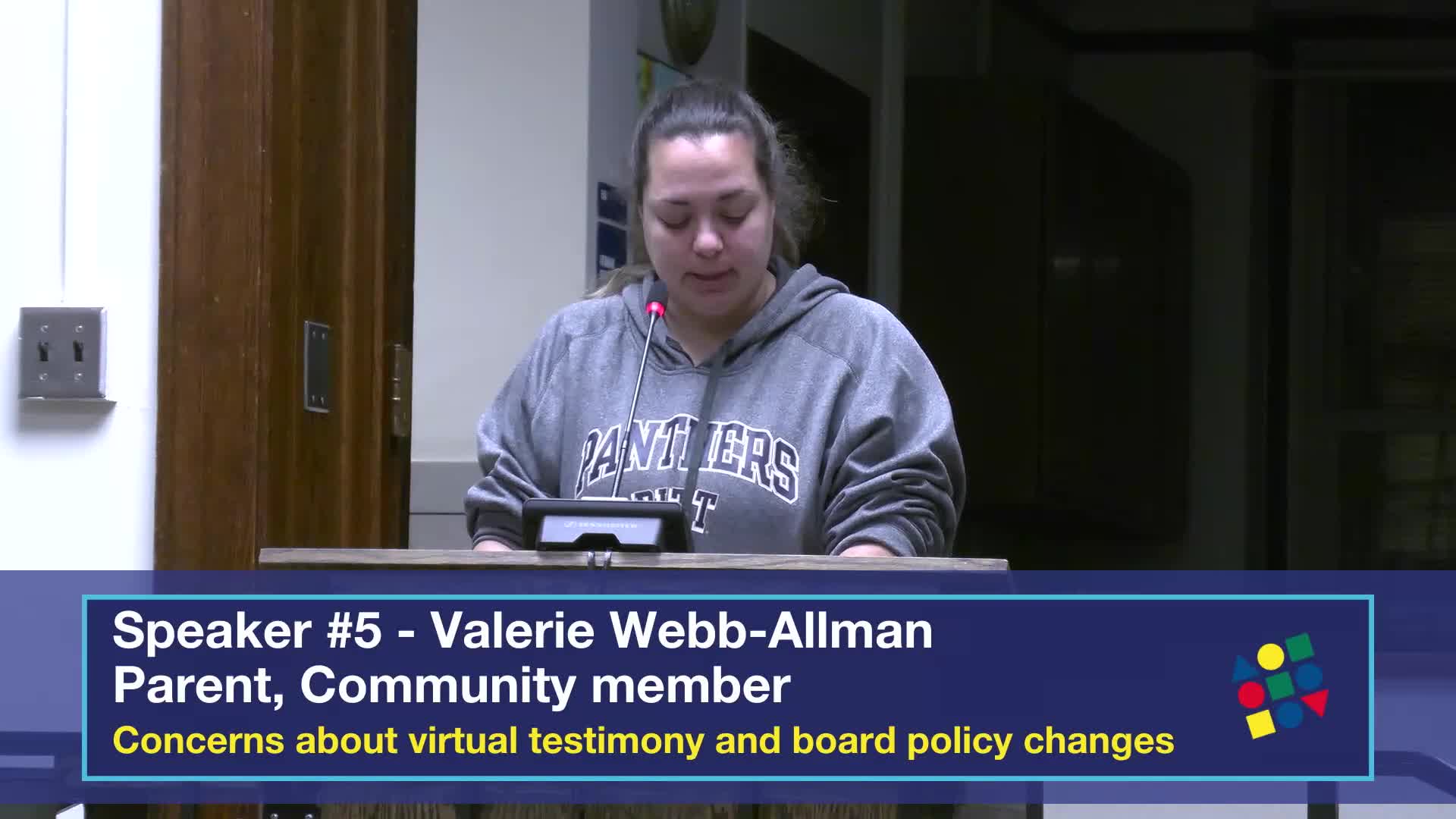
Valerie Webb Allman, who identified herself as a stakeholder, said SOFG “has no actual evidence that it results in better outcomes for students.” She argued the model will require expensive training, limit the board’s ability to consider fiscal impacts later and “directly limits the power of the board and its ability to address concerns promptly.”
Several speakers asked the board to restore remote testimony immediately rather than waiting for a policy vote. Michael Cummins, a parent and organizer of an alternative facilities proposal, said, “let’s stop doing things backwards and half assed, and let’s do it the right way every time.”
Speakers also raised a separate but related timing concern: Pam Harbin warned the board that it will vote on a proposed change to policy 119 (athletics and extracurricular activities) this week that would go into effect immediately and could make some students ineligible midsemester. “How many students won't be able to play sports this semester?” she asked, urging board members to question the timing.
Board staff acknowledged that district leadership will return to the policy workshop and public discussions; meeting organizers closed the hearing by reminding the public of the next board meeting.
Less-critical details: multiple speakers praised specific directors for listening and urged a quick reinstatement of remote testimony in the interim while a formal policy is developed.