Get Full Government Meeting Transcripts, Videos, & Alerts Forever!
Get email alerts on the Personnel Policy topic
No spam. Unsubscribe anytime.
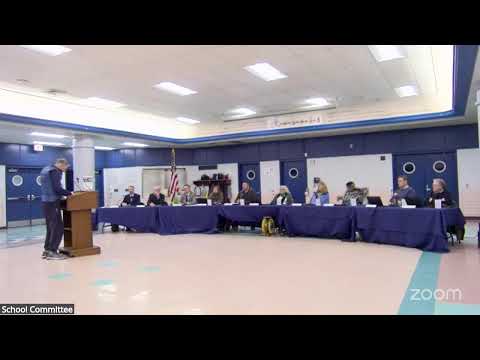
School committee holds first read on new employee ‘arrest disclosure’ policy requiring prompt reporting
Summary
The committee conducted a first read of proposed Policy 5435, which would require employees to disclose arrests, indictments or convictions within five calendar days; members asked about retroactivity, disciplinary consequences and collective-bargaining implications.
The South Kingstown School Committee conducted a first read of proposed Policy 5435, an “arrest disclosure” policy that would require employees to report arrests, indictments, convictions, no-contest pleas or other adjudications involving listed offenses within five calendar days.
Policy authors said the proposal would create a formal reporting mechanism for the district and help the district meet existing educator-certification reporting obligations in state regulations. The draft policy was described by staff as substantially similar to a policy the East Greenwich district has on the books.
Committee members asked how the policy would operate in practice. Questions included whether the requirement would be retroactive (staff said the subcommittee had not discussed going back and that the administration would research that), whether an arrest without conviction could trigger discipline (the policy as written focuses on disclosure and refers to the educator code of responsibility for any subsequent disciplinary review), and whether implementing routine background checks (BCI checks) for current employees would be subject to collective bargaining (staff said that is likely to be a collective-bargaining issue).
Members also asked whether the policy would cover conduct occurring off school grounds or outside school time; staff said the list of offenses in the policy does not limit geographic or temporal scope and that, as drafted, it would require disclosure regardless of where or when an alleged offense occurred.
The policy was presented as a first read; staff encouraged members of employee bargaining units who had questions to attend the second read and comment. No vote was taken on the policy at the meeting.