Get Full Government Meeting Transcripts, Videos, & Alerts Forever!
Get email alerts on the Occupancy Tax Infrastructure Sewer Johnsburg topic
No spam. Unsubscribe anytime.
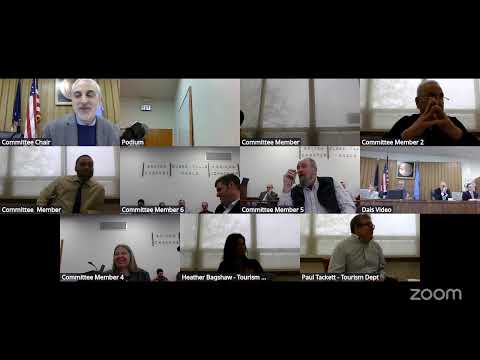
Warren County committee weighs $2.5 million occupancy-tax supplement for Johnsburg sewer project
Summary
The Warren County Occupancy Tax Committee heard public comment and debate on a request to provide $2.5 million from occupancy-tax revenues to close a funding gap for a Town of Johnsburg municipal wastewater project that officials say is necessary to support tourism-related development in North Creek.
The Warren County Occupancy Tax Committee on Feb. 10 considered a request to award the Town of Johnsburg $2,500,000 in municipal supplement funding from occupancy-tax revenue to close a shortfall for a proposed municipal wastewater system in North Creek.
Supporters told the committee the sewer project is tied to substantial private investment and will enable hotels and other tourist-serving development. Jim Williams, a Town of Johnsburg board member, said the town needs the money to award existing construction bids and avoid rebidding at higher cost. “We’re looking for an award of $2,500,000. That allows us to close our gap and allows us to proceed with the bids that we have,” Williams said.
The funding request would be paid from occupancy-tax (Octax) revenues at $250,000 per year over 10 years, according to the resolution request presented to the committee. Supporters said the project has broader county benefits: an Economic Development Corporation representative told the committee “there is nothing in the county that would develop more future potential than this,” citing visitor counts and potential year‑round growth.
Officials and residents described specific elements tying the sewer project to tourism. Williams and other commenters said the Olympic Regional Development Authority (ORDA) and a lodge operator have made major investments tied to the ability to connect to a municipal wastewater system; one speaker said ORDA-related development has involved tens of millions in private investment. Speakers also said the town already has $7,500,000 appropriated for the project and that the U.S. Department of Agriculture (USDA) — the project’s primary lender — will not allow bids to be awarded until the full $10,100,000 financing package is accounted for.
County staff and supervisors pressed for safeguards and more analysis. Rob Lynch of the treasurer’s office requested a financial analysis estimating how much additional occupancy tax revenue the new treatment plant would generate. “We would like to see some sort of financial analysis done as far as how much additional Octax will be generated by installing this new wastewater treatment plant,” Lynch said.
Several supervisors and members of the public raised procedural and policy concerns: some said occupancy-tax revenues historically have been used for marketing and event promotion and warned that using the fund for multi‑million‑dollar capital projects could open the “floodgates” for other infrastructure requests. Supervisor John Stroud, town supervisor of Queensbury, said he was sympathetic to Johnsburg but worried Octax revenue could be diverted from tourism marketing. Other supervisors urged structuring any award as a loan or placing funds in a reserve until costs and matches are verified.
Legal and administrative constraints were discussed. Committee members noted a state controller review threshold tied to the cost per equivalent dwelling unit (EDU) — speakers quoted an EDU estimate of about $654 and said a review threshold is roughly $660 per EDU, which could trigger additional state scrutiny and delay. County counsel advised the committee that the county’s occupancy-tax local law permits using Octax revenue for capital projects when the project’s primary benefit is to increase, enhance, or promote tourism; she also confirmed the committee could seek attorney-client advice in executive session under Public Officers Law §108(3).
The committee did not record a final vote on the $2.5 million request. A motion was made to go into an executive session to receive legal advice; Supervisor Patchett moved the executive-session motion and Supervisor Merlino seconded it. The transcript ends after the motion; no committee action on the resolution was recorded in the public portion of the meeting.
Next steps identified in the meeting: staff were asked to share municipal‑funding guidance and eligibility language for Octax capital awards, the treasurer’s office was asked to prepare or coordinate an ROI/financial analysis of projected Octax receipts tied to the project, and committee members said the item must come before the full county board for a final decision.
For now, the committee left the request unresolved and moved to seek legal advice and additional fiscal analysis before making a recommendation to the full Warren County board.