Get Full Government Meeting Transcripts, Videos, & Alerts Forever!
Get email alerts on the Budget topic
No spam. Unsubscribe anytime.
Superintendent proposes $670 million FY2026 operating budget; seeks $26.2 million additional local funding, flags $15 million in position reductions
Summary
Superintendent Dr. Bolsom proposed a $670 million FY2026 operating budget and asked Harford County for $26.2 million in additional local funding; the plan combines a reduced salary package, proposed position reductions and use of fund balance to close a significant shortfall.
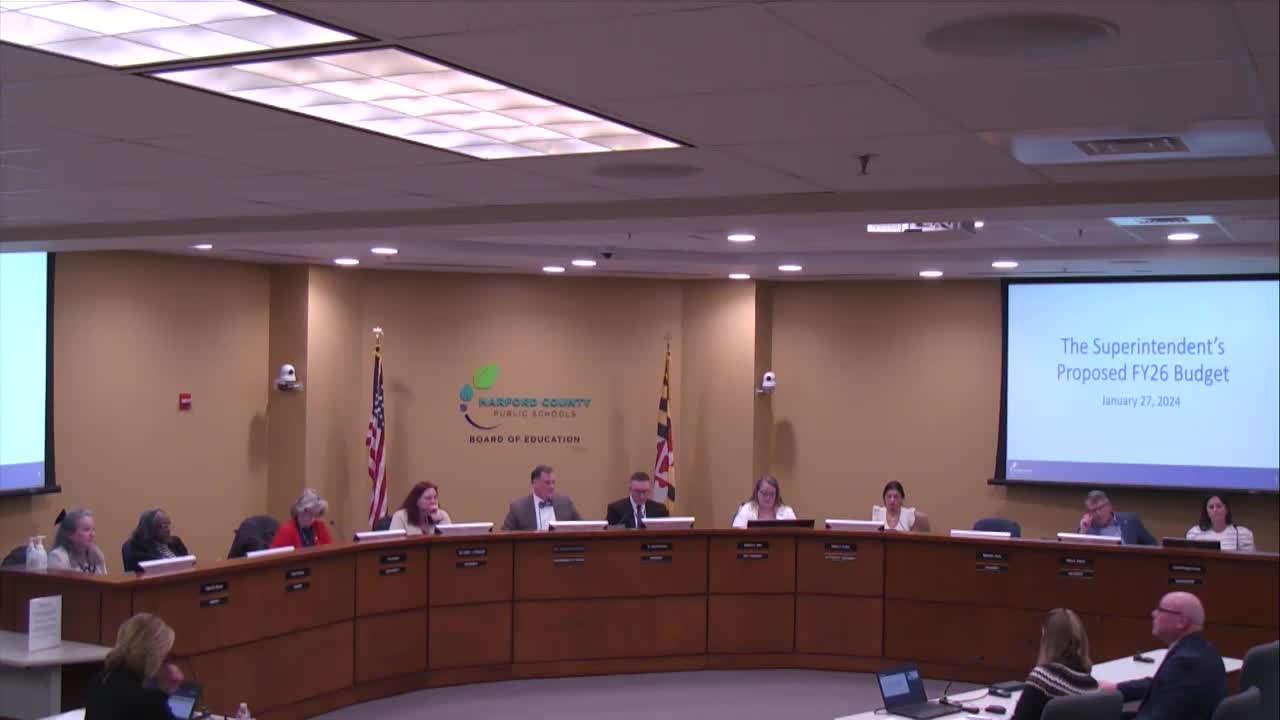
On Jan. 27 Superintendent Dr. Bolsom presented his proposed FY2026 operating budget to the Harford County Board of Education, proposing a $670 million unrestricted operating budget and requesting an additional $26.2 million in local funding to balance FY2026 spending.
Key numbers and the trade‑offs
- Total proposed operating budget (unrestricted): $670,000,000 (≈ +2.6% vs. FY2025). - Local request to Harford County: $26,200,000 (≈ +8.2% vs. FY2025 local funding). - Estimated state revenue (based on the governor’s budget): +$10,700,000 (3.6%), subject to legislative changes. - Proposed use of fund balance: $10,000,000 (administration seeks to reduce reliance on fund balance compared with prior years). - Salary/wage package included in proposal: roughly $13,000,000 (lower than earlier board parameters; board earlier discussed a larger package). - Proposed position reductions: administration proposed approximately $15,000,000 in position‑related savings (roughly 150 net positions by the department’s estimate) to reduce the local funding request and hold the district to an achievable ask.
Administration warned the board the trade‑offs are consequential. “I can’t balance this budget in a way that doesn’t impact student achievement,” Dr. Bolsom told the board, adding the proposal is intended to make the budget more sustainable and avoid a late, disruptive round of cuts later in the fiscal year.
Major drivers called out in the presentation
- Employee benefits and health insurance: Human‑resource and benefits costs are increasing; the administration projected a ~$6,000,000 increase in active employee health insurance costs for FY2026. - Electricity/energy: projected increase of roughly $3,000,000 (about a 33% rise versus FY2025 estimates). - Pension costs: the normal employer pension increase for teacher pensions was projected at approximately $1,700,000; the governor’s budget proposes shifts that could transfer additional pension costs to local governments and school systems, which would create an additional multi‑million dollar exposure. - Contracted transportation: an estimated $1,000,000 increase is included in the proposal to reflect increased contract costs tied to wage changes. - AP exam fees: the district budgeted roughly $500,000 for Advanced Placement testing fees (a requirement in the state blueprint). - Pre‑K expansion: nine FTEs and approximately $615,000 are proposed to carry forward a pre‑K expansion grant into the operating budget as seats convert to ongoing funding.
Position reductions and timing
Eric Clark, director of budget, and Deborah Judd, assistant superintendent for business services, said the $15,000,000 in staff‑related savings is an estimate intended to be achieved primarily through attrition and vacancy management, not immediate lay‑offs. Clark said the $15.4 million figure is an early estimate that used an average cost per position; staffing details will be developed so the board can see the distribution of cuts by function and school level before final action. Dr. Bolsom said the administration wants to present reductions earlier in the spring so the district avoids disruptive late‑June cuts that would coincide with hiring season.
Questions from the board and next steps
Board members pressed administration on the likely class‑size effects, the mix of positions targeted for reduction and whether fees (sports, transportation, magnet) should be considered. Administrators said fees provide comparatively small revenue and carry steep administrative costs and equity trade‑offs; the district is not proposing major new fees at this time, but it seeks to increase facility‑use fees closer to market levels.
The superintendent proposed a mix of three revenue and reduction strategies: a reduced salary package, $15,000,000 in position reductions primarily achieved through attrition and vacancy management, and a $10,000,000 use of fund balance. With that mix, the administration said its local request would be approximately $26.2 million. If state legislative action reduces anticipated state support (for example, if teacher collaborative time funding is paused), the district would need to identify deeper cuts, additional revenue or greater use of fund balance.
Public engagement and timeline
Dr. Bolsom and his budget team said they received more than 4,400 responses to the district’s public budget survey and would hold a public budget input session on Feb. 5. The board scheduled a vote on the superintendent’s proposed budget for Feb. 10 so the BOE can transmit a proposed budget to the county executive within the county’s timetable.
Ending note
Administrators said they will return to the board with more detailed staffing breakouts, updated fund‑balance projections and revised state revenue estimates after the Maryland General Assembly acts on the governor’s proposal. The board will continue its deliberations in February with opportunities for public comment and additional review.