Get Full Government Meeting Transcripts, Videos, & Alerts Forever!
Get email alerts on the School Dress Code topic
No spam. Unsubscribe anytime.
Harford County board hears mixed feedback on dress-code enforcement; some members suggest studying uniforms
Summary
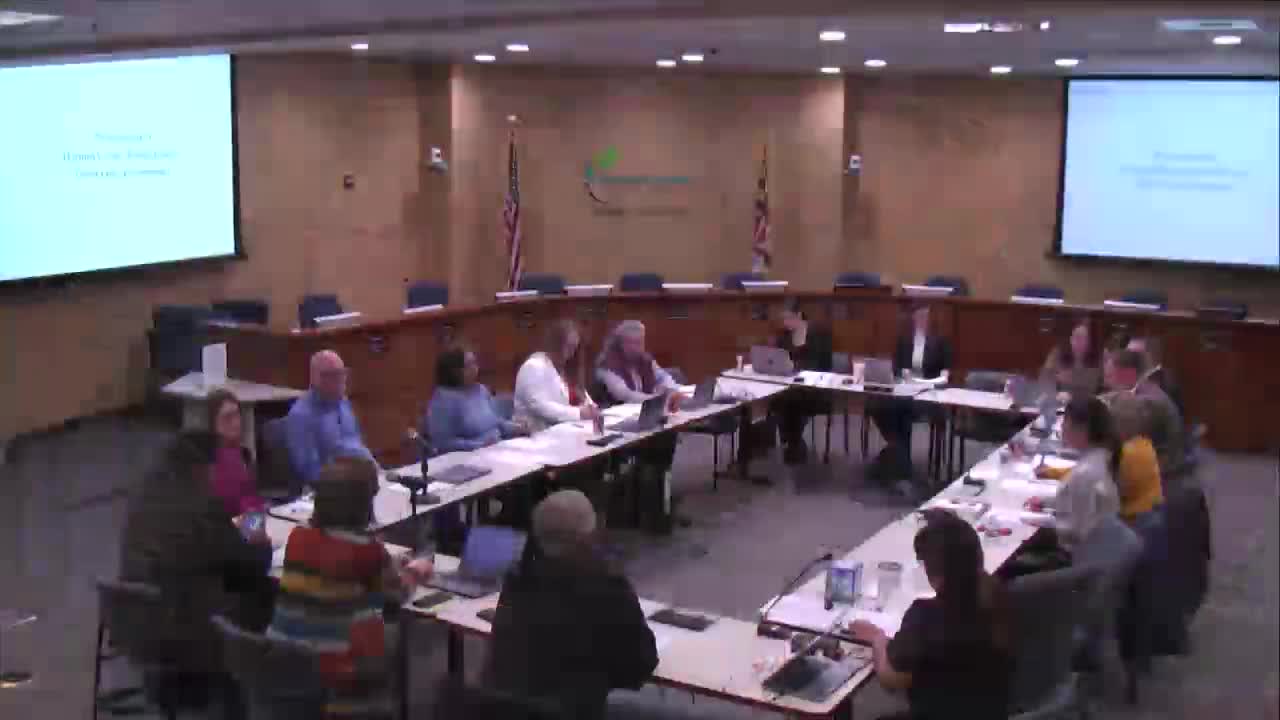
Dr. Stanton, a board member, told the Harford County Board of Education at its Jan. 13 work session that administrators, teachers and some students report dress-code rules are generally followed but enforcement appears inconsistent across schools.
Dr. Stanton, a board member, told the Harford County Board of Education at its Jan. 13 work session that administrators, teachers and some students report dress-code rules are generally followed but enforcement appears inconsistent across schools. “What I'm hearing from most people who dress code is being enforced. When there's an infraction, students are being told to correct the problem or asked to correct the problem and generally they comply,” Dr. Stanton said.
The discussion centered on hats/hoods, midriff exposure and perceived targeting. Dr. Stanton said hats and hoods are regularly addressed and most students comply, though she described at least one case in which a parent insisted a child be allowed to keep wearing a hat. She reported students who feel targeted for midriff enforcement sometimes think judgments are based on body type: “One of the students' main complaints was that she was being told, maybe because she was curvier, that she couldn't wear [something] but then other girls who were thinner were being allowed to wear it without being checked,” Dr. Stanton said.
A student who identified herself as Sasha said she hears enforcement vary by classroom and school, and that stricter enforcement can pull teachers away from instruction. “If they pause that to have what could be a 2‑second interaction…could turn into a 15‑minute thing if the student says I don't agree and resists,” Sasha said, adding that students are sensitive to perceived loss of self‑expression.
Superintendent Bolsom (Superintendent, Harford County Public Schools) told the board she has not yet proposed a formal districtwide change and recommended a deliberate, multi‑step study if the board wants to explore uniforms. She listed steps she would expect the district to take before recommending a policy change: focus groups, surveys, literature review and comparison with other districts. She said she is not aware of research showing that traditional dress-code enforcement alone improves student achievement and noted investigative and Title IX-related burdens on staff when adults interact with students about attire.
Board members offered a range of views. Carol Bruce (Board member) reported local officials in Aberdeen volunteered to pilot a uniform program at selected elementary and middle schools and said principals had noted out‑of‑school supportive needs (for example, clothing or diapers) among some families. Other members said uniforms may improve consistency but warned about costs, branding/inequality effects and the possibility of significant pushback from students and families.
Several board members suggested alternatives: better communication about existing dress-code expectations, targeted enforcement focused on safety (for example, obscuring student identification on cameras), and studies of potential impacts before any policy change. Multiple members also urged the board and administration to coordinate any district action with input from students, parents and school staff.
On a related point, the board discussed cell-phone enforcement as an implementation/consistency problem: members said stricter, simple rules (for example, “no cell phones, period”) had shown early gains in classroom focus but that enforcement often relaxed over the year. Board members and student speakers recommended clearer, simpler rules and regular communication to families rather than immediate new policy mandates.
The board did not vote on any dress-code or uniform policy at the session; Superintendent Bolsom said any formal recommendation to change policy would return after exploratory work and community engagement.