Get Full Government Meeting Transcripts, Videos, & Alerts Forever!
Get email alerts on the Doj Nomination Blanche topic
No spam. Unsubscribe anytime.
Senate Judiciary Presses Todd Blanche on Conflicts, DOJ Independence
Summary
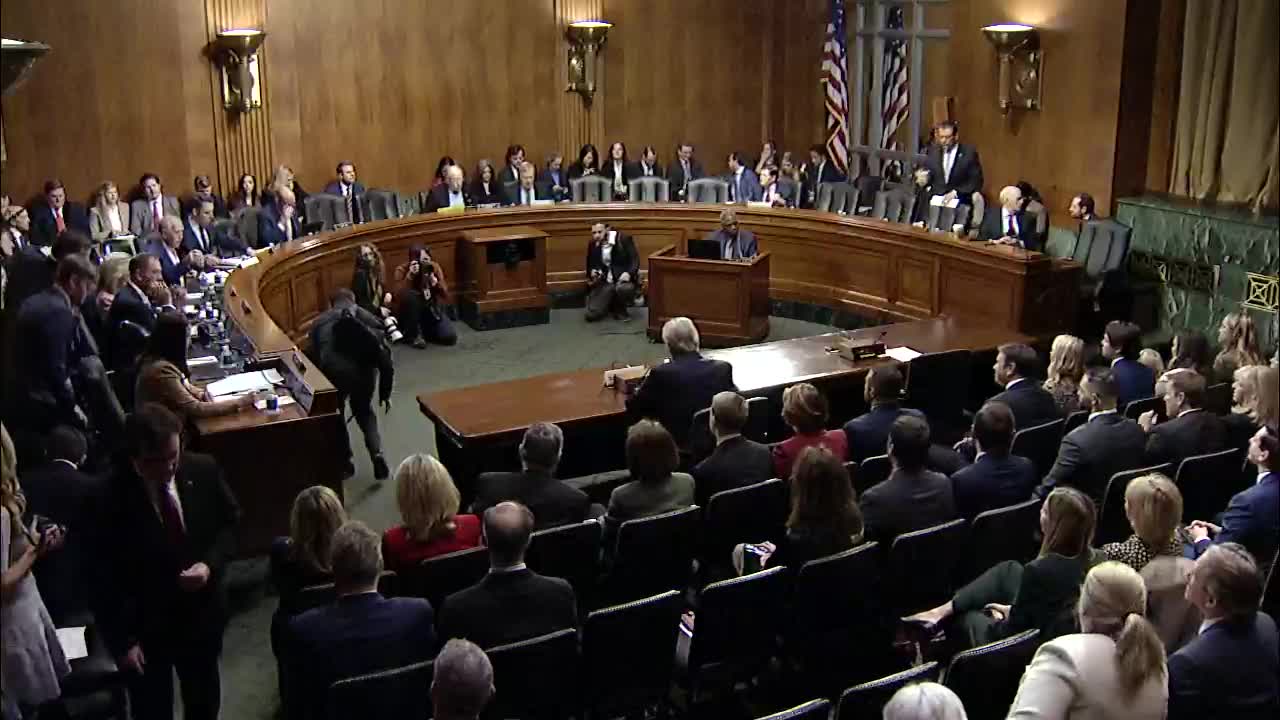
At a Senate Judiciary Committee hearing, senators pressed Todd Blanche, President Trump's nominee for deputy attorney general, about potential conflicts stemming from his prior role as the former president's private lawyer and broader concerns about politicization at the Department of Justice and the FBI.
Todd Blanche, President Trump's nominee to be deputy attorney general, told the Senate Judiciary Committee that he would “follow the law” and that “politics will play no role,” while senators repeatedly pressed him about conflicts of interest tied to his prior work as the president’s private lawyer and about recent personnel moves at the Department of Justice that critics say risk politicizing the agency.
Why it matters: The deputy attorney general would be the Justice Department’s second-in-command and would oversee components including the FBI, the criminal division and national security teams. Senators from both parties raised questions about how Blanche would handle requests from the White House, whether he would recuse himself from matters involving his former client and how he would safeguard career prosecutors and investigators.
Republican Chairman Charles Grassley opened the hearing by praising both nominees for public service, and ranking member Senator Dick Durbin and other Democrats pushed Blanche for commitments that he would resist political pressure. Durbin asked directly whether Blanche would act to protect line prosecutors and investigators from political interference, saying, “If they're out to settle political score, I'm not voting for them.” Blanche replied several times that he would follow the law and refuse political influence: “Politics will play no role. Full stop. Period.”
Several senators focused on recent personnel and record requests that have alarmed career Justice Department staff and agents. Durbin described a request for lists of FBI personnel who worked on the Jan. 6 investigations and recalled briefings from FBI agent representatives who said disclosing identities could endanger agents and their families. Multiple senators cited the figure of about 5,000 agents involved in the investigation and asked whether requiring the agents to identify themselves publicly would chill law-enforcement work.
Blanche, who recounted his career as a federal prosecutor and later a private defense lawyer, told senators he had defended clients against high-profile prosecutions and described the volume of discovery he and defense teams received in recent federal cases: “In just the two federal cases by Jack Smith, there was more than 11 terabytes of discovery dropped on us,” he said, arguing the pace of filings and scheduling created practical burdens for defense teams.
Democrats and Republicans both pressed Blanche on how he would handle recusals and conflicts. Senator Richard Blumenthal and others asked whether he would recuse himself from any review or oversight of matters in which he had represented the former president, including the Jan. 6 prosecutions and the Mar-a-Lago matter. Blanche said he would follow department rules on recusals and ethics and repeatedly deferred to career ethics officials on particular recusal determinations.
Other lines of questioning covered inspector general removals, alleged reassignments of career prosecutors across divisions, hiring freezes and whether the department would continue to pursue matters free of political considerations. Blanche told senators he supported Attorney General Pam Bondi’s early memos directing reviews to guard against outside influence but declined to make commitments about personnel decisions that would be taken after consultation with career leaders.
Context and supporting details: Blanche has earned public statements of support from more than 100 former colleagues at the U.S. Attorney’s Office for the Southern District of New York, which senators referenced in the hearing. He said he put himself through law school at night while working as a paralegal and later clerked for federal judges; he emphasized his long experience on both the prosecution and defense sides.
The committee did not vote at the hearing. Senators submitted written questions and sought additional records. Blanche and committee members repeatedly returned to a set of core themes: whether DOJ will enforce the law free of partisan influence, how the department will protect the safety and careers of line prosecutors and agents, and whether nominees with past client relationships can oversee or review matters tied to those former clients.
The hearing closed with the committee reserving time for written follow-up; Blanche’s answers left some senators seeking clearer recusal commitments and more specific pledges on preserving evidence and safeguarding career staff.