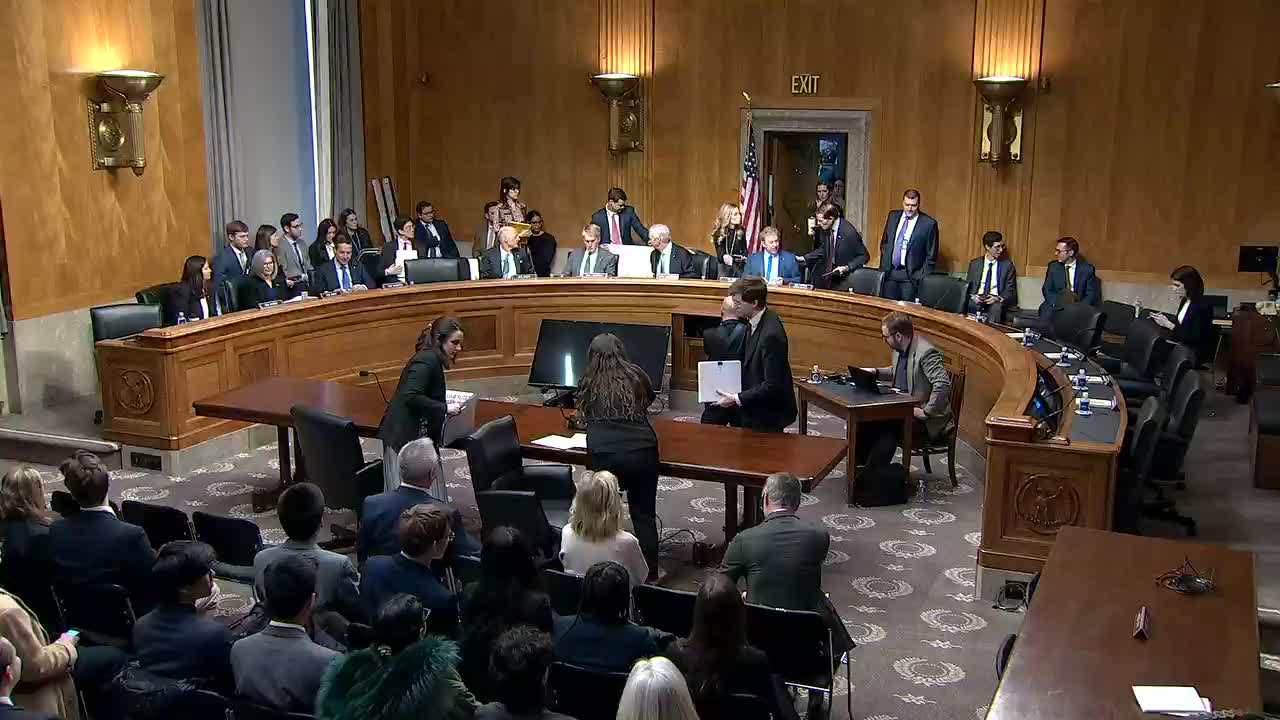
Senate Homeland Security panel debates USAID spending and transparency after administration pauses aid
Get AI-powered insights, summaries, and transcripts
SubscribeSummary
Witnesses and senators clashed over the scope and oversight of U.S. foreign assistance at the Senate Homeland Security and Governmental Affairs Committee hearing on Feb. 5, 2025, as witnesses alleged misuse of funds and senators warned of harm from abrupt pauses and inspector-general removals.
The Senate Homeland Security and Governmental Affairs Committee on Feb. 5, 2025, heard competing accounts about U.S. foreign assistance as the administration paused major USAID programs and sought an audit of the agency.
Chairman Paul opened the hearing by calling for scrutiny of what he described as “reckless and wasteful spending” overseas and said the United States “should not be the sugar daddy for the entire world,” citing the national debt and a series of examples he said illustrated waste. He framed the hearing as part of an audit and reexamination of USAID spending.
The hearing drew sharp pushback from the committee’s Democrats, led by Ranking Member Peters, who said the session risked becoming a “pep rally” for dismantling agencies and warned that the administration’s actions could be unlawful and harmful to Americans and global partners. Peters and other Democrats repeatedly called attention to inspector-general activity and to potential consequences for humanitarian programs and U.S. farmers.
Why this matters: Senators and witnesses offered contrasting views on whether the pause and audit represent needed accountability or a disruptive, potentially illegal dismantling of a congressionally established agency. The dispute touches on core oversight duties of Congress, the role of inspectors general, and immediate effects on food assistance and other humanitarian programs.
Witness testimony and evidence
Michael Shellenberger, introduced as an author and journalist, told the committee that USAID has funded programs he characterized as information-control operations and said USAID-funded contractors had advocated censorship and prebunking. Shellenberger alleged that USAID money had flowed to media projects and groups such as EcoHealth Alliance and to journalism organizations that he said eroded independent reporting; he urged Congress to “defund all and any federal programs and contractors that promote or engage in censorship and propaganda.”
Dr. William Ruger, president of the American Institute for Economic Research, told senators that cuts and reforms would not necessarily damage U.S. national security. Ruger argued that U.S. material power — military and economic strength — matters more than so-called soft-power effects of assistance and said aid programs should be prioritized and subjected to cost–benefit analysis.
Democratic senators and witnesses countered that sudden pauses and personnel removals at USAID have real-world costs. Senator Blumenthal cited a report from the agency’s inspector general that, he said, noted a pause in funding had delayed $489 million of food assistance in transit or in storage and had left major portions of the Bureau for Humanitarian Assistance furloughed or on administrative leave. Blumenthal added that USAID purchases support U.S. farmers, and he said halting programs harms those sales and people who rely on them.
Legal and oversight issues
Several senators pressed on the legality of impoundment and removal of oversight officials. Committee members referenced past precedent — including the 1926 Supreme Court decision Myers v. United States and the Impoundment Control Act of 1974 — while acknowledging courts will decide some disputes. Senators on both sides urged more transparency and forensic accounting of awards and subawards; supporters of the pause said the audit is intended to expose misuse of funds, while critics said it has already resulted in a de facto reorganization and a staffing gutting.
Other points raised
- Several Republicans gave specific examples of USAID-funded projects they criticized, including cultural and public‑health projects abroad; the witnesses and members argued about whether such programs advance U.S. interests. - Witnesses and some senators alleged that some USAID-funded contractors had close links to media and information‑control efforts; those are presented in testimony as allegations and calls for investigation. - Democrats warned that removal of inspectors general reduces independent oversight of waste, fraud and abuse and cited recent cases where IG offices produced recoveries and criminal referrals.
Committee business and next steps
Chairman Paul closed by thanking the witnesses and noting that the record would remain open for seven days for statements and questions for the record. The hearing produced no committee vote on foreign‑aid policy; senators signaled they expect additional hearings and oversight requests.
Ending: The committee adjourned after the witnesses’ testimony and questions, leaving the dispute over the pause, the scope of the audit, and the legal limits of executive action to be resolved through further oversight, court challenges, and congressional action.