Get Full Government Meeting Transcripts, Videos, & Alerts Forever!
Get email alerts on the Tribal Funding And Administration Directives topic
No spam. Unsubscribe anytime.
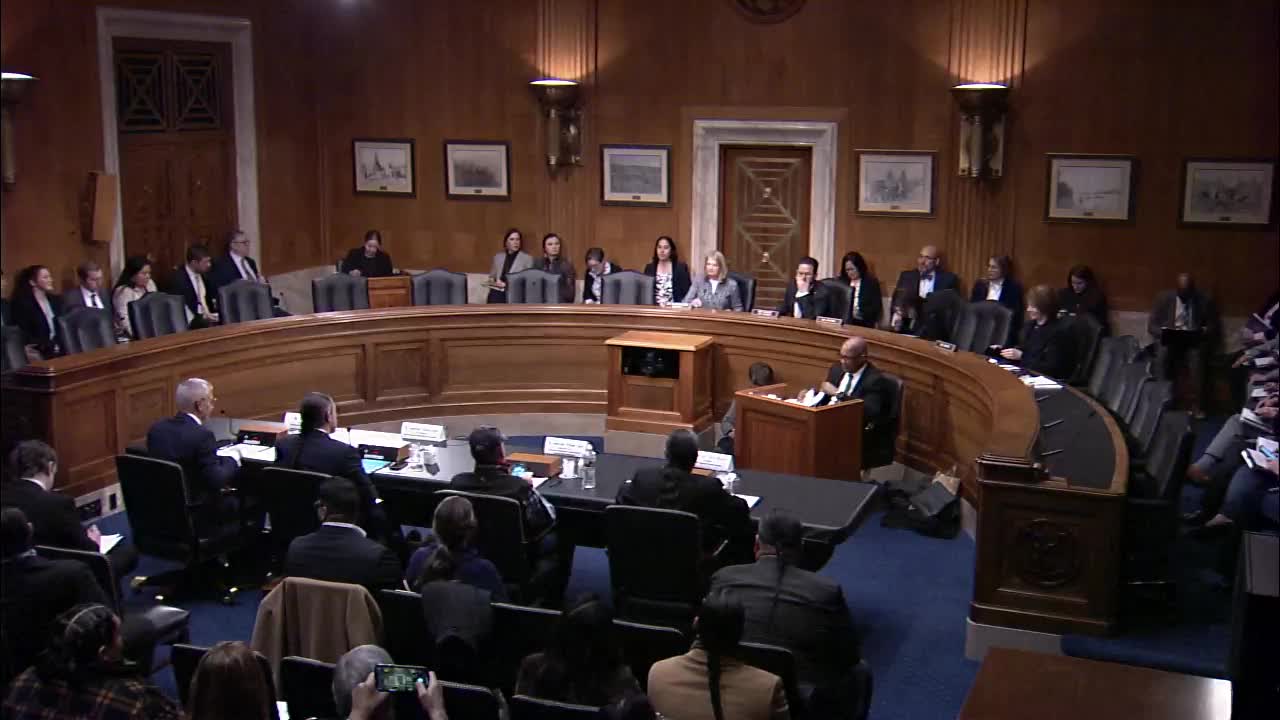
Senate Indian Affairs hearing warns OMB directives risk pausing tribal programs
Summary
Senate Committee on Indian Affairs members and tribal leaders urged the new administration to acknowledge tribal nations’ unique political status and avoid pausing or reclassifying federal funding that tribes rely on, calling for clear OMB guidance and agency secretarial orders to protect trust and treaty obligations.
Chair Lisa Murkowski opened a Senate Committee on Indian Affairs priorities hearing by stressing that the committee “listens first” to tribal leaders and will press the new administration to respect tribal nations’ unique political status.
The committee and witnesses told federal officials at the hearing that recent Office of Management and Budget (OMB) directives and other executive guidance had created confusion and threatened continued delivery of tribal programs. Mark Macarro, president of the National Congress of American Indians, said tribes “ask that Congress and the administration ensure federal funding for tribal programs is not paused, reallocated, reclassified, or deprioritized when implementing any executive order or other administration priority.”
Why it matters: Tribal programs often operate on tight budgets and depend on multi-year grants and agency staffing. Committee leaders said a funding pause or reclassification could immediately disrupt services in health, education and public safety. Vice Chair Brian Schatz urged agencies to treat tribal programs as political, government-to-government obligations, not discretionary programs swept up by broad administrative actions.
Witnesses described specific harms. Mark Macarro and Rodney Butler of the Native American Financial Officers Association recounted reports of tribal recipients unable to access grant draws or system portals. Chief William Smith of the National Indian Health Board warned that OPM and agency workforce actions have “caused confusion and concern” among health professionals serving Indian Country and risk reducing an already short-staffed provider pool.
The committee highlighted early steps taken by the chair to press the administration: a letter urging OMB to explicitly acknowledge tribal political status and direction from some secretaries that tribal programs be treated differently. Witnesses recommended similar directives across departments and a secretary/agency-level order at HHS recognizing tribal political status for Indian health programs.
Committee members asked witnesses to provide specific examples of interrupted grants and of agency staffing gaps through a committee portal so senators can target fixes. The chair closed by emphasizing that restoring both funding flow and staff capacity is necessary: “We can help you get the money released. But if there’s nobody then to help execute this through the programs…we’re no further ahead.”
Ending: Senators and tribal leaders said they will pursue legislative and oversight remedies to protect tribal funding streams and agency staffing levels while continuing committee engagement with the administration.