Get Full Government Meeting Transcripts, Videos, & Alerts Forever!
Get email alerts on the United Nations Ambassador Nomination topic
No spam. Unsubscribe anytime.
Senate Foreign Relations Committee grills Elise Stefanik on UN reform, UNRWA funding, China influence and Iran
Summary
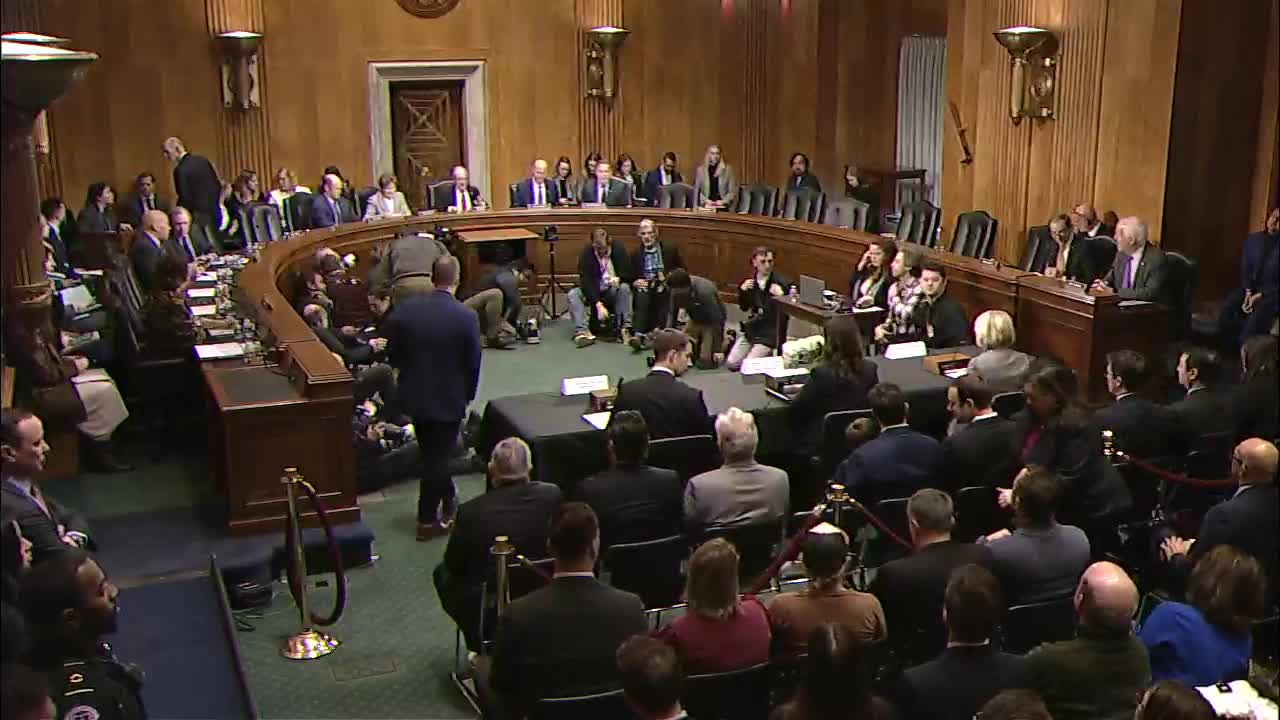
Representative Elise Stefanik appeared at a public hearing of the Senate Foreign Relations Committee to answer questions on her nomination to be U.S. ambassador to the United Nations.
Representative Elise Stefanik appeared at a public hearing of the Senate Foreign Relations Committee to answer questions on her nomination to be U.S. ambassador to the United Nations. Chair Jim Risch opened the session by framing the hearing around what he described as the UN's departure from its founding mission, and numerous senators pressed Stefanik on ways the United States should use its leverage as the largest UN funder.
The hearing brought a wide range of issues into a single confirmation setting: reform and accountability at UN agencies, allegations of antisemitism and anti‑Israel bias, the U.S. share of UN budgets, whether to resume or withhold contributions to specific agencies such as UNRWA and WHO, China’s long‑term personnel strategy inside the UN system, Taiwan’s participation in UN bodies, the prospect of “snapback” sanctions on Iran under U.N. Security Council Resolution 2231, and humanitarian crises in Sudan, Gaza, Ukraine, Haiti, Myanmar and Syria.
Stefanik framed her approach in terms she said matched President Trump’s priorities: “America First, peace through strength,” stewardship of U.S. taxpayer dollars, and a demand for transparency and accountability across UN entities. In her opening remarks, she said the United States is the largest contributor to the UN system and must ensure that contributions “serve the interest of the American people.” She repeated several times that she would press for reform and for U.S. leadership at the UN.
Senators from both parties questioned Stefanik on specific agencies and policies. Chair Jim Risch said the UN has “not lived up to its founding mission,” and emphasized U.S. leverage given that the United States pays roughly 22% of the UN regular budget and about 25% of the peacekeeping budget, figures Risch cited during the hearing. Ranking Member Jeanne Shaheen and others urged Stefanik to weigh the national security benefits of multilateral engagement, noting that UN programs can act as force multipliers — for example, peacekeeping or food assistance — and warning that U.S. disengagement leaves space for adversaries to fill.
UNRWA, UNFPA and WHO
A recurrent line of questioning focused on UNRWA, the UN agency for Palestinian refugees. Senators including Josh Hawley, Ted Cruz, and others pressed Stefanik on longstanding allegations that some UNRWA employees enabled or participated in the October 7 attacks in Israel; Stefanik said she supported the congressional decision to defund UNRWA and told senators she would push to move legitimate humanitarian functions to other organs or trusted nongovernmental organizations. She said, “We should never tolerate any U.S. taxpayer funds going towards terrorism,” and noted she voted in Congress to defund the agency.
Senator Shaheen specifically asked Stefanik to commit to reviewing the UN Population Fund (UNFPA) before the administration makes any policy decision. Stefanik answered that, if confirmed, she would conduct a review of UNFPA and other UN programs to determine whether they meet U.S. priorities for transparency, results and national security.
Several senators raised the World Health Organization. Stefanik expressed support for President Trump’s decision to withdraw the United States from WHO, saying the agency “failed on a global stage in the COVID pandemic,” and repeated her view that the United States must ensure it is not funding bodies that have been “taken over by CCP propaganda.” Other senators cautioned that public‑health leadership remains important and asked her to ensure U.S. capacity to shape global health standards even if the U.S. is not a WHO member.
China influence and UN personnel strategy
Multiple senators from both parties pressed Stefanik on China’s expanding footprint in the UN system — both in votes and in personnel inside UN agencies. Stefanik agreed that the People’s Republic of China has pursued a long‑term strategy to place nationals into UN posts and to shape technical organizations’ standards. She told the committee she would work with allies to run candidates for senior UN posts, recruit junior professional officers and pursue a “human capital strategy” to counterbalance Chinese influence. She suggested partnering with higher education and the private sector to expand the pipeline of candidates who would serve in the UN system.
Taiwan, technical standards and UNESCO were raised as examples where U.S. influence in standards‑setting bodies is strategically important; Stefanik said she would seek “maximum meaningful participation” for Taiwan across international organizations and press for U.S. and allied leadership in technical agencies.
Iran, snapback sanctions and the Security Council
The Iran nuclear file came up repeatedly. Several senators referenced U.N. Security Council Resolution 2231 (the JCPOA implementing resolution) and asked whether Stefanik would support invoking the resolution’s snapback mechanism to reimpose sanctions. Stefanik answered she would coordinate with the National Security Council, Secretary of State Marco Rubio and the president on strategy and said she supported strong measures to counter Iran’s regional activities.
Senators also discussed limits to U.S. influence in the Security Council because of vetoes by permanent members. Stefanik said she would use U.S. votes, funding leverage and diplomatic outreach to marshal allies and to press for change where possible, while acknowledging the structural constraints of the Council.
Humanitarian operations and the 90‑day pause on development assistance
Senators raised urgent humanitarian and geopolitical concerns, including Sudan’s massive humanitarian crisis, the situation in Haiti, Myanmar’s displacement, continuing needs in Ukraine and Syria, and instability along Israel’s northern border with Hezbollah. Several senators asked whether a recently announced 90‑day pause on all development assistance (an executive action described in testimony) might harm ongoing lifesaving programs. Stefanik said she supported the president’s executive action and pledged to work with the National Security Council and Secretary Rubio to ensure tools needed to protect U.S. national security were available, while some senators urged faster, more granular exemptions for critical humanitarian programs.
Process, staffing and oversight
Committee members pressed Stefanik on how she would work with career diplomats and the U.S. Mission at the UN. She said she would rely on career experts, seek a deputy permanent representative with deep institutional knowledge, and prioritize outreach to rotating Security Council members and to the global South. Several senators called for a systematic review or ranking of UN agencies by U.S. interests and effectiveness; Stefanik said she would support such an assessment in coordination with the State Department, the NSC and Congress.
What was decided
The hearing was a confirmation hearing and produced no committee vote in the transcript. Senators asked for additional written responses and the record was left open for questions for the record. The committee adjourned without formal action recorded in the transcript excerpt provided.
Why this matters
The U.S. ambassador to the United Nations represents American policy across a broad set of global issues — from peacekeeping and humanitarian relief to climate, health and human rights — and the nominee’s approach to funding, personnel and alliances will shape how the United States seeks reforms, counters influence by revisionist powers, and supports allies. Committee questioning showed bipartisan concern about UN effectiveness, Chinese influence inside UN personnel systems, accountability for agencies alleged to have aided terrorists, and how to preserve U.S. leverage without ceding leadership in technical standard‑setting bodies.
Provenance: committee transcript excerpts and senators’ questions as recorded in the public hearing.