Get Full Government Meeting Transcripts, Videos, & Alerts Forever!
Get email alerts on the Syria Engagement topic
No spam. Unsubscribe anytime.
Senate Foreign Relations Hearing Presents Window to Engage Post‑Assad Syria, Urges Benchmarks
Summary
Senators and two expert witnesses at a Senate Foreign Relations Committee hearing said the fall of the Assad regime creates an opportunity to shape Syria’s future but emphasized that U.S. engagement should be phased, conditional and centered on counterterrorism, sanctions benchmarks and accountability for rights abuses.
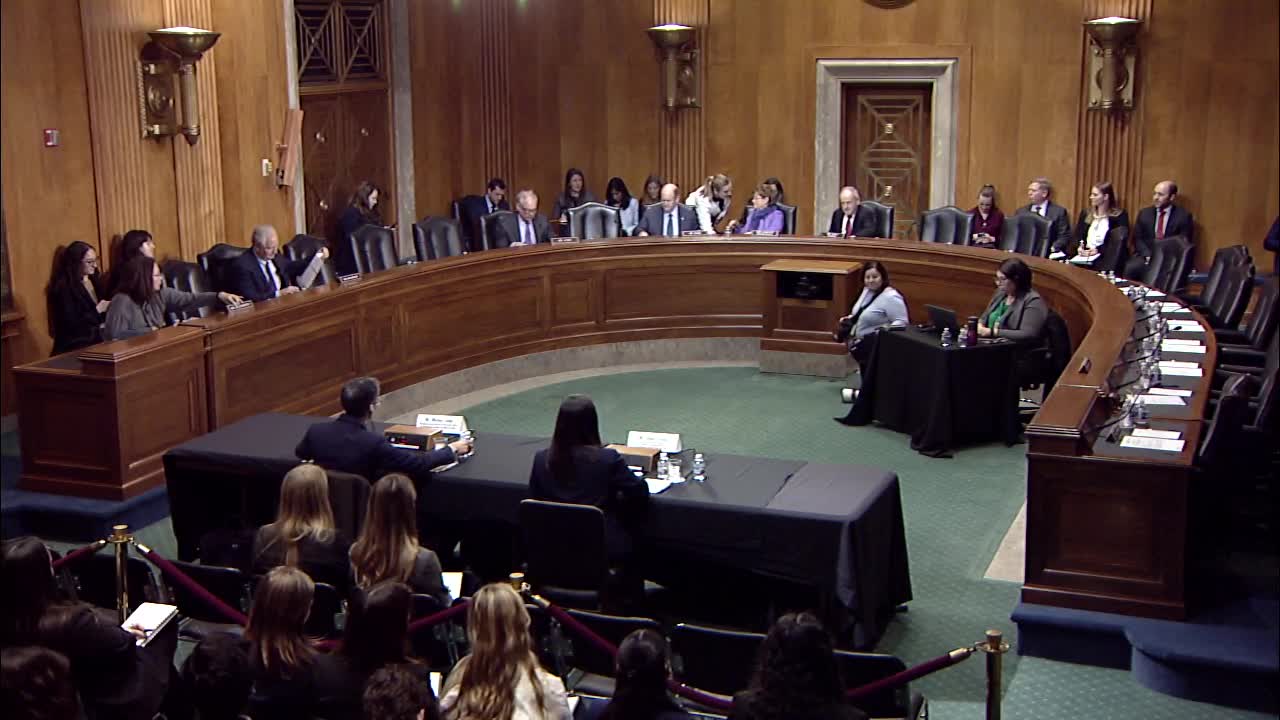
At a Senate Foreign Relations Committee hearing, Chairman Jim Risch, Ranking Member Jeanne Shaheen and two outside witnesses urged a calibrated U.S. response to the collapse of the Assad regime in Syria, saying the moment presents both strategic opportunity and serious risk.
The committee leaders and witnesses recommended a phased approach to engagement including clear, measurable benchmarks on counterterrorism, the removal of foreign military footholds, dismantling narcotics networks tied to the former regime and accounting for U.S. citizens detained in Syria.
"The fall of the Assad regime presents policymakers with a dilemma. How should the United States engage with Syria?" Chairman Risch said as he opened the hearing. He listed four priorities he said must be addressed before broader engagement: preventing Syria from becoming a launching pad for terrorism; ejecting Russian and Iranian forces and basing access; destroying Assad-era narcotics revenue streams; and accounting for U.S. detainees such as Austin Tice.
Ranking Member Shaheen said the United States should move quickly but carefully to incentivize an inclusive, accountable transition. "Sanctions relief will also help bring in the investments from regional partners and the international community that Syria needs to rebuild," she said, calling the moment "a once-in-a-generation opportunity." Shaheen asked the committee to place a summary of blocked assistance into the hearing record and urged waivers to allow humanitarian and stabilization work to continue.
Witnesses Michael Singh, managing director and Lane Swig senior fellow at the Washington Institute for Near East Policy, and the Institute’s director of research (identified in the hearing as Ms. Stroll) told senators they saw a narrow window to deny Iran and Russia renewed influence in Syria. Both called for a phased, performance‑based sanctions relief tied to benchmarks such as credible counterterrorism operations against ISIS and Al Qaeda affiliates, concrete steps to protect minorities and women, and a political roadmap toward a new constitution and inclusive governance.
Singh urged pragmatic engagement with Hayat Tahrir al‑Sham (HTS) to test its willingness to cooperate on shared security priorities, while cautioning that HTS retains an authoritarian, intolerant record in areas it governed. Ms. Stroll emphasized that the drivers of Syria’s long conflict persist and that reconstruction and stabilization are inherently political tasks requiring technical expertise and sustained assistance.
Both witnesses and multiple senators stressed the need to sustain counterterrorism pressure as engagement proceeds. The witnesses recommended close coordination with regional partners, careful sequencing of sanctions relief and planning for the eventual transfer of U.S. military counter‑ISIS roles in Northeast Syria so gains against the group are not reversed.
The committee heard that the National Security Council is conducting a Syrian policy review; senators urged the administration to incorporate the hearing recommendations and to move quickly on targeted waivers and benchmarks.
The hearing record will remain open for additional submissions, the committee said.
The discussion on Syria spanned operational counterterrorism priorities, humanitarian and stabilization assistance, sanctions policy, and regional diplomacy — including the role of Turkey, Lebanon and the wider international community.