Get Full Government Meeting Transcripts, Videos, & Alerts Forever!
Get email alerts on the Healthcare topic
No spam. Unsubscribe anytime.
Appropriations Committee approves a package of health and human services bills; dental expansion passes with one dissent
Summary
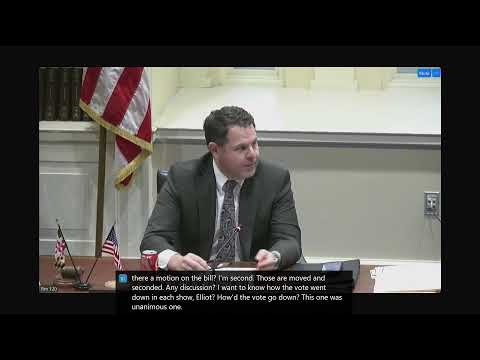
The House Appropriations Committee held a short voting session to consider several health and human services bills, approving each item on the agenda by roll call.
The House Appropriations Committee held a short voting session to consider several health and human services bills, approving each item on the agenda by roll call.
A departmental bill described to the committee alters provisions related to reimbursement of Maryland court participants, changes eligibility rules for a program that provides two pathways (an "program path" for 18-to-25-year-olds and a "service path" for people 18 and older), repeals an unused executive fellows program and makes conforming agency changes. "This is a departmental bill. It alters provision regarding the reimbursement of the Maryland courts participants, changes eligibility requirements for the program, allows the department to use its current funds for either the program path, which is 18 to 25 year olds, or the service path, which is for 18 year olds and older. It repeals the obsolete executive fellows program that was never utilized, makes other clarifying and conforming changes to agency responsibilities, and there's no fiscal effect," the committee heard from a departmental presenter. The presenter also told the committee that the bill had not been unanimous in Health and Government Operations (HGO): "It was not, we had 5 opposed." The committee approved the bill on a roll-call vote.
The committee also advanced House Bill 265, sponsored in the floor comments by Delegate Shetty, which expands eligibility in the Maryland Dental Care Program to include dentists and dental hygienists employed part time. The committee considered two amendments adopted earlier in the referring committee: a technical amendment and a second amendment that removed a requirement for a study on dental online credentialing. The committee passed the bill on a roll-call vote with one dissent (see "Votes at a glance" below).
House Bill 43, which would authorize the Board of Public Works, on the recommendation of the secretary of health, to award grants to counties, municipal corporations and nonprofit organizations for acquisition of land for construction or use as federally qualified health centers as part of the existing FQHC grant program, was approved without amendment.
House Bill 214, a Department of Human Services departmental measure to codify the Maryland Assistive Technology Program inside the Department of Disabilities and to allow the program to establish a services fund to raise revenue for existing programs, was also approved with no amendments.
Votes at a glance
- Departmental bill (described as altering reimbursement and eligibility, repealing the executive fellows program): Motion to approve moved and seconded; approved by roll call. Vote record: Vice Chair Chang — yes; Delegate Smith — yes; Delegate Lewis — yes; Delegate Shetty — yes; Delegate Watson — yes; Delegate Solomon — yes; Delegate Grice — yes; Delegate Jones — yes; Delegate McCaskill — yes; Delegate Spiegel — yes; Delegate Beacham — yes; Delegate Schindler — yes; Delegate Stanko — yes; Delegate Mangione — yes; Delegate Wallach — yes; Delegate Heimbaugh — yes; Delegate Acevedo — yes; Delegate Metzger — yes; Delegate Edelson — yes; Delegate Harris — yes; Delegate Forbes — yes. Outcome: approved.
- House Bill 265 (Maryland Dental Care Program; expands eligibility to part-time dentists and hygienists): Amendments adopted in referring committee included a technical amendment and removal of a required study on dental online credentialing. Motion to approve moved and seconded; approved by roll call. Vote record: Vice Chair Chang — yes; Delegate Smith — yes; Delegate Lewis — yes; Delegate Shetty — yes; Delegate Watson — yes; Delegate Solomon — yes; Delegate Grace — yes; Delegate Jones — yes; Delegate McCaskill — yes; Delegate Spiegel — yes; Delegate Beacham — yes; Delegate Schindler — yes; Delegate Stanko — yes; Delegate Mangione — yes; Delegate Wallach — yes; Delegate Heimbaugh — no; Delegate Acevedo — yes; Delegate Metzger — yes; Delegate Edelson — yes; Delegate Harris — yes; Delegate Forbes — yes. Tally: 20 yes, 1 no. Outcome: approved.
- House Bill 43 (FQHC land acquisition grants via Board of Public Works recommendation): No amendments; motion moved and seconded; approved by roll call. Vote record: Vice Chair Chang — yes; Delegate Smith — yes; Delegate Lewis — yes; Delegate Shetty — yes; Delegate Watson — yes; Delegate Solomon — yes; Delegate Grace — yes; Delegate Jones — yes; Delegate McCaskill — yes; Delegate Spiegel — yes; Delegate Beacham — yes; Delegate Schindler — yes; Delegate Stanko — yes; Delegate Mangione — yes; Delegate Wolick — yes; Delegate Heimbaugh — yes; Delegate Acevedo — yes; Delegate Metzger — yes; Delegate Edelson — yes; Delegate Harris — yes; Delegate Forbes — yes. Outcome: approved.
- House Bill 214 (Maryland Assistive Technology Program codification and services fund): No amendments; motion moved and seconded; approved by roll call. Vote record: Vice Chair Chang — yes; Delegate Smith — yes; Delegate Lewis — yes; Delegate Shetty — yes; Delegate Watson — yes; Delegate Solomon — yes; Delegate Grace — yes; Delegate Jones — yes; Delegate McCaskill — yes; Delegate Spiegel — yes; Delegate Beacham — yes; Delegate Schindler — yes; Delegate Stanko — yes; Delegate Mangione — yes; Delegate Wallach — yes; Delegate Heimbar — yes; Delegate Acevedo — yes; Delegate Metzger — yes; Delegate Edelson — yes; Delegate Harris — yes; Delegate Forbes — yes. Outcome: approved.
What it means
Committee members completed the agenda quickly, approving departmental and health-related measures that affect program eligibility, grant authority for land acquisition for federally qualified health centers and the statutory home of the Maryland Assistive Technology Program. Where applicable, the committee recorded whether earlier referring committees had taken different positions (the departmental bill had five opposing votes reported in HGO). The dental bill’s amendment package removes a study requirement and expands the program to part-time dental professionals.
Next steps
Passed bills will proceed through the legislative process as required for House measures. The bill that authorizes BPW grants will require action by the Board of Public Works if enacted; the Assistive Technology measure creates statutory authority for an agency fund if enacted. The committee adjourned after the roll calls.