Get Full Government Meeting Transcripts, Videos, & Alerts Forever!
Get email alerts on the Transportation Budget topic
No spam. Unsubscribe anytime.
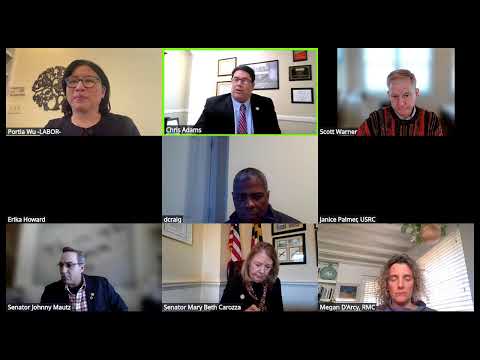
MDOT presents budget plan to Eastern Shore delegation; delegates press for road funding amid transit increases
Summary
Maryland Department of Transportation officials briefed the Eastern Shore delegation on Feb. 14, 2025, outlining a proposed budget that would add $420 million in state transportation revenue annually and, if approved, could leverage roughly $695 million a year in new resources.
Maryland Department of Transportation officials briefed the Eastern Shore delegation on Feb. 14, 2025, outlining a proposed budget that would add $420 million in state transportation revenue annually and, if approved, could leverage roughly $695 million a year in new resources when combined with bonding and federal matches.
The department said the additional revenue in the proposed Consolidated Transportation Program would allow it to resume work on the Maryland 90 corridor to Ocean City, expand support for locally run transit providers such as Shore Transit and Delmarva Community Transit, and provide $3 million annually beginning in FY2026 for a regional aviation assistance program to benefit small airports including Easton and Salisbury.
Why it matters: Delegation members said Eastern Shore roads and bridges depend on those state allocations, and some members expressed alarm at what they called a near‑term reduction in State Highway funds while transit agencies receive large increases. Delegate Royce called the shifts “a clear message” that priorities may be moving away from rural roads, and asked how resurfacing and state of repair work for shore roads will be protected.
Deputy Secretary Samantha Biddle said the budget proposal is intended to be balanced and to fully leverage federal funds; she told the delegation the department’s final CTP “includes maintaining operations across the department and advancing previously deferred priority projects.” Biddle repeated the administration’s request for the additional recurring state revenue, which she said is critical to unlock federal matching dollars and bonding capacity.
State Highway Administrator Will Pines outlined results already delivered on the Eastern Shore and how the CTP would be used. Pines said SHA completed about 216 lane miles of resurfacing and 147 lane miles of preventative maintenance on Eastern Shore routes in FY2024, and that the governor’s proposal adds $82 million in state funds for resurfacing (a total resurfacing program increase of roughly $143 million when combined with federal funds). Pines also confirmed the administration put Maryland 90 back on track to advance design and the NEPA process.
Delegates pressed specifics. Delegate Royce asked for a clear explanation of a $575 million figure he said represented a State Highway cut in the proposed budget; MDOT officials responded that year‑to‑year allocations shift across the six‑year CTP and that some near‑term pressure on State Highway cash flow stems from timing, formula changes for highway user revenues, and the department’s decisions to accelerate system preservation in transit where federal matching deadlines exist. The deputy secretary said MDOT will work to add federal money to system preservation projects and noted that the six‑year program shows improved outlook in later years.
Delegation questions also touched on the Purple Line, which delegates described as a large cost driver. Biddle and MDOT staff said MTA and the secretary’s offices are working to contain costs with the P3 partner as construction moves into final phases; Pines said he was aware of the percent‑complete figures raised in the meeting and that MDOT is working on cost containment.
What’s next: Delegation members asked for additional detail about the FY2026 allocations and the practical impacts for federally ineligible local routes; MDOT said staff will follow up with county and delegation offices to clarify how state dollars and federal matches will be applied to Eastern Shore resurfacing and system preservation projects.
Ending: The department framed the budget request as a step to unlock federal funds and restore deferred projects; delegates said they will press for clear, local impacts and updates on how resurfacing and rural roads will be prioritized.