Witnesses say Class 6 aquifer‑exemption rule limits usable storage space for CO2

2321380 · February 12, 2025

Get AI-powered insights, summaries, and transcripts

Subscribe
AI-Generated Content: All content on this page was generated by AI to highlight key points from the meeting. For complete details and context, we recommend watching the full video. so we can fix them.

Summary

Experts told the Senate Environment and Public Works Committee that current Class 6 restrictions on aquifer exemptions under the Safe Drinking Water Act block access to deep formations that are unsuitable for drinking water but suitable for CO2 storage, removing billions of tons of potential capacity.

WASHINGTON — Technical witnesses told the Senate Environment and Public Works Committee that a regulatory prohibition on aquifer exemptions for Class 6 wells is keeping large volumes of geologic storage offline.

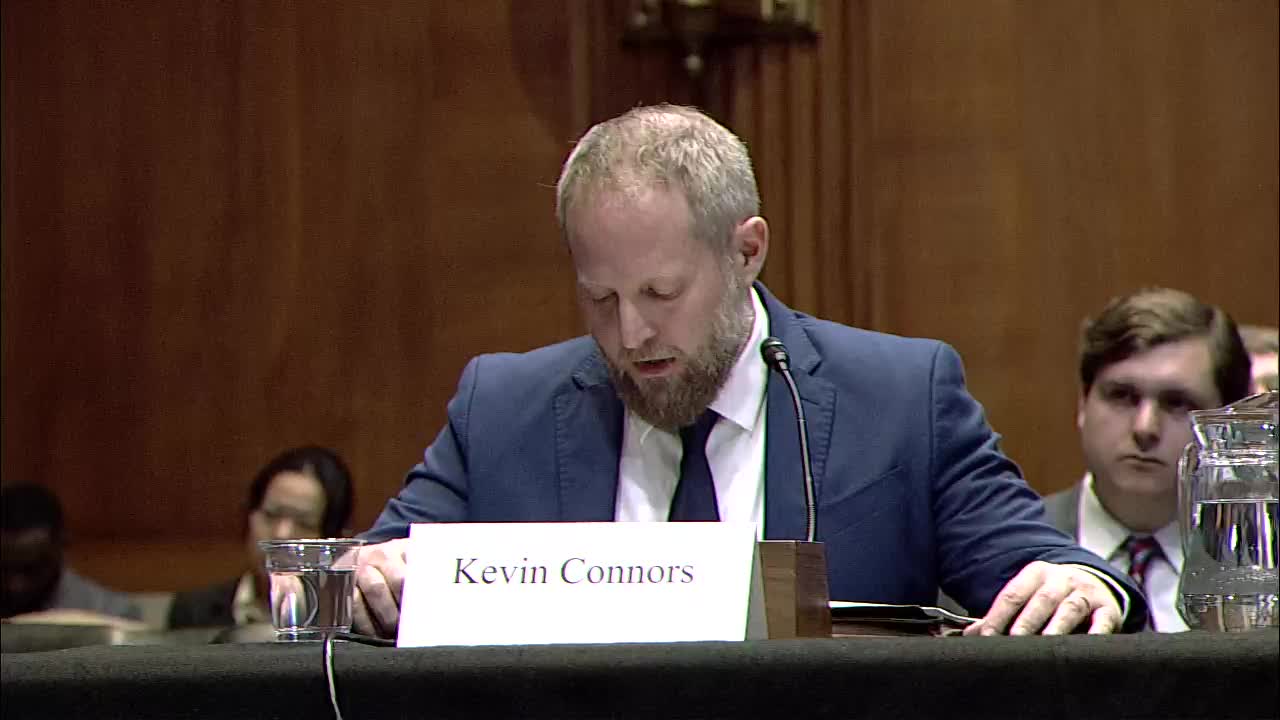
Kevin Connors of the University of North Dakota’s Energy and Environmental Research Center said the Class 6 rule excludes the use of aquifer exemptions — a mechanism used under other UIC classes to allow injection into deep formations that meet federal criteria but are not practicable as drinking water sources. "When EPA published the Class 6 rule in 2010, they excluded OCCFA exemptions are not allowed for Class 6 injection," Connors said, describing the practical effect: formations that are geologically suitable for CO2 storage cannot be used.

Connors told senators the exclusion removes "billions of tons" of CO2 storage potential in Western states including North Dakota, Montana, Wyoming, Colorado, Utah, Oregon and Alaska. He described the underlying problem as a function of the Safe Drinking Water Act definition of an underground source of drinking water and the lack of a pathway under current Class 6 regulations to exempt deep formations that are unsuitable for potable supply.

Senators and witnesses described three routes to fix the issue: congressional action directing EPA to allow aquifer exemptions for Class 6; EPA rulemaking to revise the Class 6 rule; and case‑by‑case aquifer exemption decisions by EPA. Connors warned that even after a legal or regulatory change, EPA review timelines for aquifer exemptions can be long: he recounted that aquifer exemptions for other well classes could take one to two years to obtain from EPA when allowed.

The committee heard the point in the context of broader permitting and primacy debates. Witnesses argued that clarifying the aquifer‑exemption pathway would unlock significant domestic storage potential and that Congress could act to direct EPA rule changes if a faster route was required.

Ending: Senators asked witnesses for written recommendations on statutory or regulatory changes to enable use of geologic formations that are unsuitable for drinking water but appropriate for CO2 storage.