Get Full Government Meeting Transcripts, Videos, & Alerts Forever!
Get email alerts on the Omb Reorg topic
No spam. Unsubscribe anytime.
OMB secretary outlines procurement and fleet consolidations, says $100M in early savings identified
Summary
Secretary Lisa Hirschman told Ways and Means the governor's new cabinet model gives OMB authority to consolidate contracts, standardize purchases and reduce duplication; early work on fleet, body cameras and IT licensing shows opportunities to realize savings and improve service.
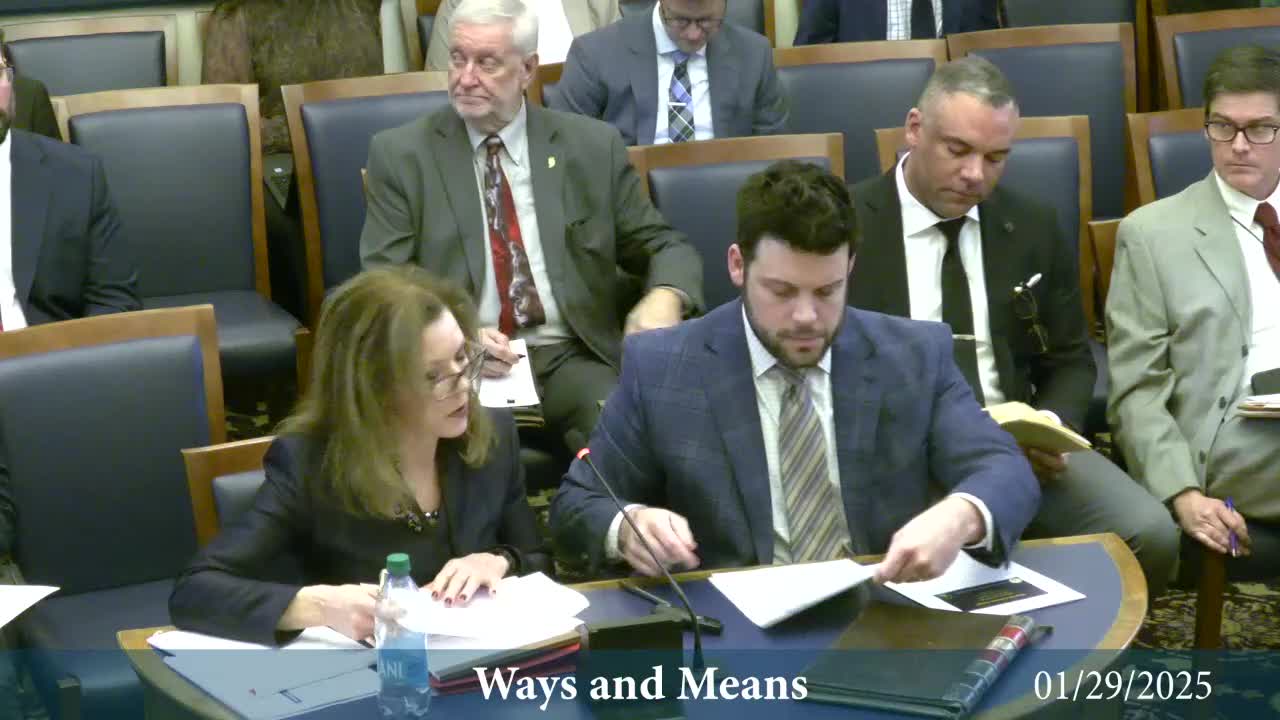
Secretary Lisa Hirschman, in a subsequent portion of the hearing focused on the Office of Management and Budget vertical, described an early agenda of consolidation and category management intended to cut duplication and leverage state buying power.
Hirschman said OMB staff have already found examples where agencies pay different prices to the same vendor for similar equipment, including body‑worn cameras and two‑way radios, and identified about $29,000,000 spent on new state vehicles in 2024 despite many units showing very low utilization. She said those patterns point to opportunities for consolidated procurement and longer service life for equipment.
"We have the potential opportunity to look at could they be on the same vehicle structure and therefore leverage the buying power at the unit price," Hirschman told the committee. She said a preliminary set of procurement and contracting changes has already identified roughly $100,000,000 in potential savings on a multi‑year timeline; the timing of cash‑realization will depend on contract expirations and implementation steps.
Examples and next steps
- Fleet: Hirschman said some agencies operate vehicles that drive fewer than 5,000 miles a year and that standardizing vehicle types where operationally appropriate could lower unit costs and generate savings. - Body cameras and radios: The administration found multiple agencies buying the same camera model from the same supplier at different per‑unit prices; OMB has asked vendors to consolidate contracts and align pricing. - Federal/state contract vehicles: OMB plans to use federal and other states's negotiated contracting vehicles (e.g., GSA and states that have large IT agreements) as part of competitive procurements to accelerate savings. - Software licenses and IT consolidation: Hirschman said the state spends about $4,000,000 annually on 8,500 unused software licenses and plans to align purchase to utilization.
Hirschman also described vendor management goals and internal reorganization: centralizing some procurement functions, expanding procurement category management, and establishing balanced scorecards to track fiscal and service outcomes across the vertical.
Committee reaction and concerns
Members asked whether consolidation would affect frontline services and how savings would be phased in. Hirschman said the 5% administrative guideline provided to agencies focused only on administrative and operating lines and that OMB will work with agencies to avoid cutting front‑line services. Several representatives asked for more detail on vendor commitments and timetables; Hirschman said the team will return with additional analyses and a schedule of expected savings by six‑month intervals.