Get Full Government Meeting Transcripts, Videos, & Alerts Forever!
Get email alerts on the Fish And Game Budget topic
No spam. Unsubscribe anytime.
Fish and Game budget shows license-funded structure, website overhaul and wildfire rehab request
Summary
The Idaho Department of Fish and Game told the Joint Finance-Appropriations Committee that its budget relies entirely on dedicated license revenue and federal grants and that it plans a mix of one-time capital work and several ongoing items for fiscal 2026.
The Idaho Department of Fish and Game told the Joint Finance-Appropriations Committee that it receives no general-fund support and operates largely on dedicated license revenue and federal grants, and it outlined several one-time and ongoing requests for fiscal 2026.
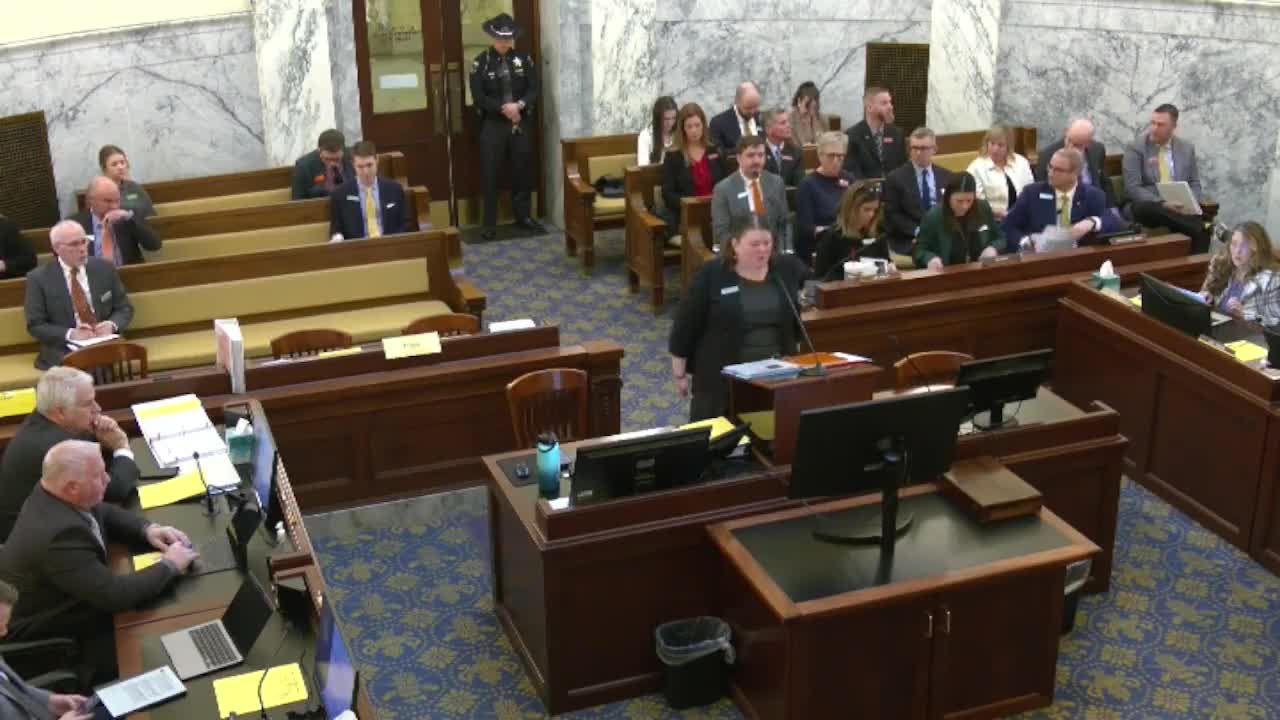
Janet Jessup, legislative budget analyst, told the committee the department operates 19 state-run fish hatcheries, employs roughly 550 FTP and typically spends about 91% of its appropriation on personnel. Jessup said the Fish and Game Fund and its set-aside accounts derive from hunting, fishing and trapping licenses, tags and permits and that many dedicated funds are statutorily prescriptive about allowable uses.
Director Jim Fredericks said a dip in consolidated fund balances shown for FY2024 reflected timing and billing differences for federal grants and deliberate use of reserves for one-time projects. “That dip in FY ’24 was in part due to…we fell behind several months and we have caught up in fiscal year 25,” said John Oswald, the department’s administration bureau chief, who explained grant-billing timing and said FY2026 planned one-time spending includes a salmon regional office remodel and other projects.
Fredericks described the agency’s ongoing and one-time requests for 2026: software licensing (ArcGIS), lease and subregional office costs for McCall, funding for seasonal employees tied to Bonneville mitigation stewardship, and a largely one-time package of replacement items and capital work. Jessup told the committee the agency requested $18,184,900 in enhancements for 2026 — about 88% of that request is one-time in nature, she said.
On a supplementary matter, Fredericks said the agency undertook fire rehabilitation work after the Valley Fire burned roughly 9,900 acres east of Boise and part of the Boise River Wildlife Management Area. Fredericks said the agency purchased seed and applied aerial herbicide to stabilize winter range for deer and elk, and he estimated initial short-term costs at about $750,000 while warning that restoration will require ongoing work. He said discussions with the responsible utility about voluntary contributions were ongoing.
Senator Cook asked about the agency’s website overhaul. Fredericks said only a small portion of the initial $750,000 for phase 1 has been spent on discovery and auditing, and that the agency now expects the full redesign to total roughly $1.3 million given comparable work in other states. He told the committee the department expects to proceed with phase 2 promptly if funded.
Representative Mitchell questioned a $65,000 remote-connectivity request for several hatcheries and wildlife-management locations; John Oswald said the agency worked with the state ITS office to spec hardware and some sites require point-to-point connections, which raises per-site costs beyond a simple consumer terminal.
Fredericks closed by thanking the committee and saying the budget supports the department’s mission “to maintain and manage healthy and abundant fish and wildlife populations around the state.”