Get Full Government Meeting Transcripts, Videos, & Alerts Forever!
Get email alerts on the Lead Poisoning Prevention topic
No spam. Unsubscribe anytime.
Legislative oversight panel flags gaps in Delaware lead-prevention law, asks agencies for data in 60 days
Summary
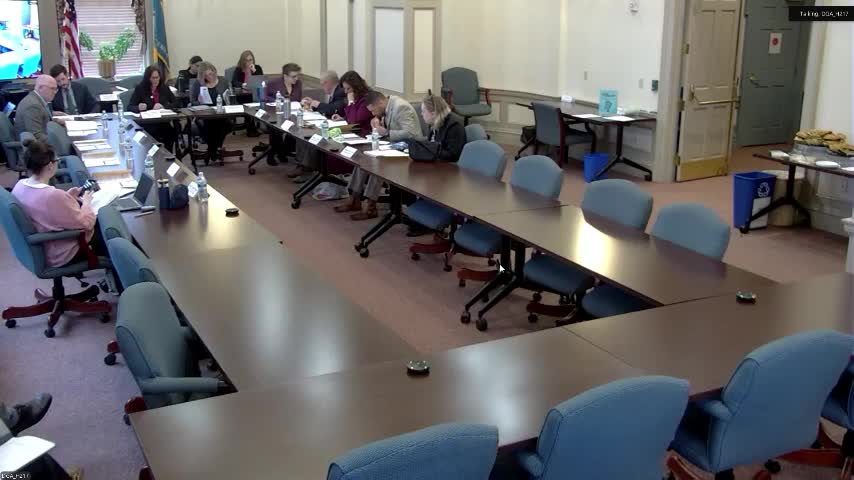
Senators and representatives on the Joint Legislative Oversight and Sunset Committee on the General Assembly’s House Majority Hearing Room reviewed a staff report on Delaware’s childhood lead poisoning prevention programs and pressed state agencies for more data and clearer statutory language.
Senators and representatives on the Joint Legislative Oversight and Sunset Committee on the General Assembly’s House Majority Hearing Room reviewed a staff report on Delaware’s childhood lead poisoning prevention programs and pressed state agencies for more data and clearer statutory language.
Amanda Wade McAtee, an analyst for the committee, and Ben Kowa presented the committee’s focused review on screening access at 12 and 24 months, water testing in schools and program funding. “Two major statutory updates occurred in June of 2023,” McAtee told the committee, adding that Senate Bill 9 of 2023 created a new Delaware state lead-based paint program and established a Lead Based Paint Abatement and Remediation Fund.
The staff report identified several code references that committee analysts said are confusing or incomplete. Analysts told members the Childhood Lead Poisoning Prevention Act is scattered across multiple reporting requirements and that the term “universal reporting system” in statute is not defined; analysts recommended linking that phrase to the CDC-supported Healthy Homes and Lead Poisoning Surveillance System used by Delaware Department of Public Health (DPH).
Sandy Spiegel, chief of health systems protection at the Division of Public Health in the Department of Health and Social Services (DHSS), described staffing and program changes at DPH since SB 9 took effect. Spiegel said DPH had created a program manager position for the new state lead-based paint program, added administrative staff, and secured a HUD capacity-building grant for $1.5 million over three years to support workforce and program infrastructure.
Spiegel also said federal funds for lead-related work include an EPA award for lead service line replacement (about $28.65 million), HUD grant funding and CDC cooperative agreement funds (an annual CDC funding amount cited in the review was $540,000). She told the committee ARPA funds of $3 million had been allocated to remediation work and that the division is prioritizing federal funds first so state funds can be leveraged for additional work.
Committee members pressed agencies for performance data. Representative Rich Collins asked whether remediation and testing remain reactive — triggered only after a child tests high — and urged faster, more direct remediation. “If no amount of lead is tolerable for a child, that calls for action, not more advising,” Collins said. Members repeatedly requested numbers the report did not include: how many children tested positive, how many homes were remediated, total spending to date and how much of the authorized state and federal funding remains unspent or encumbered.
Public commenters urged more outreach and resources. Amy Rowe, a volunteer childhood lead-poisoning prevention advocate, asked the committee to allow 60 days for the advisory committee and public to review the staff report. Donald Farrell, a landlord-tenant advocate, described community outreach work in Wilmington. Donna O’Connor, a school nurse, described operational hurdles that delay school-entry compliance checks because of the school funding September 30 count.
Committee staff and agency witnesses described next steps the committee directed. Analysts recommended consolidating multiple annual-report requirements into a single annual report that would include: number of tests and screenings at 12 and 24 months, counts of elevated blood lead levels, the number of properties identified with lead-based paint hazards, and how many properties received remediation or abatement. The Division of Public Health agreed to provide more detailed, itemized information to the committee, including contractor lists and project costs.
After questions and public comment, the committee voted earlier in the meeting to approve draft minutes from its Feb. 6 hearing; roll call yielded the required vote and the minutes were approved. The committee then tabled the focused review and asked agencies and staff to return with answers and technical corrections within 60 days. The committee scheduled its next meeting for Feb. 27.
The presentation and discussion focused on clarifying statutory authority and improving reporting and program transparency rather than on new legislation. Committee analysts flagged specific code sections for cleanup and recommended clarifying the advisory committee’s duties to avoid overlapping or inconsistent oversight language in statute.
The committee also discussed workforce capacity for remediation work. Spiegel said four contractors had completed the state procurement process and that recruitment remains a challenge because some certified firms decline work due to insurance and cost issues; Spiegel said HUD capacity-building funds will be used in part to expand training and build a local contractor workforce.
The committee directed staff and the agencies to return with more complete, itemized data on testing, remediation counts, contractor participation, encumbrances and remaining balances on the relevant funds, and with recommended statutory clarifications. The committee set a 60-day follow-up and encouraged agencies to work with the Childhood Lead Poisoning Prevention Advisory Committee to prepare the requested materials.
Looking ahead, committee staff said they could pursue a performance-focused follow-up review once additional program-year data are available. Public commenters and several legislators urged the panel to track outcomes (children tested, homes remediated) and to press for expanded local training capacity so more certified contractors can perform abatement work in-state.