Get Full Government Meeting Transcripts, Videos, & Alerts Forever!
Get email alerts on the Youth Residential Services topic
No spam. Unsubscribe anytime.
Kids Department to convert Terry Center to diagnostic crisis center for older teens; YRS and Seaford House described as higher‑need options
Summary
DSCYF officials said they are repurposing the Terry Children’s Center to serve older teens in crisis, described staffing and training plans, and outlined residential and contracted alternatives—including Seaford House—for youth with higher needs.
DSCYF officials told the Joint Finance Committee they are reassigning the Terry Children’s Center on the Faulklin Road campus to function as a diagnostic crisis‑residential center for older adolescents, primarily ages 13 to 17, and described service, staffing and training changes tied to the move.
Secretary Yeatman and division directors said the facility revamp used federal COVID aid to renovate a vacant building on the DHSS campus and to set a certificate‑of‑occupancy target in spring 2025. The center will emphasize clinical diagnostic workups and applied behavior analysis for youth with co‑occurring developmental or intellectual disabilities, Yeatman said, and will pair residential crisis care with expanded case management to identify the “next best place” for each youth.
Training and staffing: Yeatman said frontline Terry Center staff are moving into the renovated building but acknowledged ongoing recruitment challenges common to 24/7 secure and residential settings. The department told legislators it has reclassified some positions (youth services worker, youth treatment specialist) to raise qualifications and career ladders.
Youth rehabilitative services and high‑need residential care: DSCYF’s Division of Youth Rehabilitative Services (YRS) Director Renee Saconti outlined YRS programs including secure facilities (Ferris School and detention centers) and said the department maintains American Correctional Association accreditation at its high‑level secure sites. Nonsecure, higher‑need residential options—contracted group homes such as Seaford House, operated by partner providers—were described as staffed, 24‑hour placements intended to serve older adolescents with elevated behavioral or clinical needs.
Seaford House and alternatives: In later public comment, a nonprofit partner described Seaford House as a contracted, non‑locked 24‑hour program for older youth (typically 12–17) that provides on‑site services with a goal of returning youth to foster care, adoption or community placements. DSCYF staff said placements emphasize eventual reunification or transition to less‑restrictive settings where appropriate.
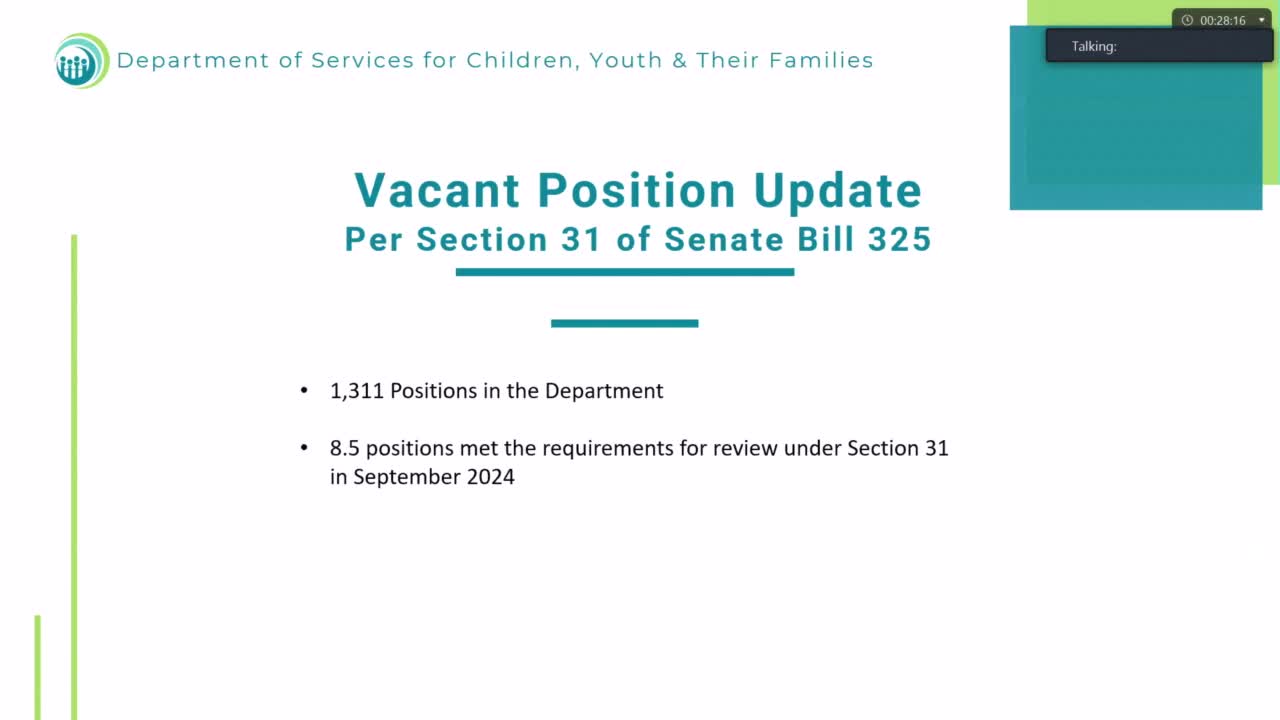
Operational context and risks: Committee members pressed DSCYF on staffing stability and vacancy rates, the department acknowledged reliance on contracted providers for specialized care, and the secretary said success depends on recruitment and training investments. Legislators and DSCYF officials discussed the practical tradeoffs between placing clinicians in schools versus maintaining provider capacity in the community.