Get Full Government Meeting Transcripts, Videos, & Alerts Forever!
Get email alerts on the Automotive Safety topic
No spam. Unsubscribe anytime.
Sponsor, industry urge Alaska to criminalize counterfeit and nonfunctional airbags in HB 74
Summary
House Bill 74 would make knowingly selling, installing or manufacturing counterfeit or nonfunctional airbags a crime. The sponsor and an industry witness from Honda described examples of dangerous knockoffs and said similar laws in many states help law enforcement and e‑commerce platforms remove illegal products.
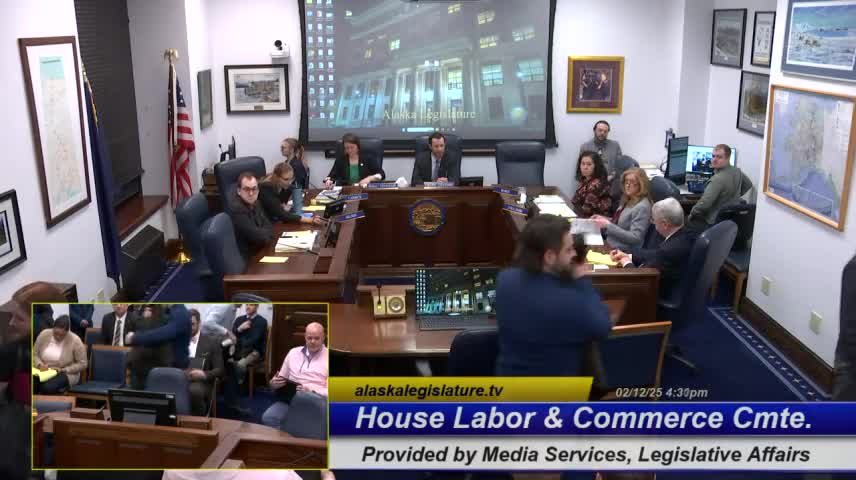
House Bill 74, introduced to the House Labor and Commerce Committee, would add a section to Alaska law making it a crime to knowingly sell, install, manufacture or reinstall counterfeit or nonfunctional airbags. The sponsor and invited industry witnesses said the measure aims to prevent dangerous devices from entering vehicles and to give law enforcement tools to act.
Representative Frank Tomaszewski, sponsor of HB 74, told the committee the bill would amend Alaska Statutes to define and criminalize “airbag fraud” and said similar legislation has passed in more than 30 states. Tomaszewski said the measure covers both counterfeit airbags (replacements that display unauthorized manufacturer marks) and nonfunctional airbags (inoperable, previously deployed or otherwise unsafe devices). He described the crime as a class A misdemeanor and said it becomes a class C felony if death or serious physical injury results from the device; specific penalty amounts and jail terms were not specified in the committee testimony.
David Goff, staff to Representative Tomaszewski, summarized the bill’s sections for the committee. Goff said the draft would not impose a duty to inspect vehicles before sale and would exempt certain parties from criminal liability if they lack knowledge that an airbag is counterfeit or nonfunctional, including dealership employees and insurers disposing of vehicles under lawful authority.
Industry witness Craig Walling, director of state and local government affairs for American Honda Motor Company, described the safety problem with examples and investigations. “We’ve seen airbags that are filled with all sorts of debris, such as sawdust, newspaper, rag, trash bags, and other debris,” Walling told the committee. He said some counterfeit inflators have been so dangerous they required bomb‑squad handling during seizure and that nationwide reporting has linked counterfeit airbags to deaths and injuries. Walling said most counterfeit airbags originate overseas and are imported into U.S. supply chains; he urged a state law to supplement the limited authority of federal agencies and to help remove listings from e‑commerce platforms.
Lawmakers asked about scope and enforcement. Representative Sadler asked whether most counterfeit airbags are imported or produced domestically; Tomaszewski and the industry witness said imports are a major source but that trafficking and domestic resale also occur. Representative Klum asked about penalties; the sponsor said the bill sets misdemeanor and felony tiers but did not supply statutory fine or jail ranges during the hearing. The committee set an amendment deadline and scheduled further consideration of HB 74 at a subsequent meeting.
Ending: Supporters said HB 74 would give Alaska prosecutors and federal partners additional tools to remove counterfeit airbags from circulation and warn consumers and repair shops. No formal action was taken at the hearing.