Get Full Government Meeting Transcripts, Videos, & Alerts Forever!
Get email alerts on the Apprenticeship topic
No spam. Unsubscribe anytime.
Lawmakers hear that apprenticeships give Alaskans debt-free career starts but face risks from federal funding pauses
Summary
Representatives from electrical trades, health centers and Alaska Pacific University told the House Labor and Commerce Committee that apprenticeships provide wages, benefits and career pipelines but that interrupted federal infrastructure funding and contractor slowdowns could cut placements and stall training pipelines.
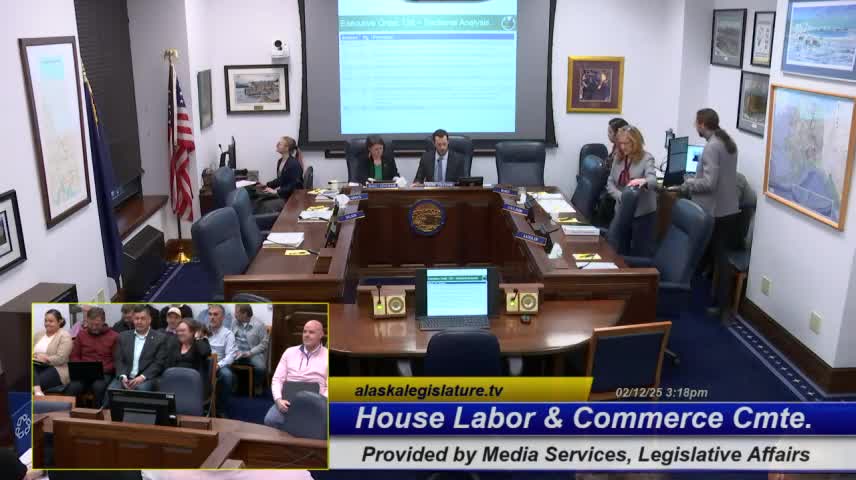
At a meeting of the Alaska House Labor and Commerce Committee, trade, health-care and higher-education representatives described how apprenticeship programs give participants wages, benefits and career credentials from day one while helping employers recruit, train and retain workers.
Speakers told committee members the programs create debt‑free entry to careers, stabilize communities and produce workers who can maintain critical infrastructure such as power and telecommunications — but they warned the pipeline is sensitive to funding and project disruptions.
Doug Tanzi, business manager for IBEW Local 1547, described starting an apprenticeship immediately after high school and said the program’s combination of on‑the‑job experience and classroom time paid off. “I was able to start my program right out of high school,” Tanzi said, adding that apprentices earn wages and benefits while training. He told the committee the union‑contract trusts administered jointly with National Electrical Contractors Association (NECA) chapters fund training and provide what he described as “approximately a $50,000 scholarship” to each apprentice to cover school, labs and materials.
Tanzi gave program details and timeframes the committee can use to evaluate pipeline capacity: many electrical apprenticeship tracks require about 8,000 hours of on‑the‑job work plus roughly 1,500 hours of classroom instruction. He said the union’s Alaska apprenticeship programs are at a historic high for enrollments in both Anchorage and Fairbanks and that graduates serve long careers maintaining power generation, transmission and telecommunications across the state.
But funding interruptions pose a direct operational risk, Tanzi and several legislators warned. Representative Carey noted recent shortfalls in federal transportation funding under the Statewide Transportation Improvement Program (STIP) and asked how that affects apprentices. Tanzi said contractors have been told to “pump the brakes” on some projects and warned that if expected federal or energy dollars do not materialize, contractors will postpone work, apprentices will lose placement opportunities and programs may have to start over — resetting multi‑year training clocks and producing workforce shortages years later.
Health‑sector apprenticeship sponsors told lawmakers their programs face different capacity constraints but the same need for flexibility. Nancy Merriman, chief executive officer of the Alaska Primary Care Association (APCA), described the association’s apprenticeship work and said APCA became a multi‑employer registered apprenticeship sponsor in 2017 in partnership with the Alaska Department of Labor and Workforce Development to help Alaska’s community health centers recruit and retain staff.
APCA chief program officer Terry O’Connor said the association currently has nearly 100 apprentices employed by more than 25 employers, including community health centers, hospitals, tribal health organizations and social‑service providers. “We have almost a hundred apprentices in training right now in our apprenticeship programs, and they're employed by more than 25 different employers,” O’Connor said. APCA sponsors nine registered apprenticeship programs and has added shorter, non‑registered earn‑and‑learn trains that are distance delivered, to meet rural scheduling and pacing needs while still awarding credentials.
Alaska Pacific University (APU) described how higher education can be integrated with apprenticeship. Hilton Hallock, provost of Alaska Pacific University, told the committee APU has stacked and stackable credentials, and is working with APCA and other partners to offer academic credit for industry training so apprentices gain transferable credentials. Hallock said APU holds a $5,000,000 Department of Labor grant to expand the nursing workforce and is adapting enrollment and credentialing to help employers get trained staff quickly. “Our goal is to provide academic programs and educational growth opportunities that meet Alaska’s critical needs,” Hallock said.
Committee members pressed presenters on supervision and mentor ratios, especially for health‑care apprentices whose work can include patient contact. O’Connor said supervisor/mentor capacity can limit how many apprentices a site can host because one experienced clinician can only safely mentor a limited number of trainees.
Speakers and members repeatedly tied apprenticeship outcomes to broader funding decisions. Testimony linked federal infrastructure and energy grants, USDA rural programs and state capital budgets to employers’ ability to put apprentices to work; several witnesses said delays or pauses in federal funding would shrink placement opportunities and could force programs to scale back intake until projects return.
The committee did not take formal action. Members signaled interest in follow‑up hearings to explore apprenticeship models for other occupations and to examine how state outreach, school‑to‑apprenticeship pipelines and agency grants can support scalable, flexible apprenticeships for rural Alaska.
Ending: Witnesses urged lawmakers to promote apprenticeship awareness and to consider outreach and coordination with school districts, employers and higher‑education partners so Alaska can expand training while limiting the risks created when public funding or project pipelines pause.