Get Full Government Meeting Transcripts, Videos, & Alerts Forever!
Get email alerts on the Mental Health Education topic
No spam. Unsubscribe anytime.
Senate panel hears bill to require mental health guidelines in K–12, holds measure for later
Summary
Senate Bill 41 would direct the State Board of Education to develop age‑appropriate mental health instruction guidelines for K–12, require two‑week parental notice before mental health instruction, and deliver a report to the legislature within two years; the Education Committee heard invited testimony and held the bill for further consideration.
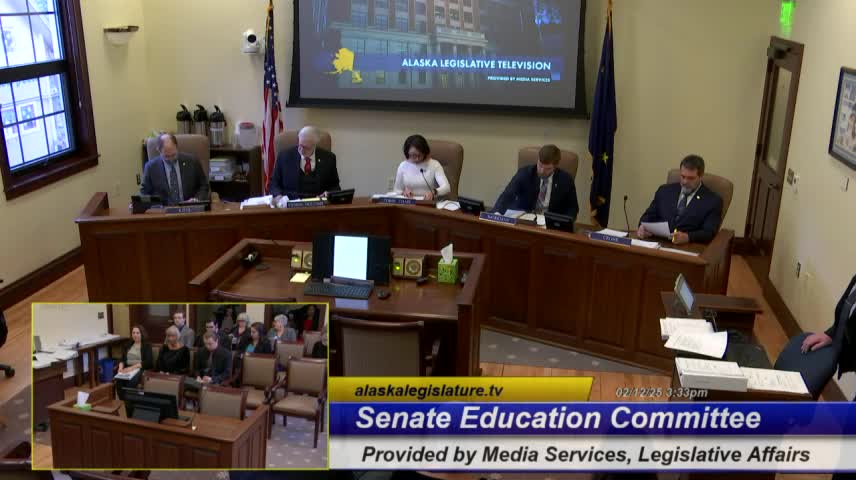
Senate Bill 41, which would require the State Board of Education and Early Development to develop age‑appropriate mental health instruction guidelines for K–12 students, received invited testimony Wednesday and was held for further consideration by the Senate Education Committee.
The bill, sponsored by Senator Elvie Gray Jackson of Anchorage, would add mental health to the K–12 health curriculum, require the board to consult with the Department of Health, the Department of Family and Community Services, regional tribal health organizations and state and national mental health organizations when developing guidelines, require schools to notify parents at least two weeks before mental health instruction, and require the board to submit a report to the legislature within two years describing the guidelines and the process used to develop them.
Supporters told the committee that schools offer opportunities for early identification of mental‑health conditions and that state guidance could help districts adopt consistent, developmentally appropriate approaches. Anne Ringstad, executive director of the National Alliance on Mental Illness (NAMI) Alaska, said the bill provides “guidelines, not curriculum,” and highlighted that 50 percent of mental health conditions begin by age 14 and 75 percent by age 25. Dr. Jen Griffiths, who identified herself as vice president of policy and advocacy at the Alaska Children’s Trust, said statewide guidance would reduce stigma, support teachers and parents, and increase access to developmentally appropriate resources.
Department of Education Deputy Director Kelly Manning told the committee the fiscal note reflects costs to convene a cross‑stakeholder work group, provide stipends, hire a facilitator and cover legal fees for regulation changes; Manning said the department recommended two in‑person convenings followed by remote work and a facilitator contract estimated at $36,000 in the fiscal note to cover facilitation and legal review. Committee members, including Senate President Stevens, pressed whether the department could reduce costs by using more remote meetings or eliminating stipends.
Senator Elvie Gray Jackson said the bill builds on prior efforts dating to 2020 and urged the committee’s support. Chair Tobin said the committee would hold the bill for a future meeting and invited sponsors to work with the committee on any amendments. No vote was taken.
Committee members and witnesses noted the bill’s consultation requirement with tribal health organizations and state agencies and emphasized cost concerns for implementation; the committee asked the sponsor and department to consider cost‑saving alternatives before the measure reaches the Finance Committee.