Get Full Government Meeting Transcripts, Videos, & Alerts Forever!
Get email alerts on the Victim Services Funding topic
No spam. Unsubscribe anytime.
Council on Domestic Violence and Sexual Assault warns of federal funding drops; committee hears staffing, audit challenges
Summary
The Council on Domestic Violence and Sexual Assault told lawmakers it faces declining federal VOCA funding, recent federal audits and staff turnover; the Violent Crimes Compensation Board reported work to accelerate victim awards.
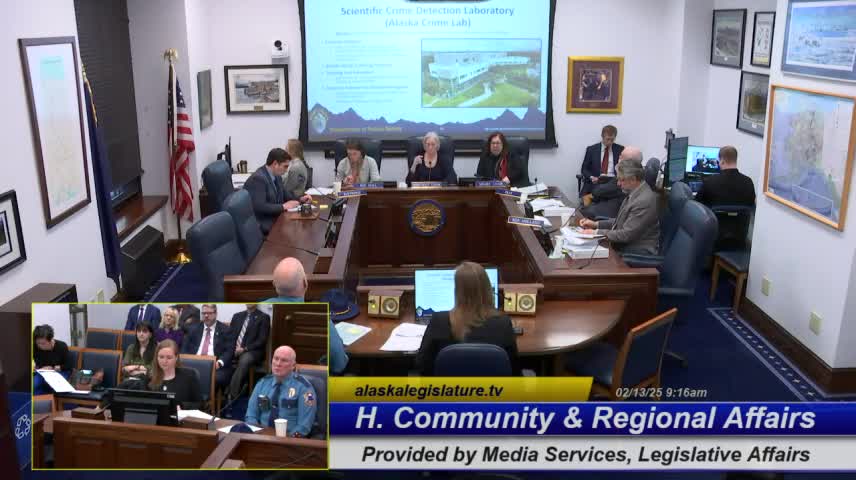
Juneau — At a Feb. 13 House Community and Regional Affairs Committee hearing, the Council on Domestic Violence and Sexual Assault (CDVSA) and the Violent Crimes Compensation Board told legislators that federal funding declines and audits are complicating service delivery to victims.
Marybeth Gagnon, executive director of the council, said CDVSA faces decreasing federal Victims of Crime Act (VOCA) funding and an end to certain earmarked congressional funding, and staff turnover has increased administrative workload. “We are facing a 39% cut for our federal fiscal year ’25 awards from the federal fiscal year ’24 awards,” Gagnon said, describing recent federal funding trends.
Why it matters: CDVSA funds statewide victim services, prevention programming and perpetrator rehabilitation oversight. Declines in federal funding would reduce grant awards to local victim-service providers that rely on those funds.
Details: Gagnon and Commissioner Cockrell described higher federal audit activity since COVID and said audits require considerable staff time. The council funds victim services (24-hour crisis support), prevention work and perpetrator rehabilitation programming; the latter has statutory oversight in the Department of Corrections, with an interagency memorandum of understanding covering approval and monitoring of battering-intervention programs.
Separately, the Violent Crimes Compensation Board (VCCB), now in the Department of Public Safety, is working to improve awards and said its budget structure currently ties positions to the grants line, limiting flexibility. The department said VCCB staff have accelerated awards and outreach to victims but highlighted the dependence on federal VOCA funding trends.
Ending: Committee members asked for follow-up in budget subcommittee hearings to reconcile funding reductions and to explore long-term state funding strategies if federal VOCA and earmarked funding decline.