Get Full Government Meeting Transcripts, Videos, & Alerts Forever!
Get email alerts on the Committee Roundup topic
No spam. Unsubscribe anytime.
House Health Committee advances newborn‑screening consent language, school glucagon plan and multiple technical bills
Summary
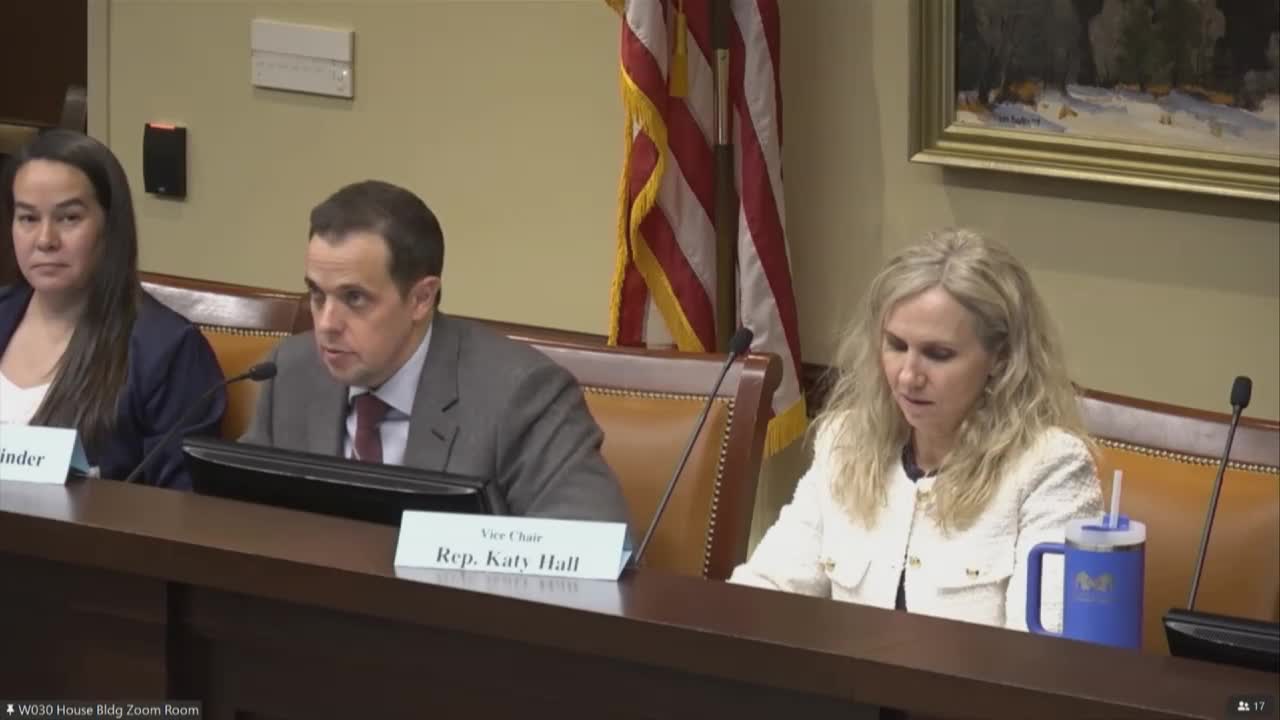
House Health and Human Services Committee members on Feb. 24 voted to advance a substitute to HB 363 that would require parental consent before the state retains newborn dried blood spots beyond routine screening and recommended several other health‑related bills favorably, including measures on school glucagon training and a veterinary gabapentin exemption.
House Health and Human Services Committee members on Feb. 24 voted to advance a suite of health-related bills, front-loading debate on a substitute to HB 363 that would require parental consent before the Utah Department of Health and Human Services stores newborn dried blood samples beyond the initial screening period.
The substitute to HB 363, offered by the bill sponsor, would require verification from a parent before the state retains a newborn’s dried blood spot beyond the time needed for the standard first and second newborn screens. "It is very simple. It is saying that you need to get a parent's consent to keep that blood sample beyond the amount of time needed for that first and second screening," the sponsor said during committee discussion.
Committee members and public witnesses, including people diagnosed through newborn screening and pediatricians, urged clearer education materials and noted medical benefits to retaining samples. Pediatrician Jennifer Brinton, representing the Utah chapter of the American Academy of Pediatrics, described clinical uses of retained samples and said families sometimes can request additional testing years later. "Keeping the samples to that 7 year period can help with unexpected death, unexpected disability, and can offer treatment we can't give otherwise," Brinton said.
Supporters said the substitute preserves the clinical benefits of sample retention while adding a privacy and education component. Patient advocates who had initially opposed the bill said the substitute addressed earlier concerns: "I no longer oppose this substitute," Claire Oliver, who was diagnosed through newborn screening, told the committee.
Committee members noted the bill’s operative window: hospitals typically keep initial screening material for up to about 90 days, while the Department of Health and Human Services retains samples for as long as seven years under current practice. The substitute would require parental consent for retention beyond the routine hospital timeframe and add language intended to spur written education to parents about what long‑term retention could mean for later diagnosis.
Beyond HB 363, the committee advanced several other measures with unanimous or voice votes after brief presentations and public comment:
- SB 134 (second substitute), an update to the Uniform Health Care Decision Act, which would modernize forms and create a standardized form produced by the Department of Health for advance directives; the sponsor said stakeholders including the Utah Hospital Association and Utah Medical Association helped shape the substitute.
- HB 406, a budgetary reporting bill asking the executive to annually report whether contracted social‑service providers received consideration for cost-of-living adjustments and to quantify the gap over the last 10 years; the bill was recommended favorably and placed on the committee’s consent calendar.
- SB 146, a bill to permit schools to acquire and maintain glucagon and to train nonmedical staff to administer it under standing orders; proponents said glucagon is lifesaving in severe hypoglycemia and safe to give in emergencies.
- HB 391 (first substitute), enabling fines for emergency medical services providers that are out of compliance and directing fine revenue to a newly created Emergency Medical Critical Needs Account.
- SB 120 (first substitute), which would exempt veterinarians from controlled-substance reporting requirements for gabapentin when used within the scope of veterinary practice; veterinarians and shelter leaders told the committee the change would reduce logistical barriers to convenient, humane treatment for animals and restore preexisting workflows that the scheduling change had interrupted.
- HB 434 (first substitute, amended), a technical cleanup bill that updates cross references, agency names and reporting authority across a range of public health statutes.
Votes at a glance
- Adoption of committee minutes (02/10/2025): motion passed by voice vote. - HB 363, first substitute (newborn blood‑spot consent): committee adopted the substitute and recommended HB 363 with a favorable recommendation (motion to adopt substitute and motion to recommend favorably both passed by voice vote). - SB 134, second substitute (Uniform Health Care Decision Act amendments): substitute adopted and bill recommended favorably by voice vote. - HB 406 (budgetary reporting for contracted service colas): recommended favorably and placed on consent calendar. - SB 146 (school glucagon): recommended favorably by voice vote. - HB 391, first substitute (EMS fines / critical needs account): substitute adopted; bill recommended favorably by voice vote. - SB 120, first substitute (veterinary exemption for gabapentin reporting): recommended favorably by voice vote. - HB 434, first substitute as amended (technical public-health cleanups): substitute adopted, amendment adopted, and bill recommended favorably as amended.
What the committee asked staff or sponsors to do
- HB 363 supporters pointed to specific substitute language (lines cited in committee discussion) intended to require a parent-facing notice and a consent verification mechanism; sponsors said lines in the substitute (referred to during debate) are meant to drive education so clinicians discuss the clinical benefits of retention and the privacy choice.
- For the gabapentin exemption (SB 120), legislators asked the Department of Health and the state veterinarian to monitor outcomes after the exemption, and sponsors said the change applies only within the scope of veterinary practice and does not affect human prescribing rules.
Why it matters
HB 363 responds to concerns about genetic privacy and parental notice while preserving clinicians’ and families’ ability to use retained dried blood spots for later differential diagnosis of rare conditions. Other bills the committee forwarded address emergency responses in schools, regulatory options for EMS oversight, and technical code updates that affect multiple public‑health programs.
The bills now move to the next stages of the legislative process or to the House floor as committee practice requires.