Get Full Government Meeting Transcripts, Videos, & Alerts Forever!
Get email alerts on the Agriculture Custom Slaughter topic
No spam. Unsubscribe anytime.
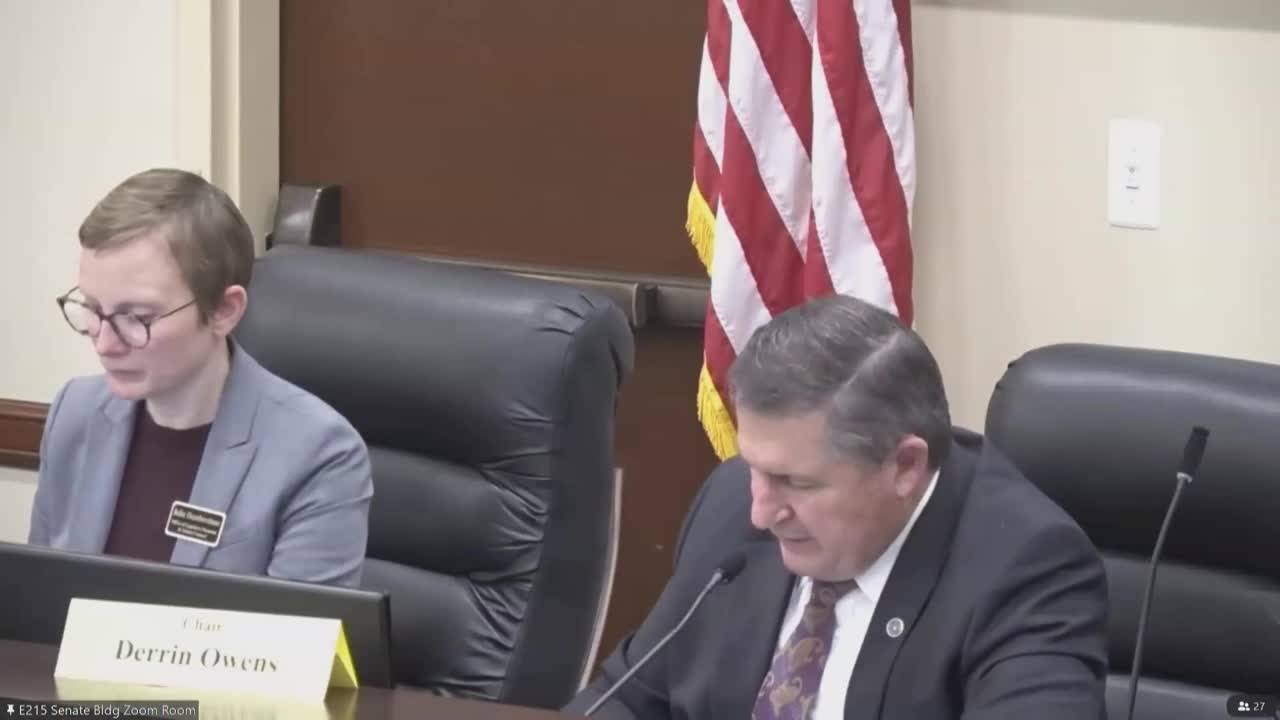
Committee advances bill to exempt licensed mobile harvest rigs from 600-foot neighbor consent for firearm discharge
Summary
The committee favorably recommended House Bill 94 to exempt Utah Department of Agriculture-licensed mobile harvest (custom slaughter) operators from a requirement to obtain written consent from all neighbors within 600 feet before discharging a firearm on private property during harvest.
SALT LAKE CITY — The Senate Natural Resources committee on Wednesday voted unanimously to favorably recommend House Bill 94, a bill that would clarify that licensed mobile harvest rigs (custom mobile slaughter operators) may discharge a firearm on private property while harvesting an animal without written consent from every neighbor within a 600-foot radius.
Representative Roberts told the committee the change aims to reduce confusion and arrests of licensed operators who perform on-site custom slaughter. “In this state we have 36 of these licensed mobile harvest rigs. They've performed about 9,000 animals last year,” Roberts said, describing the service’s importance to rural producers. Leanne Hunting of the Utah Department of Agriculture and Food told the committee the department supports the bill.
Terry Camp, vice president of public policy for the Utah Farm Bureau Federation, testified in favor, saying the bill would protect small licensed operators from enforcement actions that arise when neighbors hear a firearm discharge and call law enforcement.
Senator Stratton moved a favorable recommendation. The committee recorded a unanimous voice vote to send HB 94 to the full Senate.
The bill narrowly targets operators licensed by the Utah Department of Agriculture and Food; the sponsor said the bill does not change discharge rules that apply to private landowners who are not licensed operators. Law enforcement practice and municipal codes that limit discharge within city limits remain in effect for nonlicensed individuals.