Get Full Government Meeting Transcripts, Videos, & Alerts Forever!
Get email alerts on the Education Funding topic
No spam. Unsubscribe anytime.
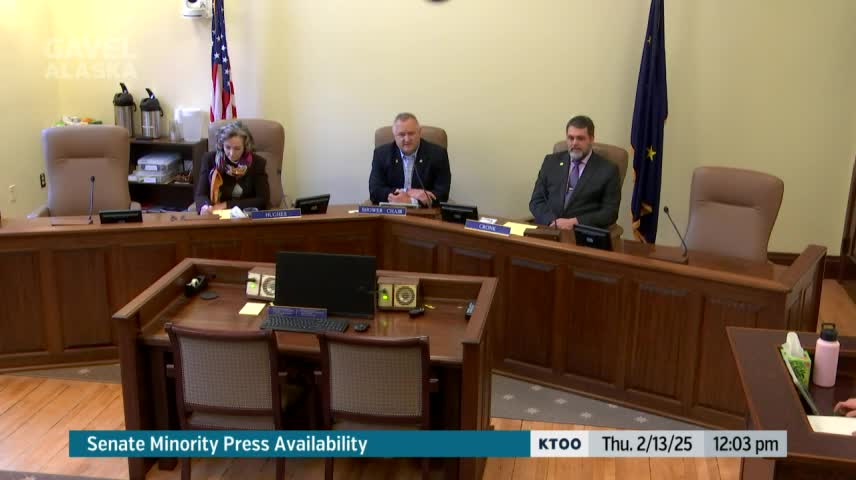
Senate Republicans say education talks productive but no agreement yet on BSA or policy changes
Summary
Senate Republican members who briefed reporters said three days of education negotiations produced substantial dialogue on Base Student Allocation increases and policy reforms — including charter and correspondent schools — but no final agreement or dollar figure has been settled.
Senate Republican lawmakers held a press conference to update reporters on ongoing education negotiations, saying three days of meetings produced “very good dialogue” but no final agreement on funding or policy.
Senator Hughes said the negotiation sessions were “very productive” but that lawmakers “didn't come to a conclusion” after three days of discussion. Senator Kronk, also on the negotiating team, said the group recognized rising costs in schools and that “we do need to address it” while pairing funding with policy reforms.
Why it matters: the Base Student Allocation (BSA) is the core per-student funding line used by Alaska school districts; changes to the BSA and companion policy adjustments would affect how state education dollars are distributed to districts, charter schools and correspondence (homeschool) programs across the state.
Lawmakers on the panel declined to name a specific BSA increase. “We don't even think we tossed a number out,” one senator said, adding that the finance committee is still modeling what the state can afford. Reporters were told the caucus is keeping a funding target open until revenue and budget modeling are clearer.
On policy, senators discussed pairing any BSA increase with reforms intended to improve academic outcomes. Kronk, a retired teacher, emphasized looking “at every student,” noting that “homeschool is about 20% of all of our kids now,” and said the caucus was discussing support for charter and correspondent public schools alongside neighborhood schools. She cited national research and programs such as Read‑by‑3 as policy models that have produced measurable results elsewhere.
Kronk said some states set higher per‑pupil allotments for correspondent students; she noted Tennessee’s allotment was about $7,300 and contrasted that with the allotment figure discussed for Alaska in the briefing. She added that any policy changes should be properly funded, and that “a 5% increase is a huge increase” in some districts.
Reporters asked whether charter and school‑choice policies lift neighborhood schools. The senators pointed to organizations that track school‑choice outcomes — including ExcelinEd (the education reform organization founded by former Florida Governor Jeb Bush) and EdChoice — as sources of the research they cited.
No formal action or vote occurred at the press conference. Senators said they expect further negotiation and may hold another press conference if the education package advances to a bill or caucus position.
The session closed with a reminder from the senate leadership to “disagree without being disagreeable,” and officials said they intend to continue negotiations with the aim of pairing funding increases with policy reforms.