Get Full Government Meeting Transcripts, Videos, & Alerts Forever!
Get email alerts on the Call Location Data topic
No spam. Unsubscribe anytime.
Committee approves measure to speed law-enforcement access to phone location data in urgent missing-person cases
Summary
House Bill 366 (first substitute) would create a prioritized process for telecommunications providers to deliver phone location data to law enforcement in exigent missing-person and imminent-danger situations; the committee approved the substitute unanimously after testimony from a victim’s mother and law-enforcement supporters.
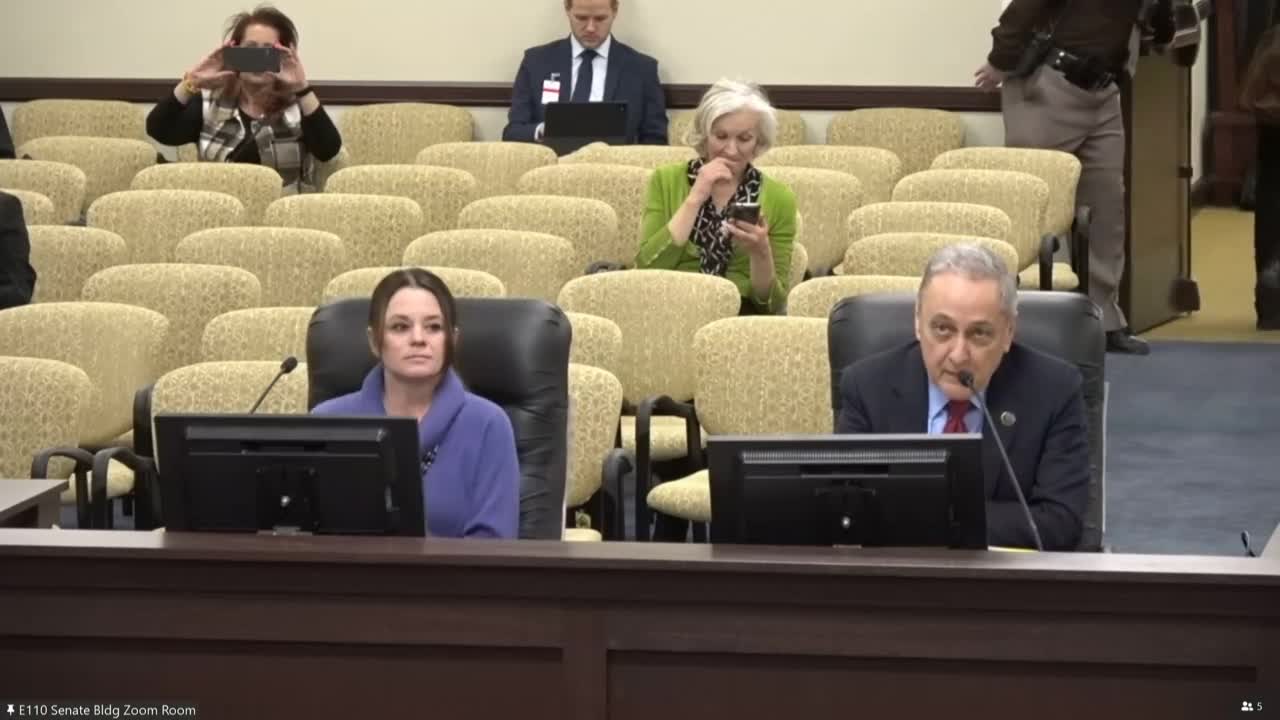
The Public Utilities and Energy Committee on Thursday passed House Bill 366 (first substitute), a bill that establishes a priority process for telecommunications providers to respond to law-enforcement requests for call-location and device geolocation data in urgent missing-person and imminent-danger cases.
Sponsor Representative Malloy said the bill expands the definition of location data, adds missing persons at risk of harm to the list of cases requiring priority access, and protects providers from civil liability when they act in good faith. He said the measure is intended to speed access to time-sensitive data that can be critical to locating a person.
Candace Cooley (Dylan’s Legacy) gave testimony about her son’s homicide in 2022 and how cell-site data and a forensic review led investigators to recover his phone within feet of water; she described delays in obtaining the data under existing procedures and the importance of quicker access. "From that data, we were able to pinpoint Dylan's phone within 5 feet under 10 feet of water," Cooley said, adding that certain carriers retain tower-derived data only seven to ten days and that timely access can be decisive.
Representative Clancy and other committee members described the practical process: law enforcement obtains a warrant, submits it to a carrier, and carriers route the request into case-management workflows. The substitute adds a checkbox or designation for “missing person at risk” or similar exigent circumstances so providers handle those requests as a priority rather than routing them to the bottom of a high-volume queue.
The committee adopted the first substitute and then passed the bill with a favorable recommendation. The chair announced both actions passed unanimously.
Testimony also noted training and a commercial app (Badge App) that can ingest provider data into maps and search tools for quicker tactical use by search-and-rescue teams; proponents said training would be made available to Utah law enforcement if the bill passes further.
Votes at a glance: HB 366 (first substitute) — committee adopted sub and recommended the bill favorably; chair announced unanimous passage.