Get Full Government Meeting Transcripts, Videos, & Alerts Forever!
Get email alerts on the Hydropower Watershed topic
No spam. Unsubscribe anytime.
Committee favors substitute for watershed bill, directs state water agent to negotiate with hydropower owners
Summary
House Bill 311 (first substitute) passed the committee with a favorable recommendation. The substitute narrows the original draft and authorizes the state's water agent to negotiate with out-of-state infrastructure owners and local hydropower entities to address water concerns without heavy-handed regulation.
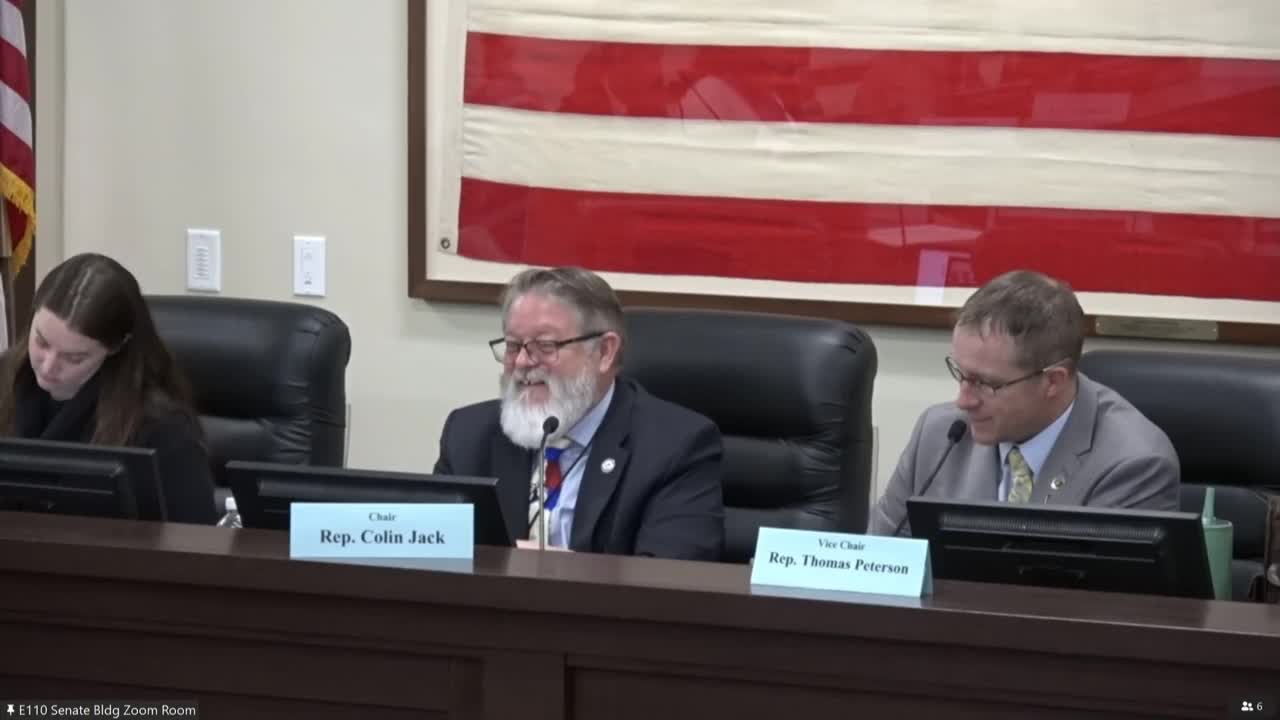
The House Public Utilities and Energy Committee on Thursday recommended House Bill 311 (first substitute), a bill the sponsor said was rewritten to emphasize negotiation over regulation concerning the state’s interactions with large hydropower facilities.
Representative Snyder, the sponsor, said the original draft contained stronger regulatory language aimed at compensating for impacts from hydropower facilities such as phosphorus loading in the Bear River and water-loss concerns in other basins. After stakeholder conversations, he said a negotiated approach would be more constructive. The substitute authorizes the state water agent to engage in discussions with hydropower operators and sister states where infrastructure sits outside Utah’s borders.
Representative Peck asked about interstate compacts and whether international entities could affect the negotiations. Snyder said the bill does not alter Colorado River or Bear River compacts and that existing interstate agreements govern apportionment. He told the committee the water agent needs latitude to talk with Idaho and Wyoming on Bear River matters because some key infrastructure is physically located outside Utah.
John Cox, representing Rocky Mountain Power, told the committee the company had concerns with the original bill but supported the substitute and thanked the sponsor for sharing the substitute in advance. Cox said hydroelectric assets in Utah are owned by a mix of private, municipal and rural cooperative entities and pointed to long-running facilities such as the Stairs hydro facility in Big Cottonwood Canyon that have operated since the late 19th century.
Representative Albrecht moved to adopt the first substitute and then moved the bill with a favorable recommendation; the chair announced both votes passed unanimously.
The substitute narrows the state’s approach to seek collaborative, negotiated solutions and explicitly enables the state water agent to engage with other states and hydropower owners to explore options without imposing immediate regulatory penalties.