Get Full Government Meeting Transcripts, Videos, & Alerts Forever!
Get email alerts on the State Housing Plan topic
No spam. Unsubscribe anytime.
Committee forwards housing bill that sets framework for statewide housing plan and incentives for owner-occupied affordable units
Summary
The House Political Subdivisions Committee unanimously adopted the first substitute to House Bill 37, which adds housing affordability to the state land-use act, directs creation of a state housing plan and offers optional incentives aimed at producing owner-occupied, moderate-income housing.
House Bill 37, described by sponsors and municipal representatives as the product of months of interim work after a legislative housing audit, was advanced unanimously by the House Political Subdivisions Committee. The first substitute adds housing affordability to the purposes of the Land Use Development and Management Act, directs the governor's Office of Planning and Budget to partner with local governments and stakeholders to develop a state housing plan, and creates optional tools to encourage owner-occupied, moderate-income housing.
Cameron Deal, executive director of the League of Cities and Towns, said HB 37 grew out of the political subdivisions interim committee's work following a legislative audit on housing and that the substitute asks the state housing plan to "prioritize good data and good metrics." The substitute also emphasizes tools for moderate-income housing plans (MIHPs), including optional density bonus programs that start at a minimum of six units an acre and can be structured so a city that adopts an eligible owner-occupied affordability tool receives extra credit toward MIHP requirements ("one menu item counts as three," Deal said).
Representative Dunnigan, sponsor, described the intent: give municipalities optional, incentive-based tools to encourage homeownership without imposing base-zoning requirements. The substitute includes other technical changes discussed with stakeholders and clarifies that the density bonuses and deed-restriction pathways are optional for both cities and developers.
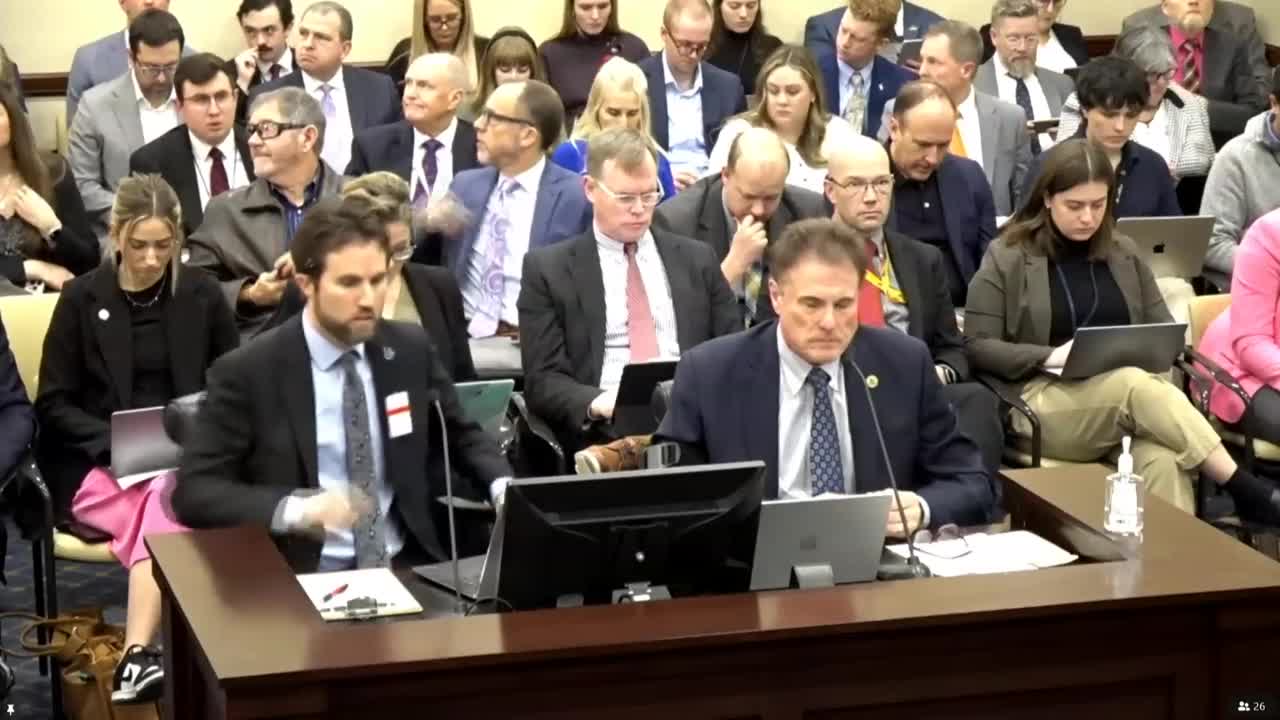
Public testimony included support from the Utah Association of Realtors, the League of Cities and Towns and local mayors. Troy Walker, mayor of Draper City and president of the League, described local efforts to produce deed-restricted owner-occupied units and said the bill's tools and data collection "move the needle." Several legislators thanked sponsors and stakeholders for the collaborative process.
Committee action: Representative Walter moved to adopt the first substitute and to recommend HB 37 favorably; both motions passed unanimously. Committee members noted the bill is part of an ongoing package of housing measures and said further work in future sessions is likely.