Get Full Government Meeting Transcripts, Videos, & Alerts Forever!
Get email alerts on the Voting Precincts topic
No spam. Unsubscribe anytime.
Committee advances bill standardizing precinct identifiers and easing small-boundary updates
Summary
The House Political Subdivisions Committee unanimously advanced the first substitute to House Bill 27, which keeps maximum precinct size at 1,250 voters, creates unique statewide precinct identifiers and allows county clerks to make minor precinct boundary adjustments following local legislative changes.
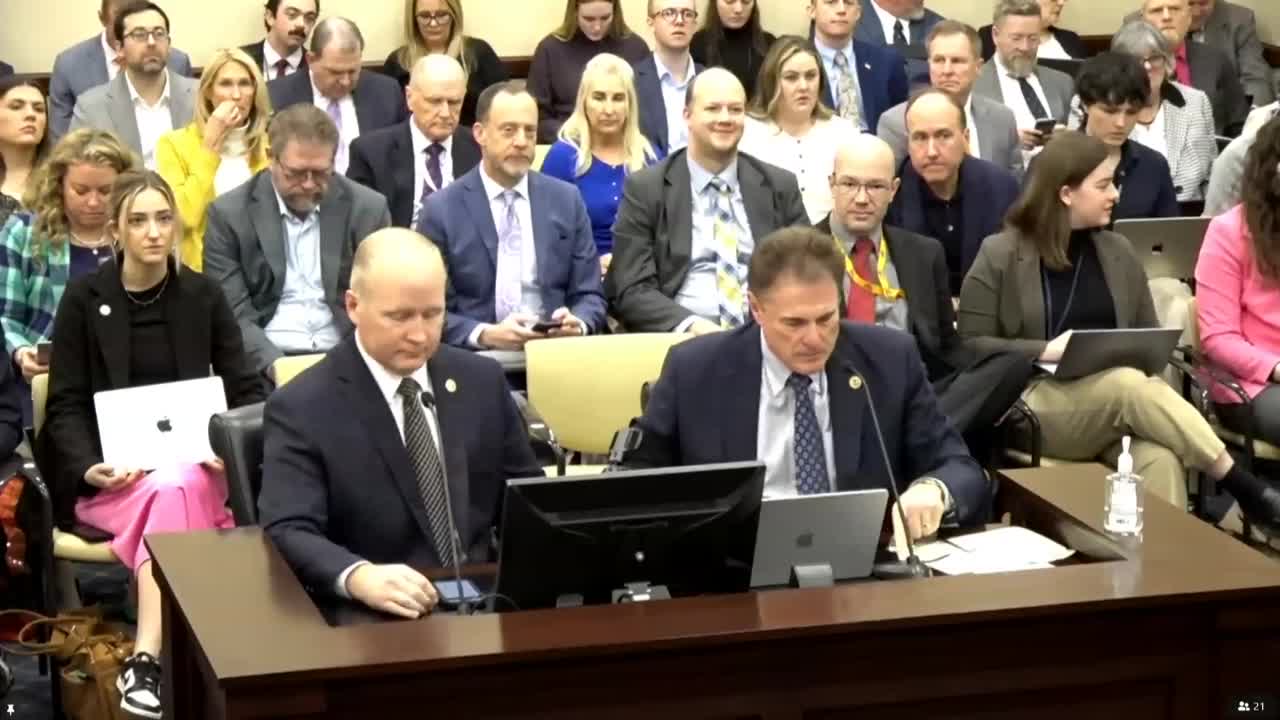
House Bill 27, the voting precinct amendments, was advanced out of the House Political Subdivisions Committee on a unanimous voice vote after proponents described changes meant to stabilize precinct boundaries and improve election data.
Representative Jim Dunnigan, sponsor of the bill, told the committee the first substitute removes a proposed increase in maximum precinct size and "keeps them at 1,250" while adding other changes. Brian McKenzie, Davis County clerk, told the committee the package was designed to reduce the frequency of precinct boundary changes and to reduce confusion for election administrators, political parties and data analysts. "The purpose of that was to help reduce the number of times that precinct boundaries are changing," McKenzie said.
The substitute also would give county clerks authority to make minor boundary adjustments that result from changes already approved by other local legislative bodies (for example, a city annexation or a special service district boundary change), enabling faster updates so voters in newly modified areas receive appropriate ballots. Ryan Calley, director of elections in the lieutenant governor's office, said the bill permits grouping small, noncontiguous pockets near a municipality so they can be treated administratively together while remaining within the same voting area. Calley noted a practical benefit: "When we start to release results and things like that...clerks will be hesitant to release those precinct specific results if there's less than 15 people in a precinct, because then we're violating the secret ballot." Grouping small pockets would reduce those privacy constraints, he said.
Members of the public and party organizations spoke in support. Chris Knoll, Salt Lake County Republican Party chair, said the substitute "will help stabilize these precincts" and reduce the number of precincts that would otherwise change; Marilyn Momoney and Salt Lake County Clerk Lanny Chapman also expressed support.
Committee action: Representative Peterson moved the committee to pass the first substitute; the motion passed on a voice vote. The committee then voted to pass the substitute out with a favorable recommendation; that motion also passed unanimously.
The substitute as presented preserves the 1,250-voter maximum, requires unique statewide precinct identifiers, and allows clerks to make minor boundary adjustments following legislative changes already approved at the local level. The bill text and the committee discussion state the changes are intended to reduce administrative churn and improve the quality and usability of precinct-level data.