Get Full Government Meeting Transcripts, Videos, & Alerts Forever!
Get email alerts on the Land Development Code topic
No spam. Unsubscribe anytime.
Council rejects proposed architectural and use standards for mini‑warehouses and storage facilities
Summary
City planning staff proposed an amendment to the land development code to add design standards and limit uses for mini‑warehouse and storage facilities along major roadways. Councilmembers said the code changes would hamper future development and overlap with state law; the council voted 5‑0 to deny the ordinance.
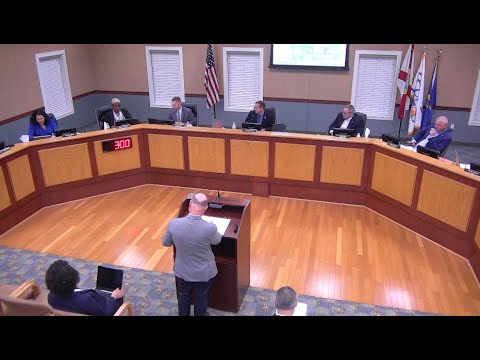
The St. Cloud City Council on Feb. 13 voted 5‑0 to deny an ordinance that would have amended the land development code to add architectural and use standards for mini‑warehouse and storage facilities across the city.
Staff proposal
Melissa Dunklin, director of community development, presented the proposed ordinance, which would have added design standards for mini‑warehouses, updated primary and prohibited uses, allowed limited secondary uses (for example, a maximum of two display trucks if truck rental is offered), required a two‑story minimum façade along key roadways, limited curb cuts, required interior access so roll‑up doors were not the predominant street feature, established material and transparent‑window minimums, and required outdoor storage to be screened by at least a six‑foot masonry wall.
Council discussion and vote
Council Member Ken Gilbert argued the city’s valuable frontage and land needs flexibility; Deputy Mayor Sean Fletcher said some issues were addressed by state statute and suggested denial. After discussion the council adopted a motion to deny the ordinance. The motion carried 5‑0 on roll call.
Ending
Councilmembers said they wanted to preserve the city’s future flexibility for commercial frontage and that some provisions would be better handled through targeted PUD standards or site‑specific review rather than a broad code change.