Get Full Government Meeting Transcripts, Videos, & Alerts Forever!
Get email alerts on the Disability Commission topic
No spam. Unsubscribe anytime.
Disability Commission urges accessible transportation, employment supports and updates to Find It Fix It app
Summary
The Seattle Disability Commission presented three focus areas — advocacy, transportation and employment — and requested Council help with citywide accessibility, enhanced app reporting, and expanded supported employment opportunities.
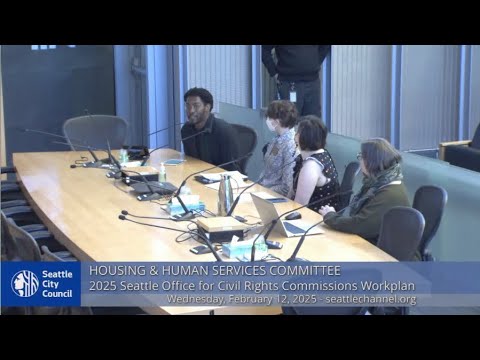
The Seattle Disability Commission told the Housing and Human Services Committee on Feb. 12 that its 2025 agenda centers on advocacy, transportation accessibility and employment for people with disabilities.
Commissioners described recent work, including sponsorship of a scholarship for a national arts and disability conference, input to the Community Fund's accessible play-space project, and engagement with the city's ADA coordination teams. On transportation, commissioners said they are working with Seattle Department of Transportation staff and the ADA coordination team on issues ranging from accessible sidewalks and parking to training transit staff; the commission also highlighted completed items such as wheelchair charging stations at Seattle City Hall and removal of a toll‑booth barrier at the airport.
On employment, the commission described partnerships to expand supported employment programs and asked the Council to help broaden city hiring access for people with disabilities and to consider program expansion for job coaching and HR supports. Commissioners asked the Council to join meetings and to consider the commission a resource when shaping policy.
The commission also requested improvements to the city's Find It Fix It app so that reports from people with disabilities (for example, about accessible parking or sidewalk issues) receive clearer follow-up and a closed‑loop response so reporters know how their issues were handled.