Get Full Government Meeting Transcripts, Videos, & Alerts Forever!
Get email alerts on the Medicaid Budget topic
No spam. Unsubscribe anytime.
Medicaid drives Alaska Department of Health budget; officials cite rebate and tribal reclaiming savings
Summary
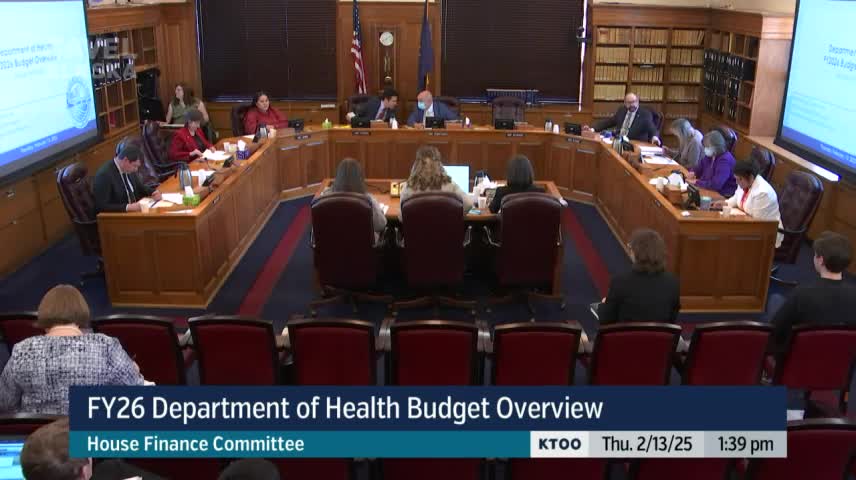
Alaska Department of Health Commissioner Heidi Hedberg told the House Finance Committee on Feb. 13 that Medicaid represents about 80% of the department's FY26 budget request and remains central to the department's work and cost pressures.
Alaska Department of Health Commissioner Heidi Hedberg told the House Finance Committee on Feb. 13 that Medicaid represents about 80% of the department's FY26 budget request and remains central to the department's work and cost pressures.
The department gave lawmakers an overview showing a department budget of about $3.5 billion and a Medicaid services appropriation of just over $2.8 billion. Assistant Commissioner Pam Halloran told the committee that general fund represents roughly 26% of the Medicaid budget while federal authority represents roughly 74%.
Why it matters: Medicaid is the largest line in the department's budget and small changes in enrollments, eligibility policy or federal matching arrangements can materially affect state general fund obligations.
Department officials highlighted three revenue-offset efforts. Deputy Commissioner Emily Ritchie described growth in tribal reclaiming'the practice of claiming 100% federal match for services provided to tribal members who are Medicaid-eligible'which the department said rose from about $34 million in FY2017 to roughly $138 million in FY2024. Ritchie also said pharmacy rebate recoveries have yielded substantial returns: "we have been able to leverage dollars 138,000,000 in federal rebates" and an additional $26,800,000 in supplemental rebates, amounts the department said are shared between federal and state governments. Ritchie added that improved staffing and teams focused on pharmacy work have enabled additional recoveries.
Hedberg described a small request within the health facilities licensing and certification allocation: $962,500 in additional authority (about $295,000 federal and $667,500 general fund match) to align budgeted authority with actual expenditures and maintain staffing for state and federal certification and investigation of Title 18 and Title 19 health facilities, including hospitals, skilled nursing facilities and home-health agencies.
The commissioner also described a small Office of Health Savings in her office created to identify innovations to reduce costs. Hedberg said the office has secured "several million dollars in technical assistance and grants" and worked with the Department of Law to add two positions that the department says have driven roughly a 30% increase in subrogation activity (recoveries from third parties when Medicaid was incorrectly primary).
Committee members pressed the department for updated figures. Halloran said the department provided Medicaid projections to the legislature on Dec. 15 and planned to provide updated projections the week after the hearing so legislators could see late-starting items that affect the budget.
Ending: The department did not request an immediate legislative action during the hearing; officials said they will provide updated Medicaid projections and follow-up details on subrogation and licensing as requested by the committee.