Get Full Government Meeting Transcripts, Videos, & Alerts Forever!
Get email alerts on the Insurance Risk Management topic
No spam. Unsubscribe anytime.
Clay County Board renews coverage with Tennessee Risk Management Trust despite 13% premium increase
Summary
The Clay County Board of Education voted to remain with Tennessee Risk Management Trust for 2025 coverage after hearing from trust representatives that market pressures and large storm losses are driving a proposed premium increase to about $207,000 (roughly 13%).
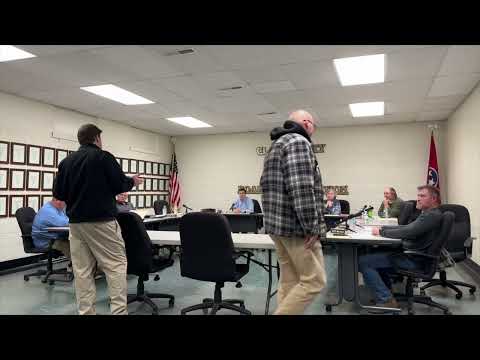
The Clay County Board of Education voted Feb. 13 to remain with the Tennessee Risk Management Trust and accept the proposed 2025 premium of about $207,000, a roughly 13% increase from 2024.
Trust representative Tom Montgomery told the board the pool began in 1987 with 13 schools and has grown to include more than 100 members. He said higher building replacement costs, recent large storm losses and rising excess-insurer retentions are the main drivers of the increase. "We started in 1987 with 13 schools," Montgomery said. "We collect... up to $80,000,000 now from all our members every year" to pay claims and buy excess coverage. He added insurers have raised retentions and deductibles since 2020, increasing the pool's costs.
Montgomery and safety supervisor Chris Sykes outlined specific market changes they said are affecting premiums: higher appraised replacement values for school buildings, more frequent and costly storm damage, and larger self-insured retentions imposed by excess carriers. Montgomery said some carriers now require higher per-occurrence retentions — "my retention... went up to a hundred thousand dollars to a million" — and that wind/storm coverages can impose still higher layers. He also noted one major carrier, Liberty Mutual, has shifted to pay "actual cash value" on some property claims and raised minimum increases across accounts.
Board discussion referenced recent premium history presented by staff: the district's premium totaled $161,005.45 in 2023 and rose to about $183,089.97 in 2024 (about 14%); the trust proposed a 2025 premium around $207,000 (about 13%). Staff warned that soliciting competitive bids would require a substantial administrative effort and could shift claims-handling burdens back to district offices if the district changed providers.
Board member Ashlock moved to remain with Tennessee Risk Management Trust; the motion was seconded by West. During roll call several board members recorded "aye," and the chair declared the motion passed.
The trust representatives encouraged the district to review building valuations and to ask about available credits for workers' compensation and other adjustments that could reduce costs. Montgomery suggested some properties could be moved to stated value where appropriate to lower total insured value, but he cautioned that adjustments might produce only modest savings.
The board did not direct staff to pursue a market solicitation at the meeting; members said they appreciate the trust's local service but are watching costs.