Get Full Government Meeting Transcripts, Videos, & Alerts Forever!
Get email alerts on the Education Holyoke Public Schools topic
No spam. Unsubscribe anytime.
Community advisory group praises teachers, dual-language program and partnerships while flagging retention, meals and communication at Holyoke Public Schools
Summary
At a community advisory team meeting, participants praised Holyoke Public Schools’ committed teachers, dual-language offerings and community partnerships but raised urgent concerns about teacher retention, school meals, transportation, special education services and inconsistent family communication.
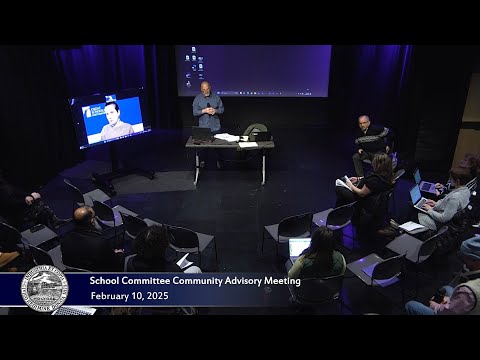
Facilitator: “We’re gonna start with an informal discussion,” the meeting leader said, opening a Community Advisory Team session convened to gather input for the Holyoke Public Schools amid an ongoing receivership and a superintendent search.
Participants said the district’s strengths include a committed teaching staff, a long-running dual-language program, broad community partnerships that provide early-college and work-based learning opportunities, and growing systems for English learners.
Those strengths, they said, coexist with pressing operational problems that parents, teachers and other community members urged the district to address promptly: steep teacher turnover, inconsistent school-to-home communication, poor-quality school meals, limited transportation to after-school programs and gaps in special-education continuity and resources.
Why it matters: multiple speakers tied retention and resource questions to students’ classroom experience. If teachers leave quickly and families do not receive consistent information, participants said, the district’s instructional goals and gains from existing programs — including dual-language pathways through middle school — will be harder to sustain.
Participants’ praise and priorities Community members repeatedly praised the district’s educators and the dual-language program, which several speakers said runs from early grades toward grade 12. A number of parents and teachers highlighted District Parent Advisory Committee (DPAC) meetings as a useful forum for connecting families with central office leaders and the interim superintendent.
Several speakers also flagged Holyoke’s co-teaching model and weekly professional development for teachers as positive changes that have supported collaboration between general-education, special-education and ESL staff.
Concerns and proposed priorities Speakers raised multiple interrelated concerns:
- Teacher retention and workload: Multiple participants described high turnover and burnout among teachers and school staff and argued that the district should prioritize teacher pay, recognition and measures to reduce workload. One participant said turnover “is not a given” and urged the next superintendent to treat retention as a priority.
- School meals and student nutrition: A Holyoke Media staff member said the quality of school lunches was poor and that food waste and hunger at events demonstrated a problem: “Not even people in prison should get that kind of food,” the speaker said, urging improvement in meal quality and participation.
- Transportation and after-school access: A participant estimated the district budget at about $118 million and said roughly $12 million goes to transportation; speakers nonetheless reported that reliable transportation to after-school programs is limited, reducing students’ ability to access enrichment and citywide opportunities (amounts described as approximate by the speaker).
- Communication and family engagement: Parents and community members said communication varied between schools and that the district should move from simple parental involvement toward sustained family engagement that treats parents as partners in decisions. Several speakers asked for clearer, more consistent newsletters, phone and text messaging systems and better outreach to families who do not currently participate.
- Special education and consistency: Participants described uneven special-education supports across grades and schools and urged examination of case-management models and staffing, especially in middle and high schools.
Other operational issues noted included perceived administrative staffing imbalances, recurring changes in curriculum that limit teacher mastery, inconsistency in cultural programming between schools and calls for more playtime and unstructured time for younger students.
Reference to prior action The facilitator said the school committee had “made an offer for Mr. So to stay on as our interim superintendent while we go through a search process,” and that the individual had accepted “pending negotiations for his contract.” Participants framed the superintendent search and the advisory team’s work as complementary: the advisory team is collecting community input to report back to the school committee but does not conduct final hiring decisions.
What participants asked the district to do next Speakers urged the district to: prioritize teacher retention and pay; standardize family communications and build family engagement capacity across schools; improve the quality and participation in school meals; review transportation funding and service models for after-school access; and examine special-education case-management and staffing. Several participants asked the advisory team to summarize the session and circulate draft minutes for correction; facilitators said they would do so.
Ending Organizers said they will summarize the discussion, incorporate the recording into the advisory team’s notes and convene further meetings and public forums as the superintendent search proceeds. Attendees were asked to send any corrections to the draft meeting minutes distributed by email.