
District standardizes Intervention Progress Teams to strengthen tier‑1 instruction and interventions
Get AI-powered insights, summaries, and transcripts
Subscribe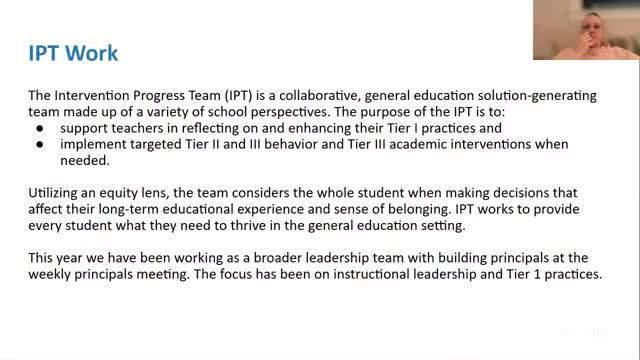
Summary
Staff described a districtwide effort to standardize IPT (Intervention Progress Team) procedures, forms and data collection so teachers have consistent referral pathways, clearer intervention menus and better intervention data to support students before special education referral.
District staff explained a multi‑part initiative to standardize Intervention Progress Teams (IPTs) across North Wasco County SD 21 so teachers and principals use consistent referral procedures, intervention documentation and data collection.
IPTs are collaborative teams that review a student’s needs and recommend tier‑1, tier‑2 or tier‑3 interventions. Staff said discrepancies among schools in team names, paperwork and practices produced inconsistent student experiences, and the district is aligning terminology, forms, data expectations and monthly leadership time for IPT coordination.
“...these teams had different names in different buildings,” staff said, noting some schools previously called the function student assistance teams, student study teams or assessment teams. The district will provide a handbook and a sample menu of interventions to help teachers select and document supports. Staff emphasized that interventions can be simple classroom adjustments — a fidget, seat changes, brief small‑group sessions — but must be tracked so the district can assess effectiveness.
Nut graf: the emphasis on stronger tier‑1 instruction and consistent data collection is intended both to improve student outcomes in the classroom and reduce unnecessary special education referrals by ensuring interventions are tried and measured first.
Staff also said they plan monthly principal leadership meetings that reserve time for IPT teams to troubleshoot and align practice. They are adopting a shared referral form and increasing expectations for intervention data collection (intensity, duration, frequency) so progress can be monitored objectively.
Ending: staff said the changes should make interventions more practical for classroom teachers while improving district‑level decision‑making about when students need additional services or special education evaluation.